GvGB: Light-Filled Bilbao Penthouse
GvGB sits atop a historic avenue in Bilbao, Spain, where BI (Bilbao Interiorismo) reshapes a corner penthouse apartment into a layered home above the rooftops. The duplex renovation separates day and night levels while opening every major room toward the terrace and the horizon of chimneys, facades, and sky. Neutral tones, honest materials, and custom-made furniture bring quiet order to an interior that stays in constant dialogue with the city outside.


From the avenue below, the corner penthouse reads as part of the historic roofline, yet inside, light draws the eye outward to the horizon. High windows, a perimeter terrace, and a measured palette turn the height of the apartment into a calm vantage point over Bilbao’s rooftops.
This duplex apartment in Spain is reworked by BI (Bilbao Interiorismo) as a contemporary home that respects the building’s original profile while living fully in the present. The project centers on how interior surfaces, furniture, and light connect with the exceptional urban setting. Every room answers to that brief through restrained materials, neutral colors, and built-in elements that guide daily life toward the city and sky.
Stair And Envelope
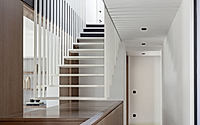
At the core of the lower level, the stair becomes both circulatory hinge and visual anchor. One short flight in natural wood reads as crafted cabinetry, while the second leg, in light lacquered steel, drops from the roof plane like a precise insert. Around it, an open floor plan gathers living, dining, and kitchen in one continuous volume where sightlines run uninterrupted. Walls stay quiet in tone so the stair, windows, and terrace threshold set the rhythm.
Day And Night Levels
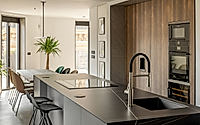
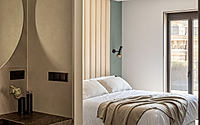
The plan separates shared rooms and private rooms across two floors to keep routines clear. On the main level, the L-shaped geometry of the corner penthouse organizes living and dining in one wing and the kitchen in the other, with the terrace tying them together along the perimeter. Upstairs, bedrooms and bathrooms follow criteria of privacy, orientation, and thermal comfort rather than formal symmetry. Each room opens toward light, with floor-to-ceiling doors that connect back to the stair void and its vertical glow.
Light As Finish
Natural light reads almost like a material here, directed and framed rather than simply admitted. Perimeter windows form large, calm apertures to the city, and direct terrace access from every main room stretches daily life out to the edge. Under the roof, high windows pour light down through the stair opening, washing the upper doors and treads and softening the transition between levels. Neutral walls catch this light without glare, allowing wood grain, ceramic texture, and city silhouettes to carry the visual weight.
Materials And Atmosphere
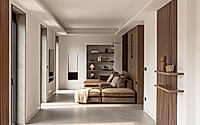
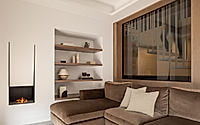
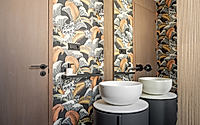
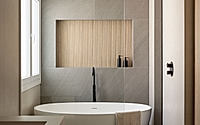
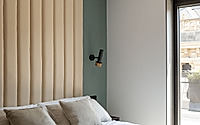
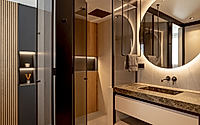
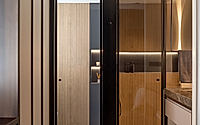
Inside, straight lines and clear joints give the apartment a composed, almost graphic character. Floors in noble ceramic and natural wood alternate with mineral cladding in bathrooms, while select stretches of wall receive wood paneling that reinforces depth and warmth. Technical systems for climate control and home automation stay hidden in this envelope, preserving the clean reading of planes and edges. Light, neutral tones keep background surfaces receded so materials in furniture and the ever-present exterior view can stand out.
Tailored Furniture And Light
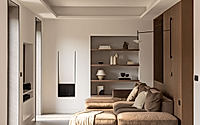
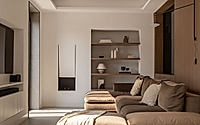
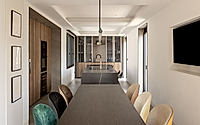
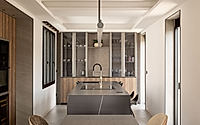
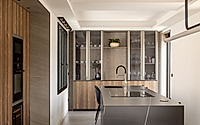
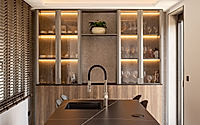
Most furnishings are custom-made with Dica, aligning with the apartment’s straight lines and measured proportions. Storage volumes read as part of the architecture, supporting everyday use while reinforcing continuity from room to room. In the living room, a velvet-upholstered Ditre Italia sofa sits against wood paneling, balancing softness and structure in the heart of the social area. The dining-kitchen zone revolves around a central axis where island, table, and a special display cabinet form a composed scene for gathering, with ambient lighting and select pieces like Tempo by Vibia and Ambrosía by Marset reinforcing that alignment.
From terrace edge to stair core, the apartment turns height and corner geometry into lived experience rather than abstract form. Light moves across pale walls and warm materials throughout the day, while custom furniture and discreet systems keep surfaces clear. The result is a refined home in the historic roofscape, where each room quietly acknowledges the city beyond the glass and the daily routines unfolding within.
Photography by Erlantz Biderbost
Visit BI (Bilbao Interiorismo)