TerraSense Mountain Charm Retreat by DRK Architects
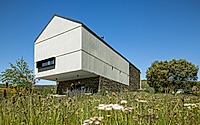
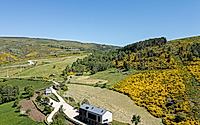
TerraSense Mountain Charm Retreat stands within the rugged Serra da Estrela landscape in Guarda, Portugal, reworking two pre-existing houses into a rural refuge by DRK Architects. The retreat aligns strict environmental protections with a clear architectural gesture, using schist and exposed concrete to connect a hotel setting with the surrounding mountains. Guests move through rooms that retain echoes of former homes while opening toward long views and a slower rhythm of stay.


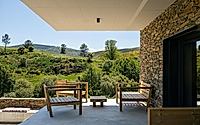
Stone walls catch the mountain light and hold it. From the first step toward the compact volumes, the Serra da Estrela air feels close and unfiltered, brushing rough schist and cool concrete as the retreat settles into its protected terrain.
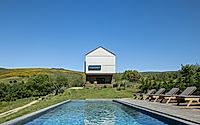
TerraSense Mountain Charm Retreat occupies two former houses in the Serra da Estrela Natural Park in Guarda, Portugal, refashioned by DRK Architects as a rural tourism and hotel destination. The project works within tight environmental rules and the physical limits of existing buildings, turning constraint into a clear architectural stance. At its core, it recasts the traditional mountain house through a measured dialogue between schist construction, exposed concrete additions, and the lived experience of guests.
Recasting Mountain Houses
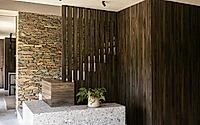
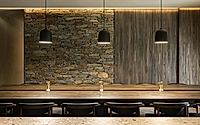
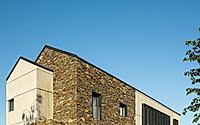
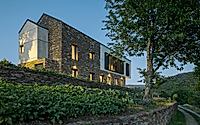
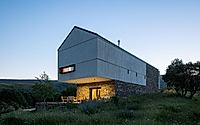
The original buildings return in schist, the emblematic stone of the region, rebuilt to preserve their familiar mass and grounded character. These volumes hold the memory of domestic life while gaining new clarity, with stone surfaces reading as a continuous, weighty base for the intervention above. Inside, former rooms shift into hotel accommodation, yet traces of the old layout still guide circulation and thresholds. A quiet tension arises between what stays and what changes, giving guests a legible sense of the site’s past.
Concrete Gestures At The Edge
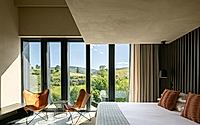
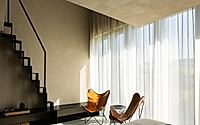
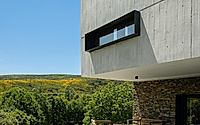
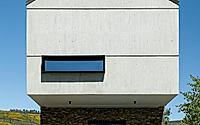
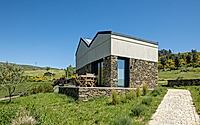
New architecture arrives as bold cantilevered elements in exposed concrete that project from the schist bodies toward the mountains. Each extension works as a single, deliberate move rather than a collection of parts, clearly marking the contemporary layer without overwhelming the original structures. These volumes pull daylight deep into the interior and frame specific views, turning the surrounding peaks and valleys into precise outlooks. Concrete soffits and edges sharpen shadows, so the meeting between inherited stone and new intervention reads with purposeful contrast.
Rooms Oriented To Landscape
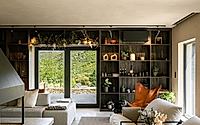
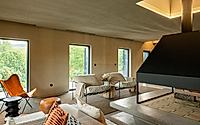
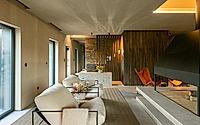
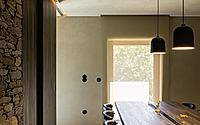
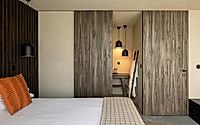
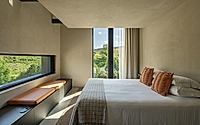
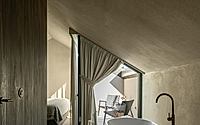
Every hotel unit, whether within the main house or the separate villa, functions as its own micro-world oriented toward a particular slice of terrain. Interior transitions are choreographed to move from tighter, introverted passages to open rooms where glazing draws the eye outward. Guests shift from stone-lined enclosures into projecting concrete bays, finding varied ways to inhabit the same mountain setting. Light, scent, and distant sound enter through these openings, binding daily rituals to the rhythm of the park.
Working With Protection Limits
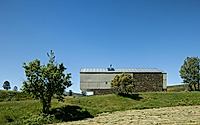
Strict conservation rules and the natural park’s status shape almost every decision, turning limitation into a design engine. The reliance on a minimal palette—schist, exposed concrete, and restrained interior finishes—keeps the architecture legible against the sensitive landscape. By staying close to the footprint of the original houses and extending only through calibrated cantilevers, the project respects environmental boundaries while still claiming new vantage points. Constraint becomes the framework for clarity, rather than a brake on architectural ambition.
At day’s end, stone darkens and concrete cools as the mountains fade into silhouette. Guests inhabit a retreat made from older houses yet oriented to new ways of looking and lingering. The project finds its calm where rebuilt walls, precise additions, and the protected landscape meet in quiet, sustained contact.
Photography by Ivo Tavares Studio
Visit DRK Architects