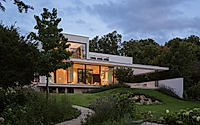
Ayoughi House: Classical Garden Living for a Multigenerational Family
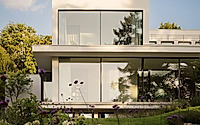
Ayoughi House unfolds in a park-like garden in Frankfurt am Main, Germany, where Philipp Architekten BDA choreographs architecture, interiors, and landscape as one coherent whole. This house for an architect and her family grows from its historic park setting, threading living rooms, a planted atrium, and generous garden terraces into a calm yet animated rhythm. Across its rooms, everyday routines meet clear structure, and the result feels measured rather than grand.


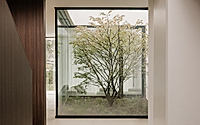
Mature trees filter the light before it reaches the house, softening the transition from historic park to private garden. Inside, a tall atrium pulls this filtered daylight through the foyer and deep into the rooms, so that movement from entrance to living level follows a gentle vertical drift rather than a single hard threshold.
Ayoughi House is conceived as a house in a garden, a domestic retreat on the edge of a grand villa park in the Rhine-Main region. Philipp Architekten BDA respond to the client’s own training as an architect with a clear, composed arrangement that ties everyday patterns of family life to the volumes of the building. Program, circulation, and planted courtyard work together, giving the family a place where shared routines, quiet breaks, and visiting relatives coexist without strain.
Atrium As Daily Heart
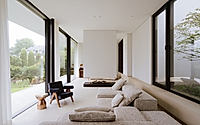
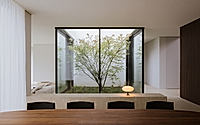
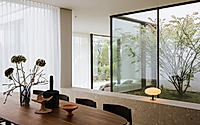
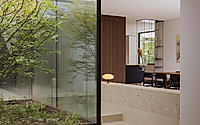
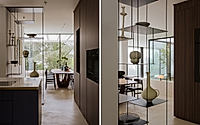
At the core of the house, a planted central atrium gathers light, air, and vegetation into one calm void. Open living areas align themselves around this interior garden, linked by fluid visual axes that let conversations, glances, and daylight move more freely than the walls. The atrium sets up zones for togetherness and retreat, so family members can share one continuous level while still finding quieter corners nearby. On busy days, the presence of greenery in the middle of the plan steadies the atmosphere, tying domestic activity to a constant view of leaves and sky.
Vertical Foyer Sequence
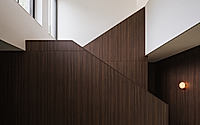
Arrival starts in a foyer that stretches upward into a generous atrium open to the top. A sculptural stair rises through this volume, countered by a graphically composed wooden cube that reads at once as furniture, storage, and architectural mass. Together they choreograph how people cross the threshold, turning a simple entry into an unfolding three-dimensional sequence rather than a corridor. This first room sets the tone for the rest of the house, where height, light, and circulation are treated as one continuous experience.
Family Rhythm And Retreat
The plan grows from the needs of a family with lively twins and an extended generation. Rooms open and close along gentle transitions, so active zones broaden around the atrium while more sheltered rooms step away from it. A separate, self-contained unit for parents or grandparents sits within the overall composition, close enough for shared meals yet independent when privacy is needed. Everyday life can switch between collective energy and quiet retreat without abrupt shifts, because circulation paths remain clear and legible across both wings.
Garden As Living Room Edge
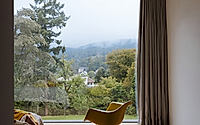
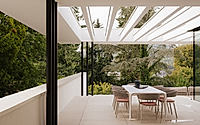
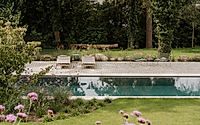
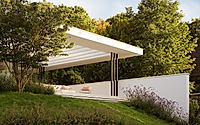
Outside, the naturally sloping ground is shaped to meet the main living level, so interior rooms walk straight out into the garden without steps. Existing mature trees stay in place, and the regraded terrain folds gently around them, turning their trunks and canopies into anchors for outdoor rooms. The result is a garden that reads as an extension of the house, not a backdrop, and gives every shared room a direct relationship to grass, shade, and distant Taunus hills.
As overall architect, interior planner, and landscape author, the studio keeps material, detail, and planting under one umbrella so the house reads as a single intention. Life inside Ayoughi House plays out between atrium, rooms, and garden edges, always within reach of daylight and greenery. On quiet evenings, when the interior cube and stair fall into shadow, the planted core still glows softly, holding the center of family life in place.
Photography by Nate Cook Photography
Visit Philipp Architekten BDA