Jaffe House Restoration: Reviving a Coastal Modernist New York Home
Jaffe House Restoration rethinks a much-loved coastal house in New York, United States, bringing new clarity to Norman Jaffe’s 1978 work under architect Neil Logan. The project concentrates on the interior layout and connections to the courtyard and ocean, replacing piecemeal alterations with a coherent sequence of rooms that sharpen light, material, and everyday circulation. Historic fabric remains present, but the lived experience shifts toward a calmer, more legible rhythm.
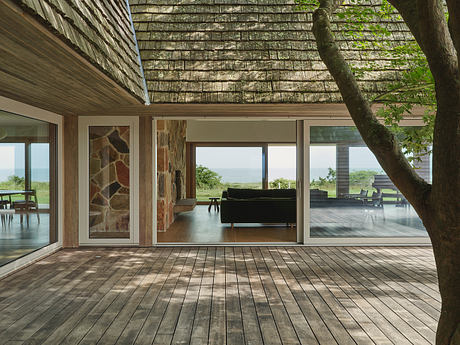
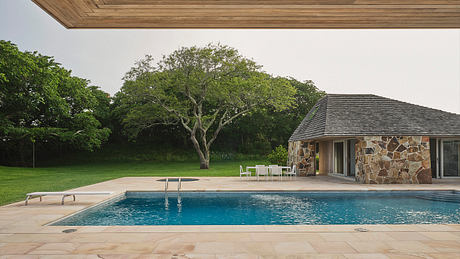
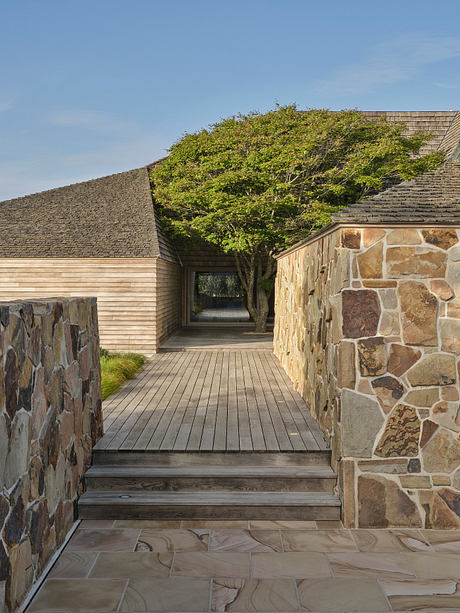
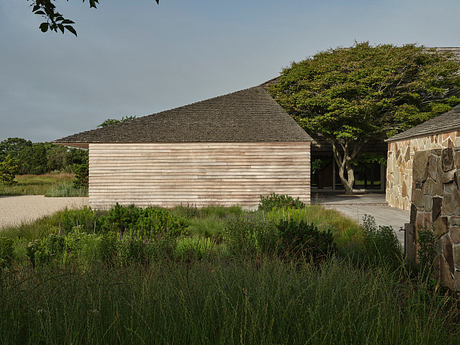
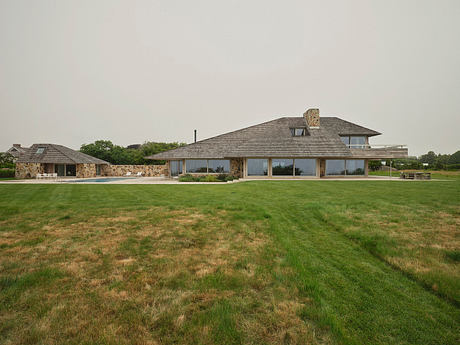
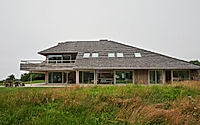
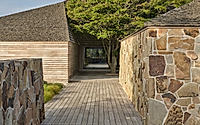
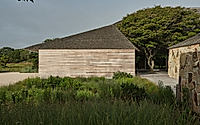
Sun slips across Tennessee sandstone and weathered shingles, catching the sharp angles of the original 1978 roof. From the preserved windowless entry façade, the house still reads as an enigmatic coastal volume, yet the path inward now unfolds with a far clearer sense of direction and light.
Inside this modernized house, Neil Logan concentrates on how rooms connect rather than how they simply look. The work respects Norman Jaffe’s exterior composition while reworking planning and circulation so daily routines move cleanly between courtyard, kitchen, living areas, and the ocean-facing rooms. Every adjustment supports a renewed interior order, tying movement through the house to material continuity and a more generous experience of daylight.
Reworking Entry And Sequence
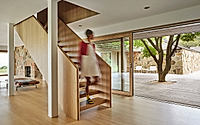
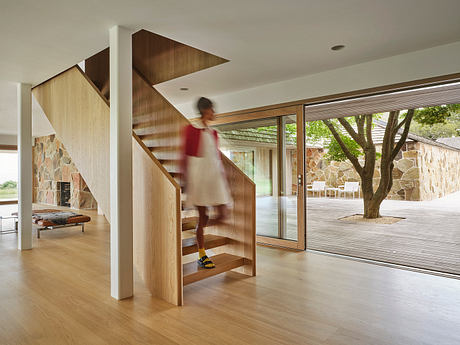
Arrival still happens at the blank, windowless façade, which holds its original sense of reserve. Once past that threshold, however, the reimagined sequence starts at a resurfaced entry courtyard where new wood decking draws people toward the main rooms. Circulation that had been pinched by decades of piecemeal renovations now opens into a central path, so movement from entry to ocean-side glazing reads as one continuous narrative.
Removing one of the two monumental masonry fireplaces proves decisive. That single move frees floor area, untangles crossing routes, and lets living zones relate more directly to the courtyard and coastal views. Planning feels more legible, and each turn of the hallway now has a destination rather than a dead-end alcove or leftover niche.
Opening Toward Ocean Light
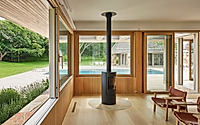
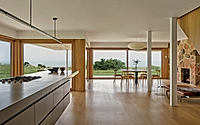
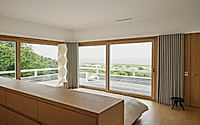
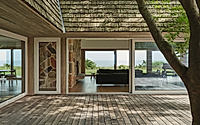
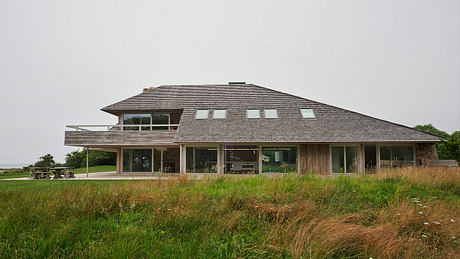
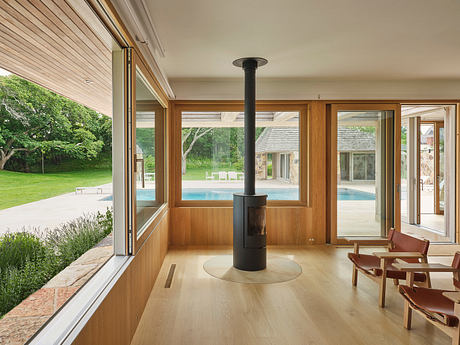
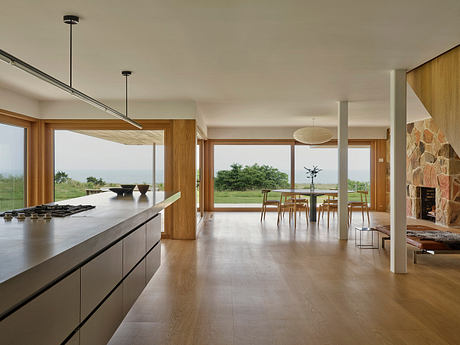
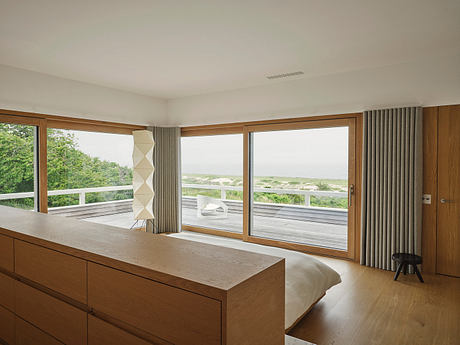
On the ocean-facing side, new expansive glazing reshapes how the house meets its setting. Long views to water and sky pull the eye outward from almost every primary room. Sunlight now tracks across oak floors and walls through the day, giving depth to the once-muted interior and reinforcing a clear orientation toward the coast.
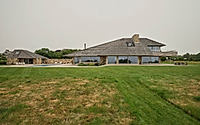
The preserved shingle roof and stone walls frame this new transparency, keeping the exterior silhouette intact while the interior reads brighter and broader. From living area to pool terrace, movement follows the light, so walking through the house becomes a measured transition from shadowed entry to open, sea-facing rooms.
Clarifying The Upper Floor
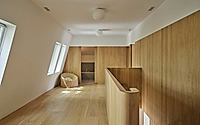
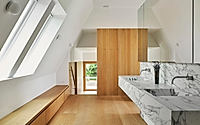
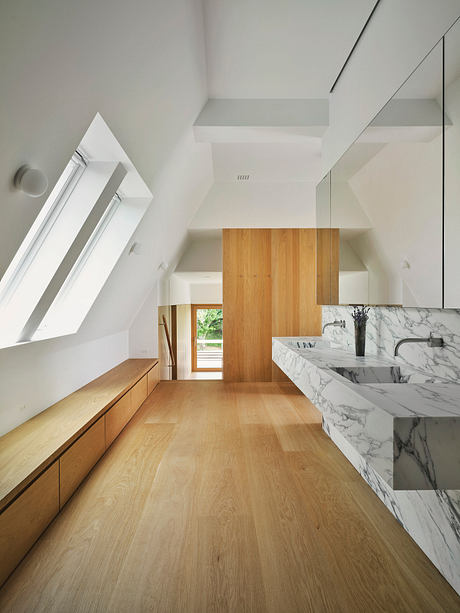
Under the sweeping roof, the second level had been cluttered by the removed fireplace mass and an extra stair. Clearing those elements reorganizes the upper plan into a calm, functional arrangement of three bedrooms, a bathroom, and an enlarged primary suite. Circulation now traces a simple loop instead of a zigzag, and doorways line up in a way that supports privacy rather than confusion.
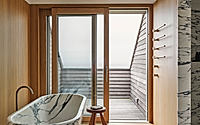
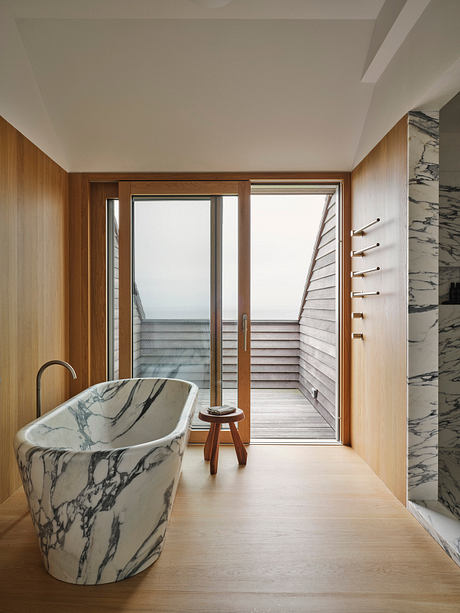
Within the primary suite, a steam room and sauna tuck into the volume without overwhelming it. The sequence from sleeping area to bathing rooms reads as a quiet progression, allowing the dramatic roofline to remain the dominant spatial experience above a disciplined plan.
Linking House, Pool, And Garden
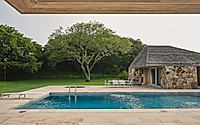
Beyond the main rooms, the renovation extends to the pool house, exterior stone paving, and rebuilt stone boundary walls. Paths between these elements are clarified so residents move from interior to pool terrace and garden without detours or awkward level changes. The courtyard now works as a hinge, aligning doors, views, and walking routes between the house and its outdoor settings.
New garden layouts and stone-paved areas reinforce these connections. Each exterior room—courtyard, pool edge, planted margins—relates back to the house through clear axes, giving the entire property a more coherent, walkable structure.
Material Rhythm Inside
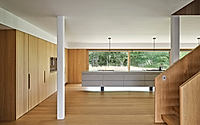
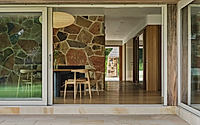
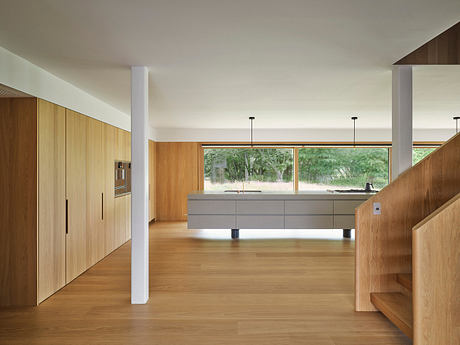
Within the reorganized plan, material consistency supports orientation. Oak-clad walls and floors run from one room to the next, so turning a corner feels less like entering a new chapter and more like continuing a sentence. New windows, an island kitchen, and the updated pool house share this palette, helping link everyday tasks to a stable visual order.
Original Tennessee sandstone still grounds the house at key points, tying Jaffe’s 1978 structure to Logan’s contemporary reworking. Under the shingle roof and along rebuilt stone boundaries, the renewed circulation pattern and unified finishes give this coastal house a clear, measured rhythm from entry court to ocean horizon.
Photography by Christopher Sturman
Visit Neil Logan