Trajetória Apartment Links Architecture, Art and Everyday Family Life
Trajetória is a renovated apartment in Brasília, Brazil, reimagined by Hersen Mendes Arquitetura for a family returning to the same block they once called home. Organized around everyday routes through the apartment, the project translates circulation, light, and shared rituals into a clear architectural narrative that connects entry, kitchen, and living areas. Along the way, each room responds to specific needs, from music gatherings to late-night work.


About Trajetória
Beginning with its name, the renovation of this apartment by Brasília-based Hersen Mendes Arquitetura reflects the trajectory of a family that moved from the same block into a new home, now adapted to their current needs.
Formed by a couple and their two children, the family wanted a place that could express their story. Named Apartamento Trajetória (Trajectory Apartment), the project is guided by the idea of everyday paths and flows, organizing circulation and rooms from the moment residents arrive home.
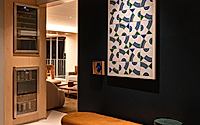
The narrative of the apartment starts at the entrance. There, residents leave their belongings in the hall before moving on to the kitchen next door, where they can help themselves to drinks from a wine cellar placed along the route. From this point, the path leads naturally to the living room, the heart of family life and the main social area of the apartment.
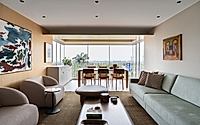
In this central room, the architects aimed to evoke the feeling of being at home while remaining connected to the city beyond. A large balcony with generous openings frames a panoramic view of Brasília and amplifies the perception of the interior. The dining room was placed here and is marked by a large tensoflex skylight that lights the table both day and night, reinforcing this area as a second core for family gatherings.
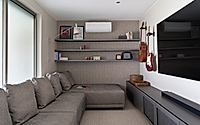
Another key element of the project is the acoustic room, a flexible environment that also contains a sofa and television. Designed to support the family’s enthusiasm for music, this room allows for musical sessions without disturbing other parts of the apartment. When needed, doors can be closed to ensure effective sound insulation.
One of the main requests from the residents was the creation of three suites: one for the couple and one for each of the children. Although the original layout lacked hydraulic infrastructure for a third suite, the architects made it possible by installing a sewage grinder, which allowed the addition of an extra bathroom.
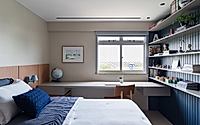
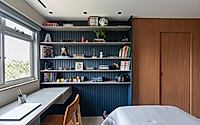
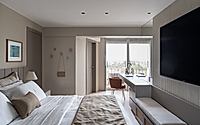
In the children’s suites, each bedroom includes a dedicated study area, and the bathrooms are discreetly concealed behind wooden panels. In the couple’s suite, a home office was integrated to accommodate the resident’s habit of working at night.
Despite its generous size, the master suite originally received little natural light, with only a small window. To address this, the architects used visual strategies and optical effects, such as horizontal elements that extend the sense of continuity, together with mirrors and new textures that help reflect natural light throughout the room.
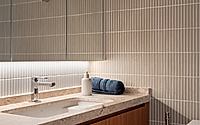
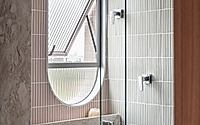
In the couple’s bathroom, considered one of the main barriers to light entering the suite, the floor plan was redesigned with a sloped and beveled wall to increase natural light penetration. Vertical, elongated tiles, in dialogue with the fluted glass of the oblong window, create a continuous visual rhythm, making the room more comfortable and visually calm.
As the final layer of the work, the composition of the interiors brought together architecture, art, and memory. Working with the clients, the architects selected pieces by Brazilian artists, especially from Brasília, along with furniture and sentimental objects from the family’s history. The result is a home that preserves past experiences while leaving space for new memories to emerge.
Photography by Gabriel Lima
Visit Hersen Mendes Arquitetura