PDLL70 Brings New Life to a 1934 House in Madrid
PDLL70 is a house renovation in Madrid, Spain, designed by Plutarco. Reworking a 1934 home that had been abandoned for years, the project looks closely at the period in which it was built while remaking its rooms for contemporary living. Vaulted ceilings, glossy surfaces, and a careful mix of marbles, wood, terrazzo, and color shape an interior that moves between historical reference and everyday use.


About PDLL70
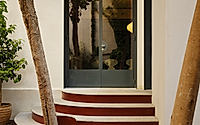
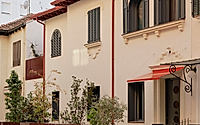
The most compelling part of the project was understanding when the house was built: 1934. The team researched other modernist villas from the same period in different parts of the world to better grasp the moment in which the house first took shape. They found the building in very poor condition. It had been abandoned for years, and the floors had been inserted halfway up the windows, so it became essential to treat the house as a blank starting point and rebuild the rooms almost from scratch.
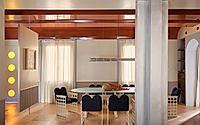
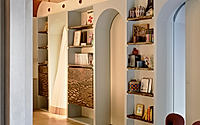
The house opens onto two courtyards, one facing a private street and the other a large inner court, which is an unusual condition in Madrid. That sense of openness and privacy guided the decision to place the living area in the lounge, where it could remain quiet on both sides. Ceilings mattered from the outset, so the team introduced vaults, a form widely used in that era, and finished them in high gloss to catch and reflect light.
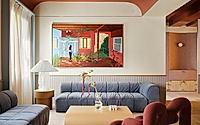
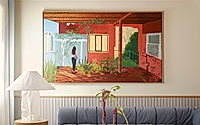
Furnishings play a precise role throughout the interior. The Arflex sofa was central to the living room because the brief called for something soft and deeply comfortable. More contemporary pieces enter the mix as well, including a lamp by Ingo Maurer and a work by Iván Franco that reads like a photograph at first glance but is in fact hand-drawn in pencil. That element of surprise mattered.
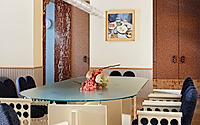
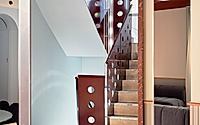
In the dining room, two architectural references shape the atmosphere. The vaulted ceiling with moldings draws from Robert Mallet-Stevens’ work at Villa Cavrois, while the mix of marbles, especially on the staircase and banister, recalls the entrances of Piero Portaluppi’s Italian villas from the 1930s, with their circles, oculi, and layered stone surfaces.
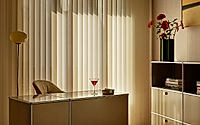
Plutarco designed the dining room furniture specifically for the project. The chairs, called Escote, take their name from their evident profile, but comfort was the main concern so that people could remain at the table long after dinner. The dining room is treated as a social room rather than a formal one. Its direct connection to the living room allows the house to shift easily between different ways of gathering.
A movable screen becomes part of that flexibility. By day, it reads as a tiled wall; at night, or whenever the mood changes, it turns to reveal a mirrored face. Behind it sits a work by Xevi Sola. The piece adds another layer to the room without fixing it into a single arrangement.
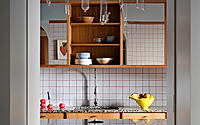
In the kitchen, the project leans into material contrast. Five main materials define the room: cherry wood, chosen for its reddish tone instead of the more familiar oak; pine stained dark blue; a terrazzo island made specifically for the house; a different terrazzo underfoot that recalls Milanese entry halls; and blue tiles set with red grout. Red appears in measured touches. The rest stays quieter, with pale blue tones that echo the sky and extend onto a glossy ceiling, drawing the exterior inward.
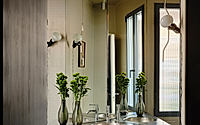
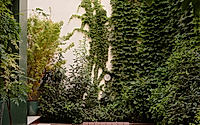
Planting was also treated as part of the living environment. The aim was to create a small climatic refuge during Madrid’s harsher seasons, with Virginia creeper set to cover the wall and turn red in autumn, alongside a mix of evergreen and deciduous species that shifts through the year.
In the living room, the key piece is the STV sofa, designed by the studio for Rabadán. The brief was direct: make a sofa for watching television. Its softness and flexible configuration allow the whole family to sit together comfortably for a film.
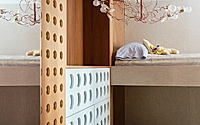
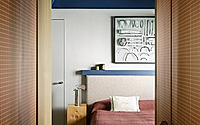
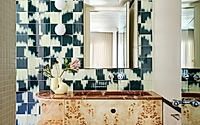
Upstairs, the house becomes more private. A small study leads to a dressing room inspired by a Japanese temple, with a conical ceiling and grid-patterned wood paneling. The main bedroom is intended to feel calm and enclosing, so the vaulted ceiling is painted midnight blue and fitted with integrated bulbs that resemble stars, along with a hand-painted constellation by Jesús Colmenero. Materials continue to shift from room to room: green-stained wood and circular glass blocks lead through a curved door to the bathroom, where curved enclosures divide the shower and toilet. A terrazzo floor ties the room together, while Chinese marble and an elm root vanity complete it.
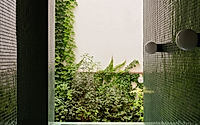
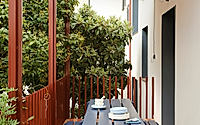
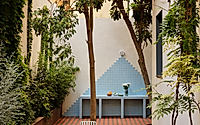
The garden follows the same logic of unexpected combinations. A striped tiled floor sits beside a green mosaic-tiled pool and a barbecue area finished in 10 x 10 blue tiles. Vegetation climbs the side wall and forms a green screen, helping the garden feel calmer and more protected. The pool is part leisure, part social setting, and the outdoor areas are planned for long tables, gatherings, and daily use.
The renovation itself was one of the project’s hardest tasks. Many floors were close to collapse, and the structure was in serious disrepair. Bringing the house through that process and making it habitable again became one of the most rewarding parts of the work.
Photography by Germán Saiz
Visit Plutarco