House M: Five Courtyards Within
House M is a residence in Beijing, China, designed by Atelier About Architecture for a multigenerational family. Completed in 2025, it reworks a walled, low-light site through a sequence of courtyards, terraces, and atriums that draw daylight deep inside. The project turns inherited memories—trees at the window, terrazzo underfoot, red brick in shadow—into the home’s spatial and material framework.
About House M: Five Courtyards Within
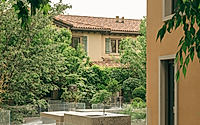
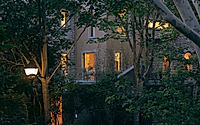
House M is a multi-story home in the eastern part of Beijing, set among shaded trees and dense vegetation. The setting carries a distinct atmosphere and texture.
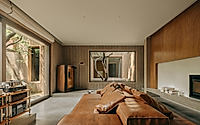
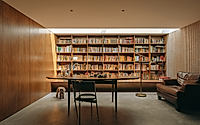
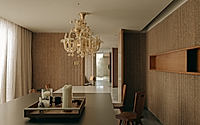
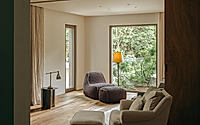
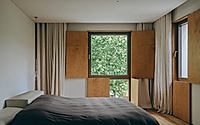
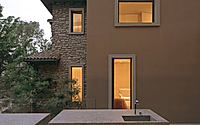
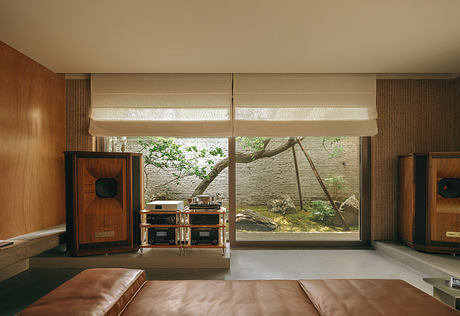
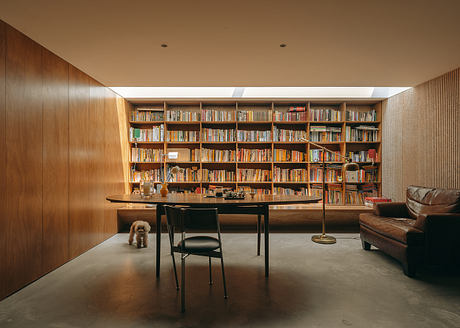
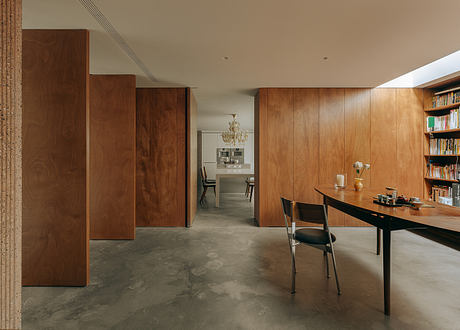
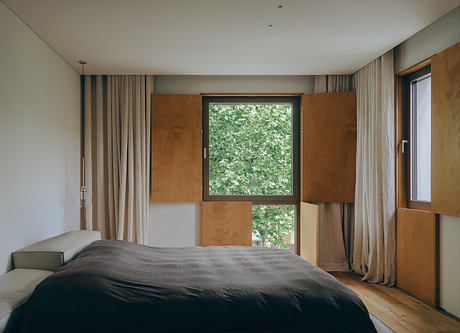
The project begins with the clients’ childhood memories of home and daily life: low-rise buildings, windows opening directly onto tree canopies, sunlight, tall bookshelves, dark terrazzo floors, and the flicker of tree shadows across red brick walls. Passed down through generations, these images become part of the family’s character and establish the emotional and nostalgic ground of the house, where old and new are closely interwoven.
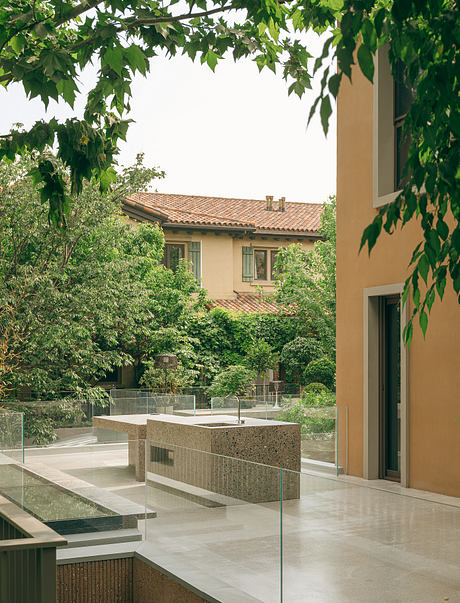
The existing site is enclosed by high walls, with a central courtyard wrapped by those same boundaries. That courtyard is the only source of light for the surrounding buildings. The rooms are long and narrow, with limited windows, leaving much of the interior in darkness.
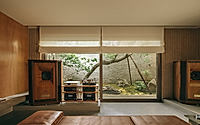
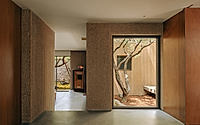
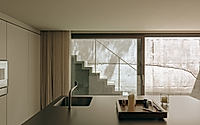
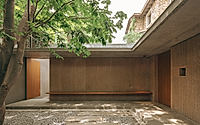
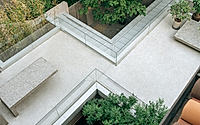
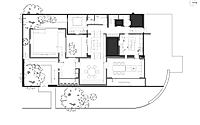
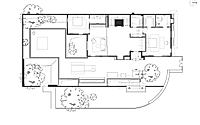
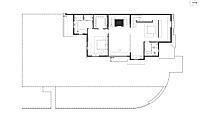
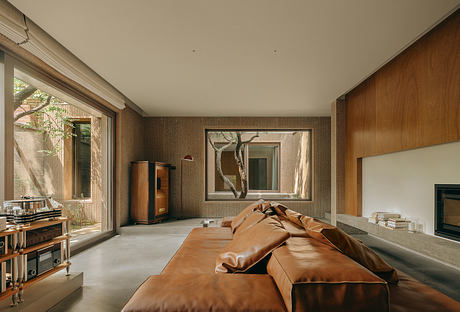
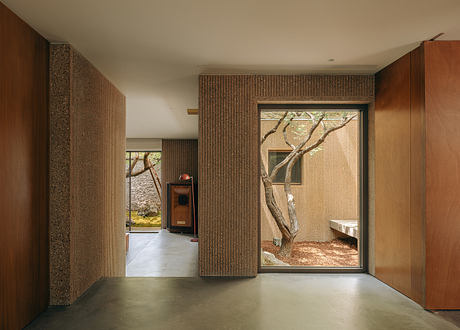
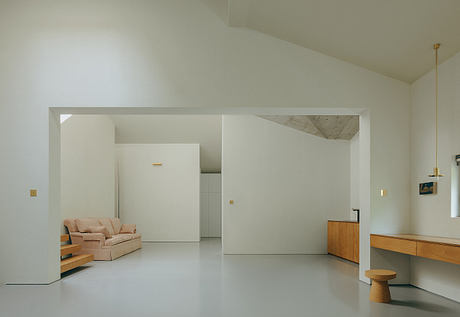
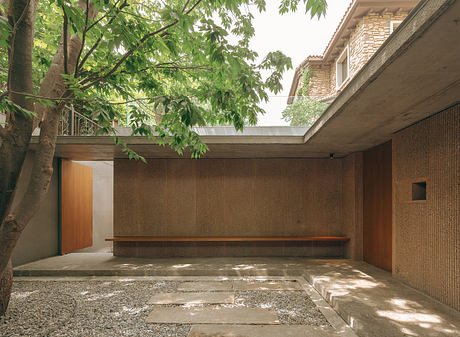
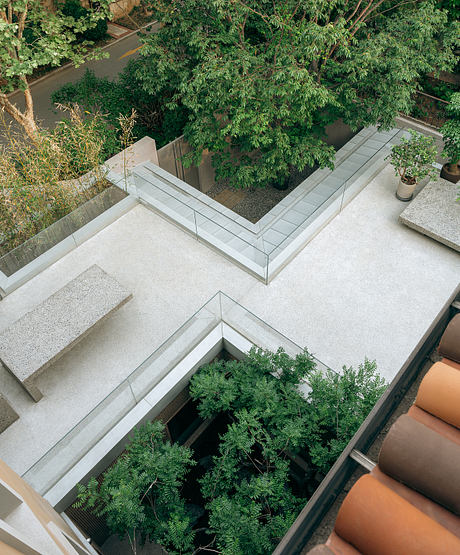
In response, the architects develop a new spatial system beneath the tall perimeter walls. Because vertical expansion is constrained, the project turns to horizontal layering, introducing five courtyards of different scales. Some are read at a distance, others are entered directly. From nearly every point in the house, one room looks toward another, forming visual links that echo the rhythms of a multigenerational household.
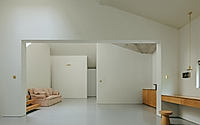
As family members move between rooms—sometimes together, sometimes apart—the arrangement supports both contact and separation. Zones are connected in multiple ways, with deliberate gaps left between them to allow partial views across the house. The scene shifts constantly, so that each vantage point reveals new information even without physical movement.
By adjusting spatial configurations, window orientations, and the way light is guided indoors, the residence captures changing daylight throughout the day. The front yard, side yard, terraces, rooftop, and atriums each correspond to different parts of domestic life, creating a varied register of light and shadow. The enclosing walls remain in place, yet the visual porosity between courtyards extends the perceived scale of the house. Darkness gives way to a gradation of shifting grays.
Plants help define and soften the sequence. Gardens, rooms, and transitional areas are layered under their cover, and the architecture remains open and fluid, producing a continuous, cyclical experience across the site.
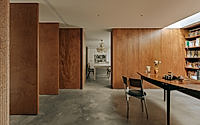
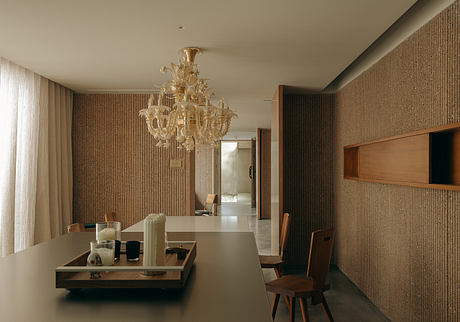
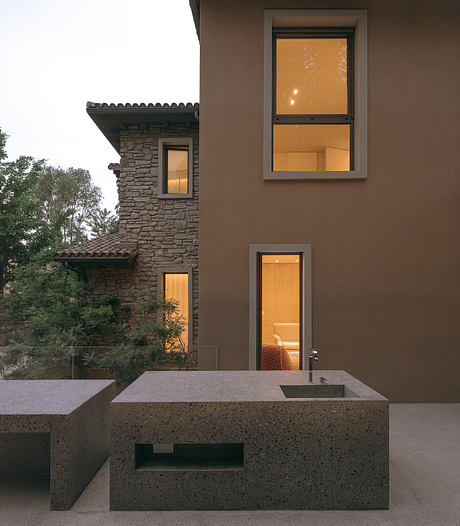
At the center of the project is the making of a physical setting for the body. Here, architecture is understood as experience, and material tension shapes the final tactile and sensory impression. Drawing on the natural aging of the original building materials, the team developed a custom finish for the residence: pigmented concrete with coarse aggregate, cast into vertically ridged trapezoidal forms and prefabricated as 900 x 2200 mm (35.4 x 86.6 in) dry-hung panels.
These panels create a sequential material experience across the interior and exterior. In this introspective environment—held by material and light—the atmosphere becomes calm and substantial. The project suggests a gradual form of acquaintance: first appearance, then character and habit, then the deeper layers of thought and memory.
Perception, in this view, becomes the measure of authenticity, joy, and meaning. It shapes the way materials, construction, and rooms are understood. In that sense, the complex process of making this house is also a reflection on personal emotion and memory.
Photography by Zhu Yumeng
Visit Atelier About Architecture