San Miguel de Allende House by Muir Architects
San Miguel de Allende is a house in San Miguel de Allende, Mexico, designed by Muir Architects in 2024. The low, stone-clad volume is organized around courts, terraces, and long openings that pull the landscape into daily life. Inside, concrete, glass, and pale finishes keep the rooms bright while the plan moves easily between enclosure and exposure.


About San Miguel de Allende
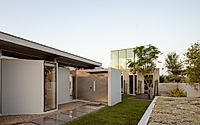
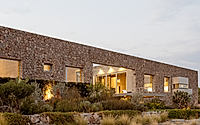
Low stone walls sit against a pale sky, and the house reads as a set of quiet horizontal lines before it reads as a single building. Planting, gravel, and open ground soften the approach, while a glassy upper volume catches the light and marks the plan from afar.
San Miguel de Allende is a house in San Miguel de Allende, Mexico, designed by Muir Architects. The composition relies on courts, terraces, and long views, giving daily life a steady rhythm between shelter and air. Concrete, glass, and stone set the tone, but the real subject is sequence: how one room turns into the next, and how each opening resets the outlook.
Courtyards Pull Light In
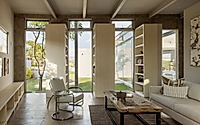
A central courtyard brings greenery close to the main rooms, and glazed walls keep that green in sight from several directions. The result is a house that stays tied to its site without shutting itself off from the landscape beyond.
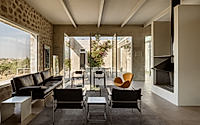
Large panes, narrow openings, and a few solid partitions do most of the work. They shape a path through the house that feels measured rather than formal, with daylight moving across floors, walls, and furnishings as the day shifts.
Stone Grounds The House
Stone appears on the exterior as a protective skin, and the material gives the long facade weight against the open setting. Its rougher texture also softens the transition from garden to building, so the edges feel settled rather than abrupt.
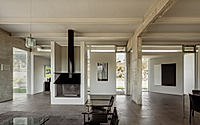
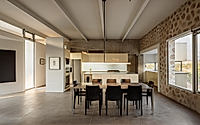
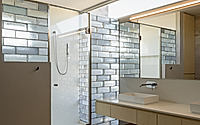
Inside, concrete surfaces and broad floor planes keep the interiors calm and continuous. The palette stays restrained, which lets furniture, artwork, and shadow carry more of the visual interest.
Rooms Open In Sequence
The main rooms unfold with clear separation but little visual clutter. A living area, dining zone, and kitchen sit in close relation, and each one borrows light and view from the next.
Tall openings and framed passages make the plan easy to read. Even the staircase and upper-level volume become part of that sequence, acting less like isolated elements and more like markers that guide movement through the house.
Light Carries The Finish
By late day, the interiors take on a warmer cast, and the hard surfaces begin to register as texture rather than mass. That shift matters here, because the house depends on light to loosen the geometry and bring the materials into balance.
The setting remains visible at every turn: cacti, low planting, and long views across the grounds. What stays with the viewer is the way the house holds itself to the site, using a simple arrangement of walls, openings, and courts to keep the exterior close.
Photography courtesy of Muir Architects
Visit Muir Architects