Villa Comporta by Sabrab Architecture
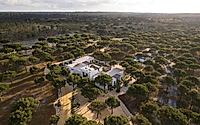
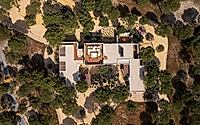
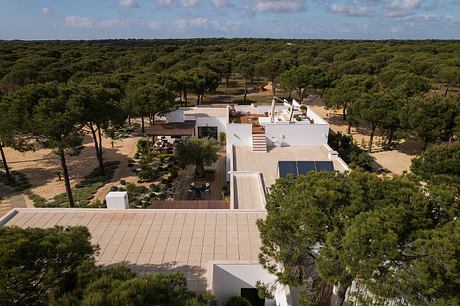
Set within the stunning landscape of Grândola, Portugal, Villa Comporta by Sabrab Architecture exemplifies contemporary design while harmonizing with its natural beauty. The L-shaped layout wraps around a tranquil central courtyard, carving out living spaces that open to the lush surrounds. Textured cork oaks, robust pines, and sandy plots guide the interiors, enhancing the sensory experience with fragrant herbs and dazzling light filtered through expertly placed brise-soleils.
Nestled In The Unique Landscape Of Comporta
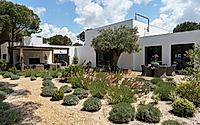
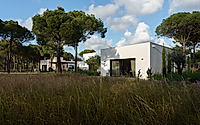
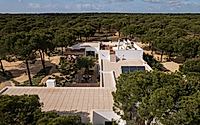
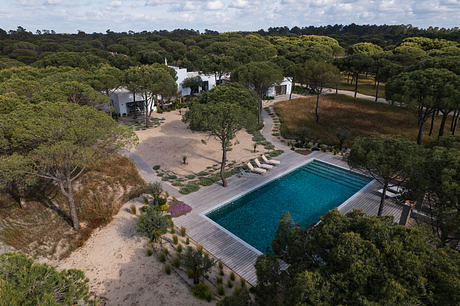
Nestled within the unique landscape of Comporta—where dense pine forests and scattered cork oaks mingle over sandy soils—this L-shaped residence by SabraB Architecture emerges as a contemporary element that simultaneously respects and engages in dialogue with the natural surroundings. The L-shaped plan follows the gentle contours of the site, carving out a central courtyard that, as a quiet refuge, opens onto a procession of maritime pines and centennial cork oaks. The vertical crowns of the pines stand in sharp relief against the crisp white façades, while the gnarled trunks of the cork oaks cast shifting patches of shadow across the day, giving the house its own choreography of light and penumbra.
A Contemporary Element That Respects And Engages The Natural Surroundings
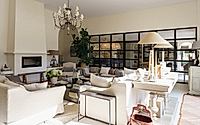
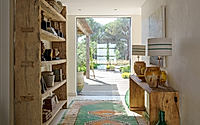
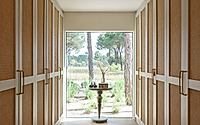
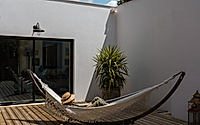
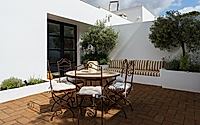
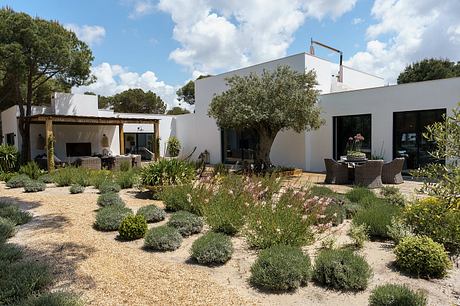
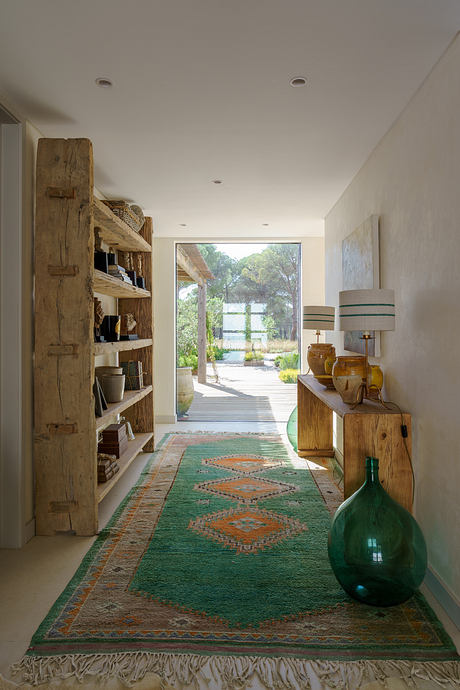
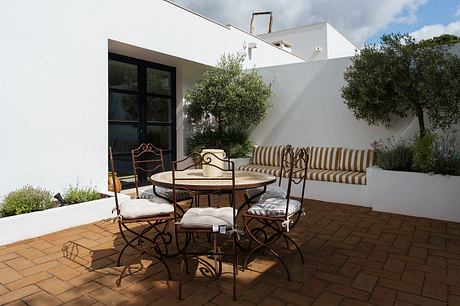
On arrival, the south-southeast–facing porch acts as a filter between inside and out. Here, the rustle of pine needles underfoot and the earthy scent of cork oak bark form a sensory prelude to the visual experience indoors. The L-shaped envelope shelters the main entrance from winds blowing off the nearby estuary, creating a warm welcome for the entry hall, whose rustic wooden-plank flooring subtly carries forward toward what will become the pool. Along the western façade, expansive retractable glass doors allow the living room to spill out onto the terrace during summer—transforming convivial gatherings into informal al fresco moments on a courtyard of fine sand, dotted with native shrubs and groundcovers adapted to the Mediterranean climate.
The Light-Toned Polished Concrete Floor
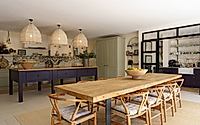
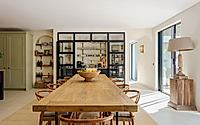
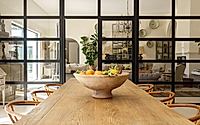
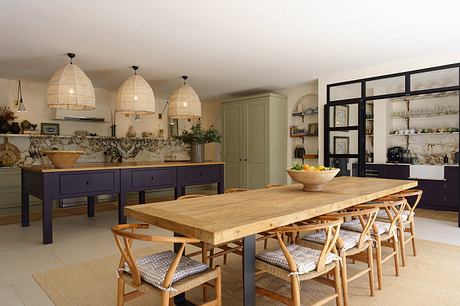
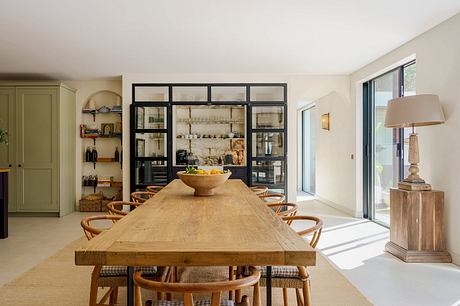
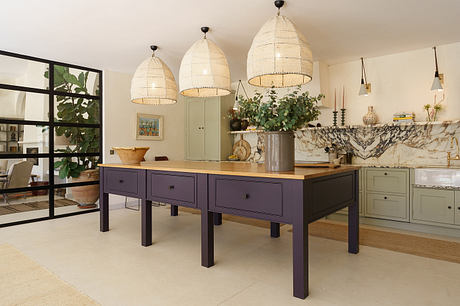
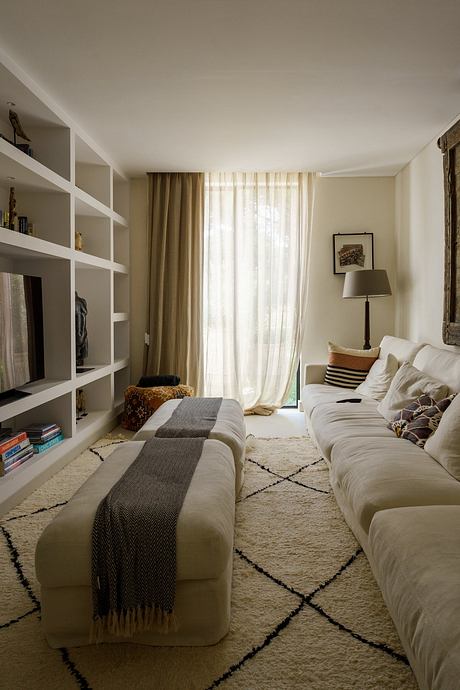
The central wing houses all the living spaces: kitchen, dining area, and living room flow together as one continuous volume, punctuated by a generous glazed opening onto the inner courtyard. The glow of the setting sun, filtered through vertical oiled-wood brise-soleils, casts delicate shadows across the light-toned polished-concrete floor. In turn, this courtyard—embraced by the perpendicular volumes of the L—is conceived as a microclimatic core: around a small arborous garden, Italian cypress and strawberry trees temper the midday heat, while stepping-stone paths of local limestone invite exploration—perhaps a hidden chaise longue tucked in a corner, a built-in white masonry bench, or a framed view of the silvered crowns of nearby cork oaks.
Creating A Dynamic Play Of Light Etched Against The White Walls
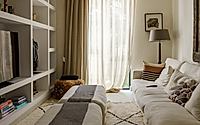
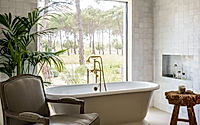
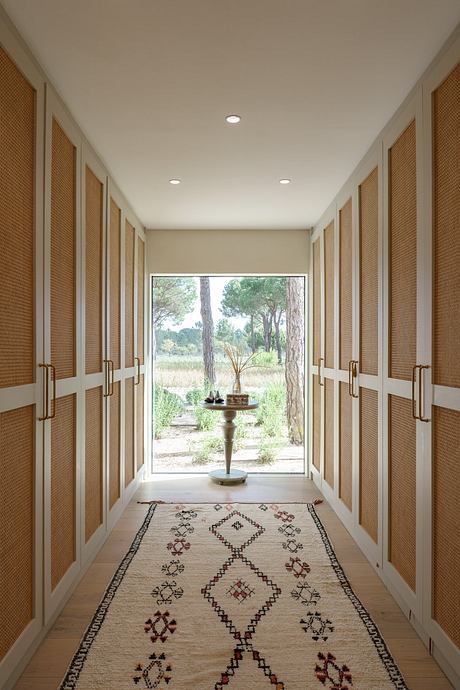
Facing east, the private wing unfolds in a sequence of three en-suite bedrooms, each with direct access to a balcony that greets the sunrise filtered through the pine trunks. Extended overhangs and treated-wood pergolas shield the windows, preventing excessive morning sun and creating a dynamic play of light etched against the white walls. Every room opens onto a narrow terrace where small pots of aromatic herbs—rosemary, thyme, lavender—forge a fragrant link between interior and semi-wild landscape, bringing the resinous scent of the pines and a whisper of Comporta’s cool nights indoors.
A Living Green Lens
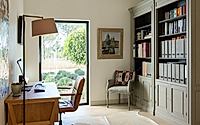
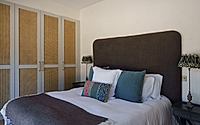
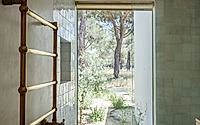
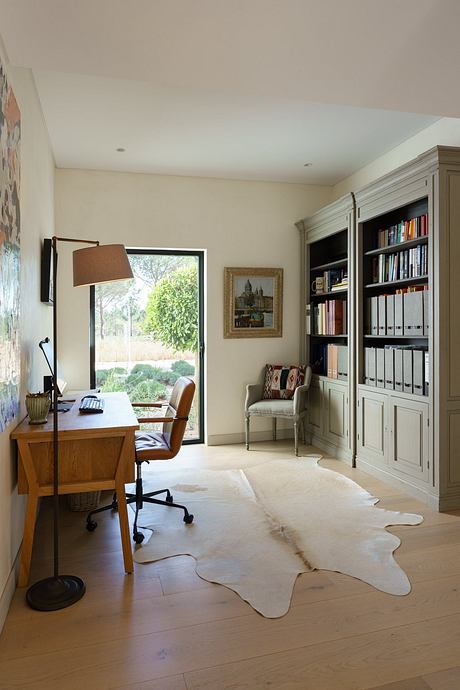
At the far end of the L, the master suite and adjoining office embody an altogether hushed atmosphere. Here, the nearest cork oak seems to extend its broad canopy over the building volume, casting a generous shade that envelopes the master bedroom in gentle penumbra during long summer afternoons. The office, with its generous opening to the pine forest, becomes an intimate lookout—where the vegetation appears to draw near through a living green lens, encouraging creative focus without isolating the occupant from nature’s pulse. Two rooftop terraces punctuate the flat roof—one for dawn meditation, offering diagonal glimpses through the canopy, and another for twilight meals, where the warm glow of sunset dances among resin-dusted pinecones.
A Discreet Vantage Point In Perpetual Flux As The Seasons Change
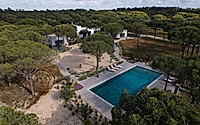
In the central courtyard, the longitudinally arranged pool becomes a mirror of the pines overhead, and on still days, even reflects the undulating silhouettes of the cork oaks. Wooden steps, built-in masonry benches, and ceramic sculptures—crafted by local artisans—dot the pool’s perimeter, creating a sequence of “stations”: from full sun at late afternoon to a shaded nook under a protective cork oak. The remaining patches of dune vegetation remain largely untouched between the stones, forming a wild tapestry that envelops the house—granting it the status of a discreet vantage point in perpetual flux as the seasons change.
Modernist Architecture With The “Wild Charm” Of Pine And Cork Oak Woodlands
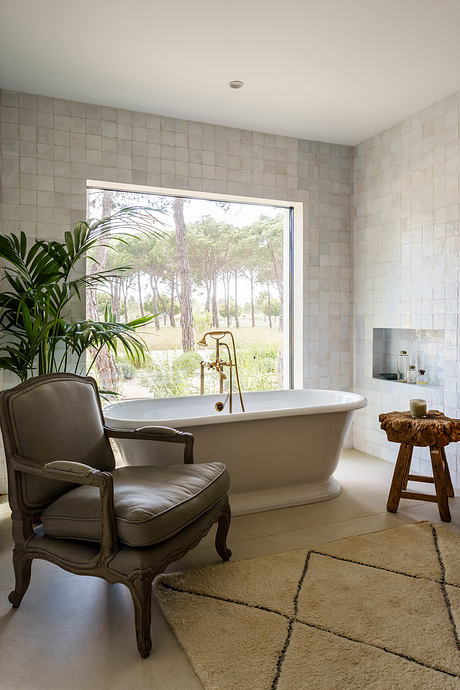
Altogether, this project stands as a dwelling that intertwines the formal sobriety of contemporary minimalism with a distinctly organic presence. The white L-shaped volume does not impose itself on the landscape; rather, it allows itself to be permeated by the textures of the pine forest and the robust silhouettes of cork oaks. Every opening, every brise-soleil, every change of plane is intended to heighten the sensory experience of living among breathing trees, walking on firm dunes, and feeling the soft Atlantic breeze. In this way, the Comporta residence celebrates the equilibrium between modernist architecture and the “wild charm” of pine and cork oak woodlands, inviting its inhabitants to become part of this living landscape.
Photography by Laura Deus photolab
Visit Sabrab Architecture