Swoosh House by Pawel Lis Architekci
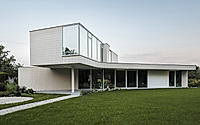
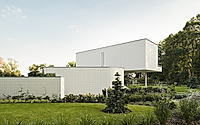
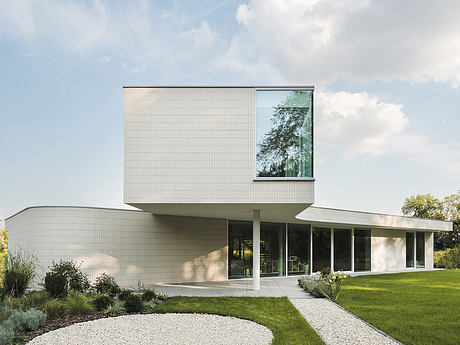
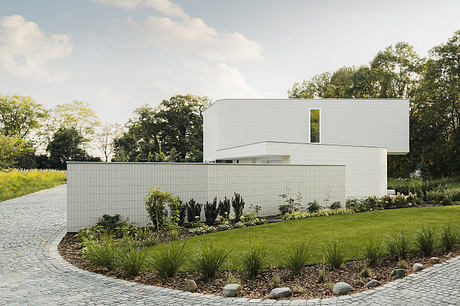
Nestled in Strzykuły, Poland, the Swoosh House is a slender pavilion designed by Pawel Lis Architekci. The 220-square-metre residence incorporates arched elements intended to frame views and maximise access to sunlight. Built on the axis of a long first floor, its top floor is set back diagonally.
About Swoosh House
The expectation of the investors was to create a small house that would fit well into an intimate plot and its architecture would be distinguished by moderation and uniqueness.
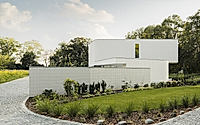
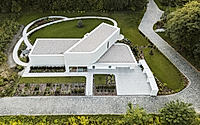
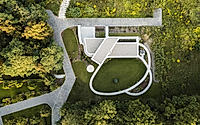
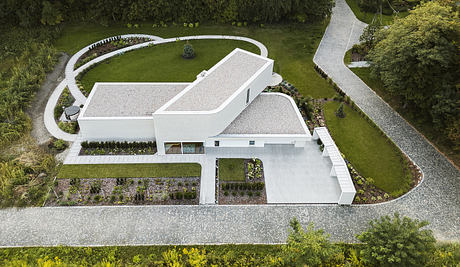
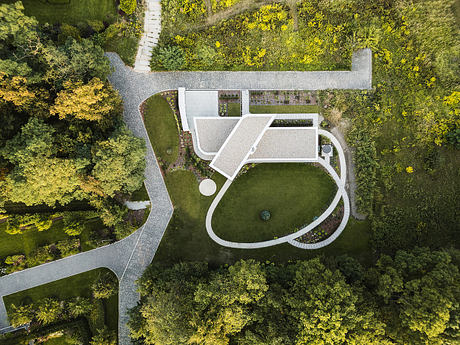
The idea for the original form of the house prompted the shape of a boomerang. The house was built in Strzykuły near Warsaw.
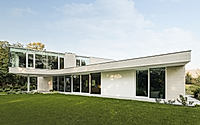
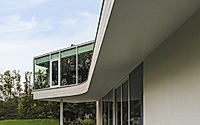
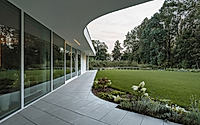
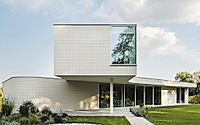
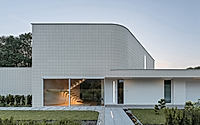
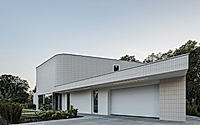
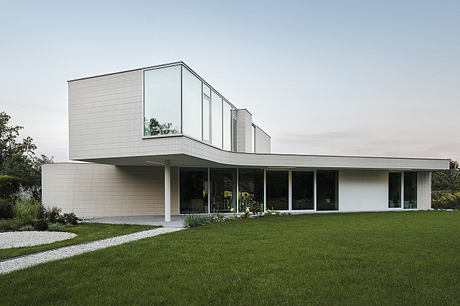
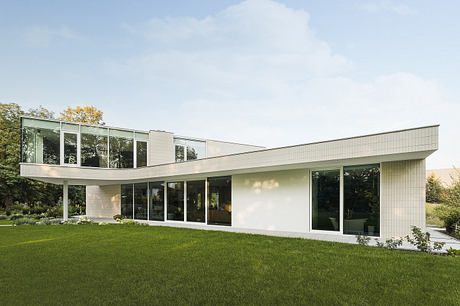
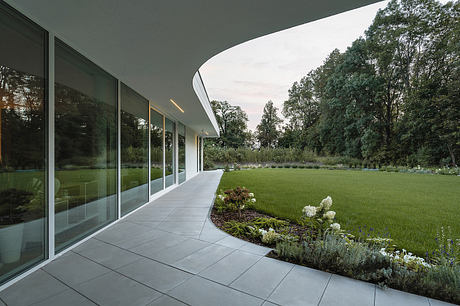
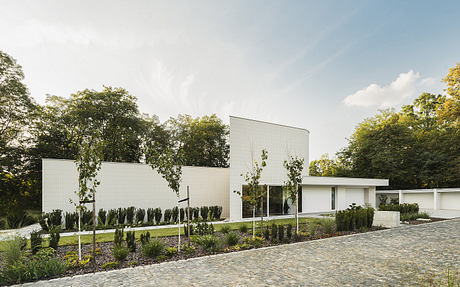
On the axis of the elongated first floor, the first floor was set diagonally. Its deviation from the line of the first floor was emphasized by an arched wall. The dynamic form of the house obtained in this way ensured its good positioning with respect to the world sides and gave it the characteristics of uniqueness.
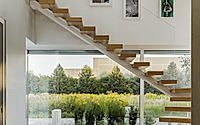
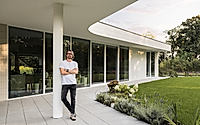
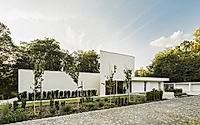
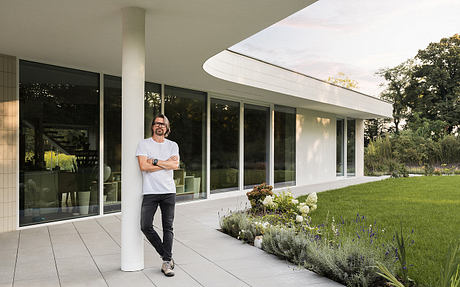
The existing access to the building forced the front to be positioned on the eastern side. The entrance to the house was highlighted by a large corner window. The openwork staircase leading to the first floor can be seen through it. The living area and bedroom on the first floor open to the west towards the tall greenery. The overhanging first floor with the study and children’s rooms curves toward the south. A corner window in the study also allows views to the west.
The principle of Sustainability was applied. The investor was convinced to optimize the size of the building. Maintaining the functional program of the house, its usable area was reduced from the assumed 300m2 to 220m2. The house is in the process of installing solar batteries and energy storage. A retention system has been prepared on the plot for recovering rainwater and watering the garden with it. Materials with a higher degree of insulation were used, warm installation of windows in 3-pane packages. Heavily glazed elevations were located on the south and west sides, providing maximum access to sunlight and natural warmth. The old-growth forest in the western part of the plot has been preserved.
This 220m2 house has the character of a modest pavilion architecture and its unique appearance is determined by the arched overhang of the floor. The building, thanks to its light and “soft” form, fits in well with its surroundings. Looking at it, the pavilion houses built in 1945-1966 in the Case Study Houses program come to mind.
Photography courtesy of Pawel Lis Architekci
Visit Pawel Lis Architekci