Tintorum: A 15th-Century Poorhouse Recast for Quiet Urban Living Today
Tintorum stands in Klausen, Italy, where Stefan Gamper Architecture reworks a 15th-century poorhouse into four pared-back apartments. The project keeps the building’s gravitas while drawing in daylight and calm, reading as both restoration and reinvention. Inside, old stone and timber hold company with glass, steel, and larch, creating a measured conversation between eras.
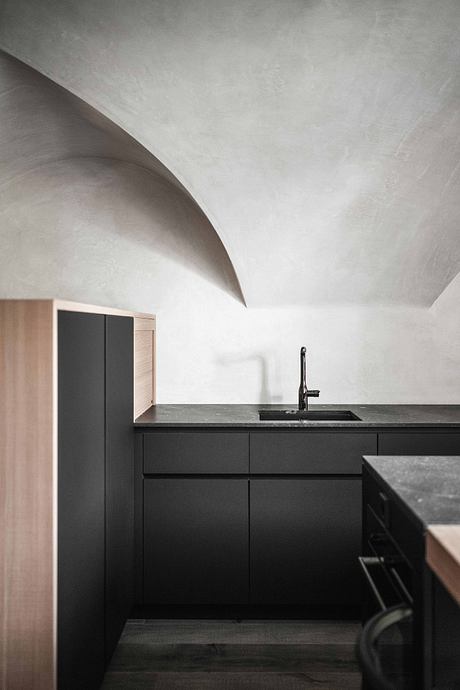
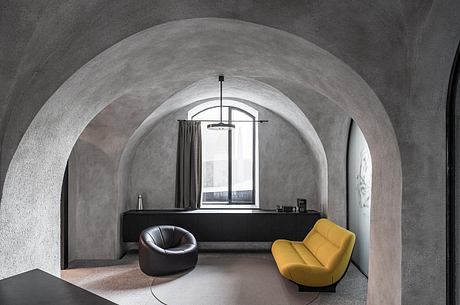
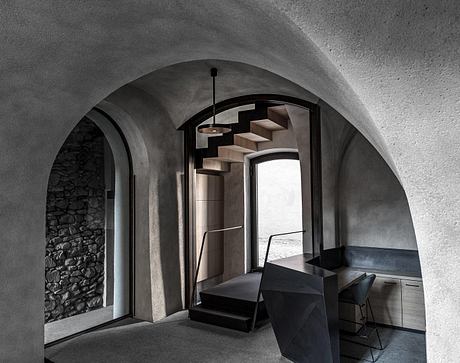
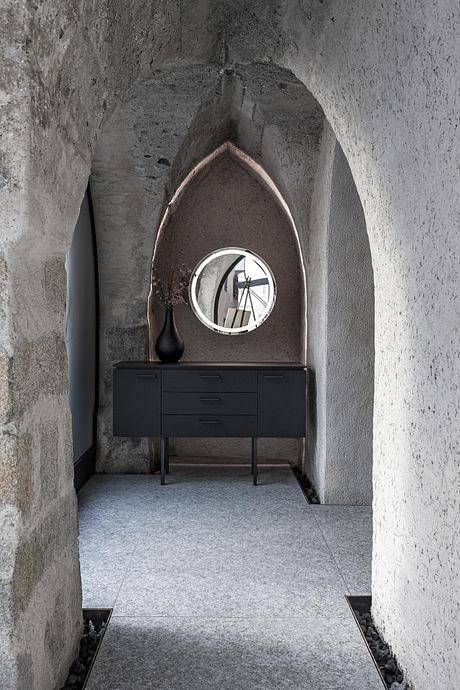
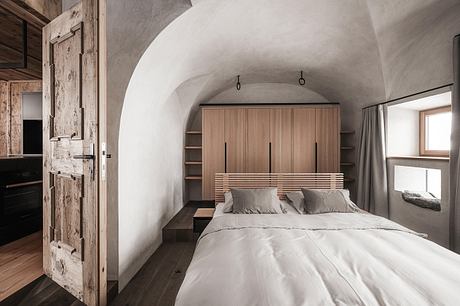
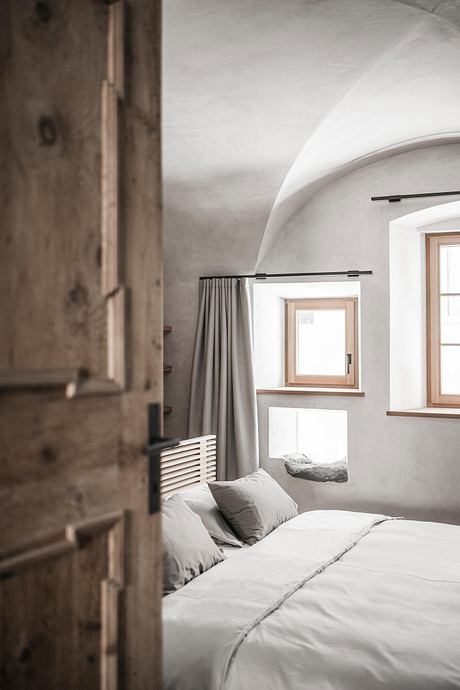
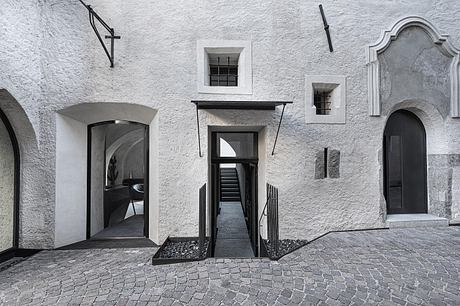
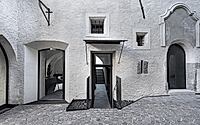
Morning finds the alley in shade. Light slips from roof cuts and loggias, catching worn stone and timber before falling across oiled floors with a quiet resolve.
Once a 15th-century poorhouse, now four apartments, this is adaptive reuse in Klausen by Stefan Gamper Architecture, defined by restraint and precise insertions. The throughline is clear: protect the historic shell while threading new life through it without weight or noise.
Strip Back to Essence
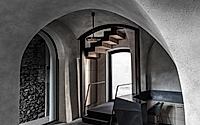
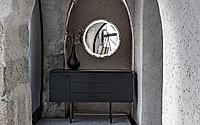
Centuries of additions are peeled away until vaulted ceilings, stone walls, and timber beams read as the building’s true armature. Later partitions and intrusive layers go, revealing a doorway only 1.70 m high—a frank reminder of past lives and different bodies. The core fabric stays legible, and with it the rhythm of thick walls, shallow niches, and time-polished thresholds.
Insert Light
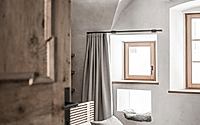
Daylight is the project’s constraint and its reward. Hemmed by narrow alleys and a compromised south face, the building learns new routes for light through roof openings, loggias, and slender light shafts that pull brightness deep into former blind rooms. Surfaces answer in muted tones, so the eye reads volume over decoration and the daily path of the sun becomes the quiet clock of each apartment.
Build Within, Not Onto
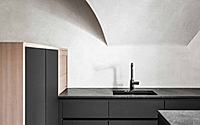
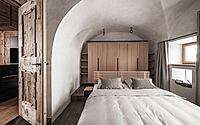
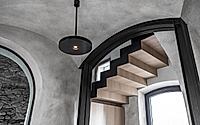
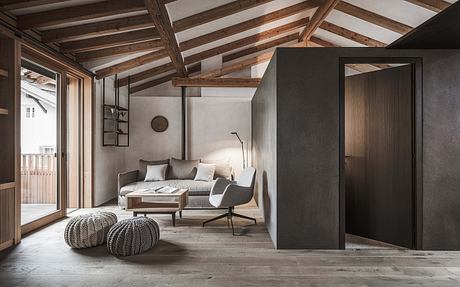
New work is conceived as gentle “implants,” held off the historic shell rather than grafted onto it. Glass partitions, steel frames, and built-in cabinetry thread between beams and against stone, precise but deferential (the old walls remain the authors of scale). Wood, glass, and steel operate as companions to the masonry, their crisp lines clarifying rather than masking the building’s rough grain.
Living, Loosened
Open floorplans create a clear dramaturgy: living kitchens at the heart, quieter bedrooms tucked behind thick walls, and small retreats where shafts of light settle. Furniture stays understated, often integrated or reversible, keeping the rooms adaptable as needs shift. Materials sit close to the region—brushed larch, oiled wood floors, and exposed concrete in bathrooms—so touch, not trim, carries the sense of finish.
Craft as Quiet Luxury
The project favors calm over show. Joints are clean, surfaces breathe, and old scars are left visible, giving depth to otherwise spare rooms. That measured dialogue—stone to glass, beam to steel—lets the house speak in two registers at once.
The alley stays narrow, but the rooms feel open. Light drops into thickness, turning a once-abandoned structure into a place tuned to daily life and time-worn matter.
Photography by Helmuth Rier
Visit Stefan Gamper Architecture