Translators’ House by Jacobschang Architecture
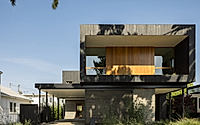
Translators’ House stands in Culver City, CA, United States, a family home by Jacobschang Architecture that threads scholarship, culture, and daily life. The house centers on an L-shaped poured-concrete spine and a chain of gardens, shaping movement and framing moments of quiet in a suburban lot. It reads as measured and calm, with a yakisugi rainscreen and a plan tuned to light, air, and routine.


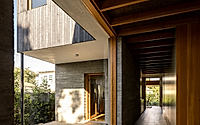
A broad concrete wall meets filtered daylight at the threshold, cool to the touch and steady in tone. Beyond it, timber spans and glazed openings pull the eye toward a courtyard that gathers the day.
This is a family house in Culver City by Jacobschang Architecture, organized around an L-shaped poured-concrete wall that directs circulation and daily routines. The plan links rooms and gardens in a clear sequence, making passage feel deliberate and humane. A rainscreen of deeply charred cedar wraps the exterior, while planted roofs and a solar array handle climate with restraint.
Trace the Spine
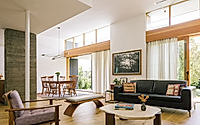
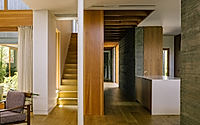
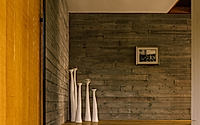
The concrete wall starts at the front facade and runs deep into the house. It forms a hallway and gallery where exposed concrete and timber beams align movement with view, tying communal rooms together in one legible stroke. Surfaces read honest and durable, so the route from door to garden stays clear even when the house is busy.
Rooms and Courtyards
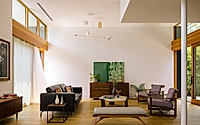
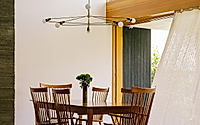
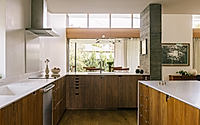
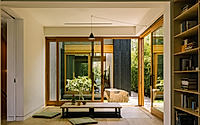
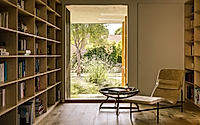
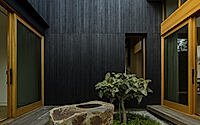
A library fills the front room, bracketed by a garden to the street and a smaller inner court. In the floor, a motorized horigotatsu rises for traditional dining and tea, then disappears to return the room to study and conversation. Farther along, living, dining, and kitchen open directly to the courtyard and back garden, letting daily meals slip outdoors without ceremony.
Light Along the South
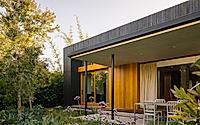
On the long south side, gardens stagger with rooms to shape privacy and view. Shifting angles of shadow play across glazed openings, sometimes screening sightlines, sometimes threading long diagonal views through the property. The result is measured transparency—enough connection for family life, enough edit for rest.
Upper Level Hub
Four bedrooms sit upstairs, joined by a shared landing for play, leisure, and the steady churn of housework. This small commons keeps the family close without forcing it, and shortens the loop between rest, chores, and downtime. Doors close when needed, yet the landing remains a forgiving buffer.
Work Below Grade
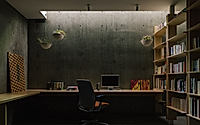
Research and writing move downstairs to a basement office set apart from household activity. A light scoop draws daylight down, cutting glare and giving the room a stable tone for long stretches of focus (the quiet feels earned). With this, the plan holds clear zones for study, gathering, and retreat.
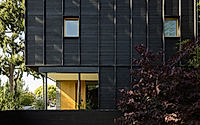
Outdoors, the yakisugi rainscreen holds a deep char that pairs with planted lower roofs and a 12kW solar array above. Xeriscape plantings thrive on pumped and filtered grey-water and filtered stormwater, cutting demand without losing rhythm or color. By dusk, the concrete reads warm, the gardens cool the air, and circulation lines learnable as a favorite path.
Photography courtesy of Jacobschang Architecture
Visit Jacobschang Architecture