Where the Jerusalem Hills Meet Contemporary Living
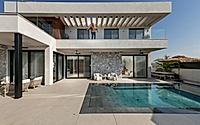
Where the Jerusalem Hills Meet Contemporary Living sits in a moshav overlooking Jerusalem, Israel, shaped by interior designer Liad Yosef for a couple and their three children. The multi-level house translates years of shared life in a modest unit into a grounded, generous home, using local stone and tailored joinery to hold daily rituals and moments of quiet reflection within a clear, contemporary frame.


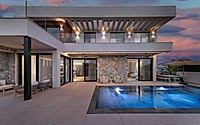
Morning light catches the stone and travertine as it moves across the levels of the house, sliding over concealed doors and deep window reveals. From the moshav, the building reads as calm and composed, but inside, volumes open and contract to match the rhythm of a family that lives very much in the present.
This is a private house in a rural community near the Jerusalem Hills, conceived by interior designer Liad Yosef for a couple and their three children. The project leans on natural materials, custom furniture, and built-in storage to create a sequence of rooms that feel intimate yet generous. Every move reinforces one idea: interior life is shaped through material choices and the way cabinetry, stone, and textiles hold daily use.
Organizing Life In Blocks
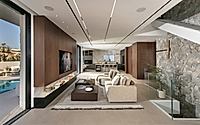
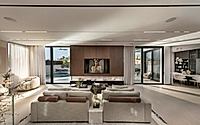
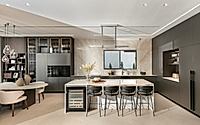
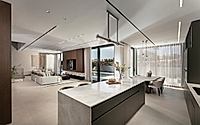
The house rests on a 700-square-meter plot, with 400 square meters of living area arranged over three levels. Rather than one big hall, the public floor unfolds as clear blocks that echo places of gathering and contemplation, with each zone legible yet connected. Storage volumes line one side, drawing a quiet boundary, while the opposite side holds dining and library elements that feel almost ceremonial. This organization turns everyday movement between kitchen, table, and living room into a calm, repeatable route.
Kitchen As Ritual Ground
In the kitchen, three-meter-high cabinetry climbs the wall, turning storage into vertical architecture. Behind those planes, advanced technologies and carefully divided appliances support Jewish traditions, with full separation between meat and dairy held as a guiding rule. Tall storage defines the right side of the main level, so cooking, serving, and clearing all remain anchored along a single, clear edge. On the other side, dining storage transforms into a sacred library, balancing right and left with a quiet symbolic charge.
Layered Living Rooms
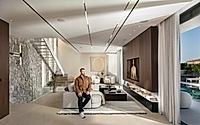
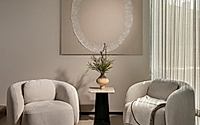
The living areas resist the temptation to go oversized and anonymous. Custom furniture by OKNIN gives each zone a specific role, starting with a dominant sofa that acts as a soft wall for the main seating area. Low coffee tables sit like islands between seats, encouraging smaller circles and more direct conversation rather than one diffuse lounge. A bespoke rug, five by three and a half meters, stretches beyond the sofa line to frame the room and bring a measured sense of luxury underfoot.
Storage As Architecture
Throughout the house, walls double as concealed storage systems, so visual calm and everyday practicality stay aligned. Flush doors and natural textures disguise generous cabinets, allowing objects of daily life to disappear without breaking the material continuity. In the dining area, the same cabinetry that holds dishes and glasses shifts into wine storage and vitrines for hosting, so entertaining folds into the permanent fabric of the house. Nothing feels secondary; the built-in work does the quiet labor of order.
A Retreat Above
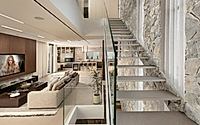
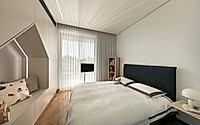
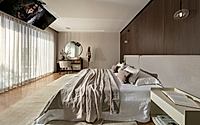
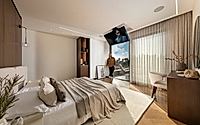
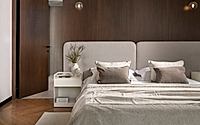
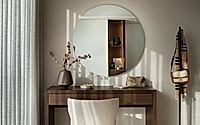
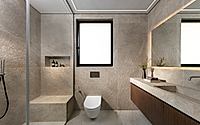
Upstairs, the parents’ suite reads as a small world of its own. A minibar, a transparent walk-in closet, and a floating travertine bathroom create a sequence that feels both open and composed. Stone walls meet hovering stair elements, and aluminum-like finishes sit against raw natural stone, so each junction carries a measured contrast. Soft textiles, upholstered beds, and layered curtains temper that material tension and bring warmth around the more sensual parts of daily routine.
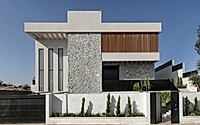
From the moshav road, the house ties back to the Jerusalem Hills through its stone and measured massing. Inside, sunlight, storage, and custom furniture work together to keep family life grounded yet flexible. The project returns, again and again, to one simple relationship: material honesty holding a present-tense, joyful way of living.
Photography by Elad Gonen
Visit Liad Yosef