Casa More by Workshop: Diseño y Construcción
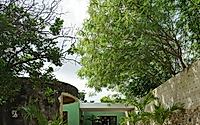
Casa More sits in Mérida, Mexico, where Workshop: Diseño y Construcción reworks a midcentury Art Decó house into a layered domestic sequence. The house retains its 1940s character at the street and unfolds toward a new terrace and pool, moving from restored interiors to tropical gardens. Each zone reads as a chapter in the same story, shaped by climate, memory, and the easy pace of Yucatán life.


Light filters across old mosaic floors before reaching the garden. From the historic street front, the house stretches back toward a courtyard, pool, and dense tropical planting.
Casa More is a house in the historic center of Mérida, Mexico, reimagined by Workshop: Diseño y Construcción as a sequence of restored rooms and new outdoor rooms. The project leans on the existing 1940s Art Decó shell and later additions, tying them together through clear alignments, shared materials, and a central patio. Every move centers movement through crujías, from cool interiors to shaded terraces and the water held in an old aljibe.
From Street To Threshold
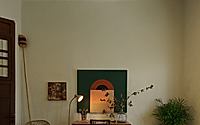
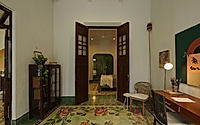
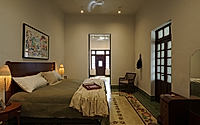
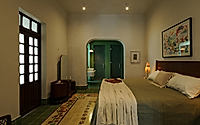
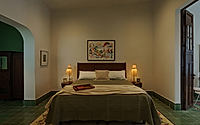
At the front, the first two crujías hold the oldest parts of the house and keep their original character. Mosaic pasta tile carpets and cedar doors trace the 1940s plan, guiding visitors from the entry into the more private core. These volumes now organize a small suite of rooms, with a recibidor leading toward the kitchen, a study tucked along the enfilade, and the principal bedroom anchoring the sequence facing inward.
Interior Rooms In Series
Each early room retains its distinct floor pattern, especially the xocbichuy floral mosaics that reference cross‑stitch embroidery and mark the domestic heart. Movement becomes legible underfoot, as changes in tile motifs signal a shift from circulation to cooking, working, or resting. Historic carpentry frames openings between these rooms, so the eye reads a continuous axis even as the program changes from social front to quieter back.
Dining At The Garden Edge
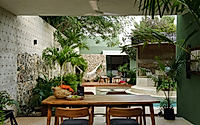
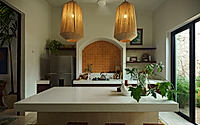
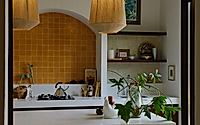
The third crujía, a 1960s addition, now transforms into the primary service band and a bridge to the outdoors. Here, the structure supports the new exterior dining room, which sits at the center of the lot with gardens on both flanks. One side connects directly to the kitchen through a large window, tightening the loop between cooking and eating, while the other side opens to the central patio and pool. This covered dining platform becomes the hinge of daily life, catching breezes and framing views of tropical planting in every direction.
Pool, Aljibe, And Courtyard
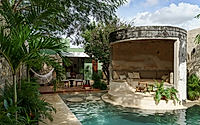
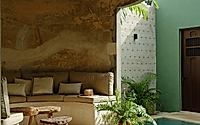
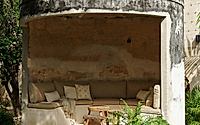
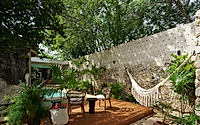
At mid‑lot, a new chukum‑lined pool draws the plan outward and down toward the water. The former aljibe used for rainwater collection now holds an outdoor living area that seems to float over the pool surface. Edges blur between garden, water, and masonry, so circulation routes thread along narrow paths and platforms around the basin. People move from hammock under trees to pool steps to the recessed seating, always within sight of stone, foliage, and sky.
Reworking The Rear Volume
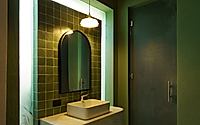
At the back of the lot, a construction from the 1980s is reshaped to belong to the earlier fabric. Its volumetry changes with new overhangs and a stone wall that folds to create a private patio for the bathroom. Materials echo those of the first crujías, so the route from front door to rear rooms reads as one continuous narrative rather than discrete eras. Repetition of familiar surfaces ties the older and newer bands while letting each period maintain its proportion and role.
From front threshold to last patio, the house now reads as a long walk through Mérida’s layers. Interiors stay cool for midday rest, while terraces, hammocks, and the pool invite life outdoors in the softer hours. The plan quietly syncs architecture with the warm Yucatecan climate, turning a deep lot into a measured progression of rooms, gardens, and water.
Photography by Tamara Uribe
Visit Workshop: Diseño y Construcción