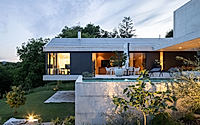
House Sonneggstrasse by Beck Oser Architects
House Sonneggstrasse steps out over the green valley in Seewen, Switzerland, where Beck Oser Architects arrange two pitched-roof volumes along a steep hillside. The concrete house unfolds around a broad terrace with pool, drawing daily life toward the view while quieter rooms settle into the slope below. Simple materials, calm furnishings, and crisp openings keep the focus on light and landscape.
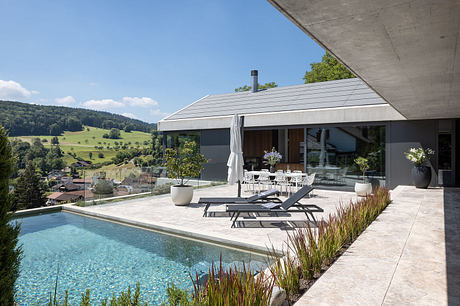
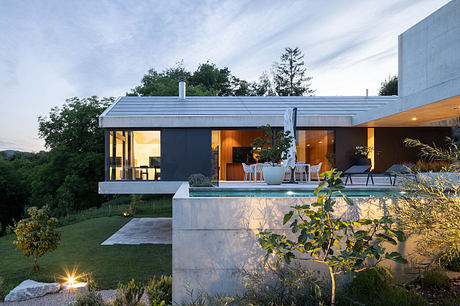
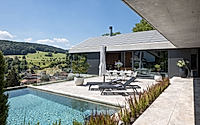
Morning light slides across the pale terrace tiles and into the water of the pool. Beyond the edge, past the glass balustrade, the hills roll away toward the village below.
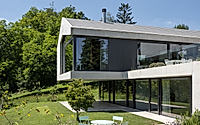
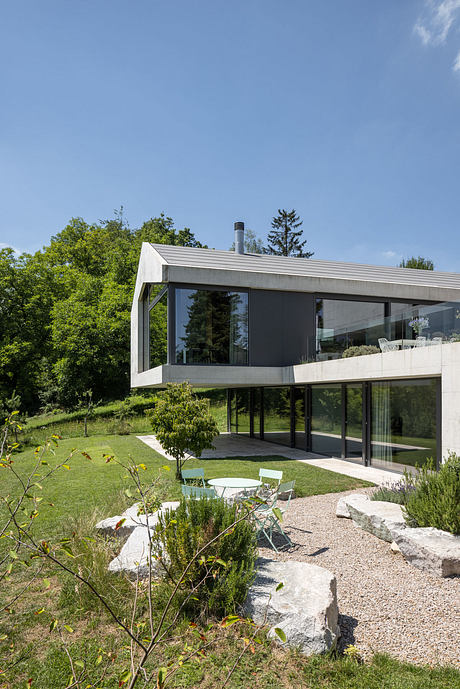
House Sonneggstrasse is a concrete house in Seewen, Switzerland, set on a steep slope and designed by Beck Oser Architects around a clear hierarchy of living and sleeping levels. Two staggered pitched-roof volumes rest on a terraced base, their concrete shells cut back to open long views across the valley. The project focuses on a restrained material palette, using exposed concrete, glass, and warm wood to tie exterior and interior rooms into one continuous experience.
Carving Into The Slope
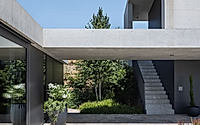
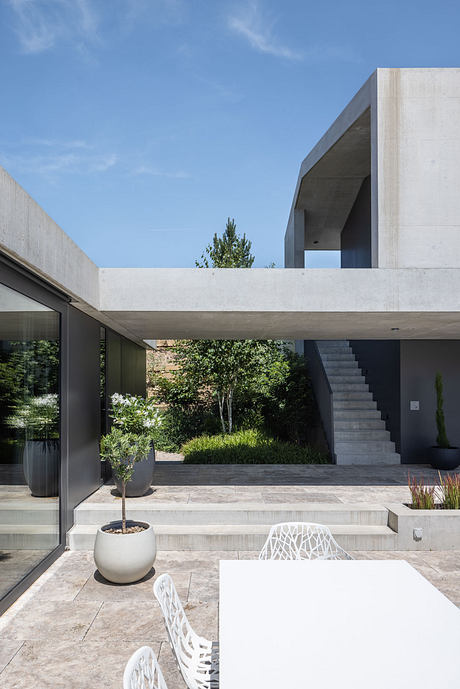
Approach begins at the street above, where the garage and canopy read as a thick concrete band along the contour. A stair carved directly into this volume leads down to the covered entrance, tightening the sequence before it releases into the open living level. The main building stands perpendicular to the hillside and cantilevers over the parallel bedroom base, so the terrace above the lower level becomes a flat plane for outdoor life with pool and seating.
Concrete And Light
Structurally generous openings cut through the concrete walls and roof, framing countryside views while keeping the volumes legible as solid forms. A canopy stretches between house and garage to shelter the outdoor dining table, its crisp edge echoing the cantilever above the garden lawn. Around the pool, thin metal-framed glazing slides back, turning the terrace into an extension of the interior floor and letting reflected light wash onto the ceilings.
Organizing Daily Rooms
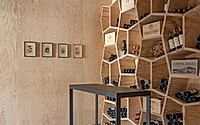
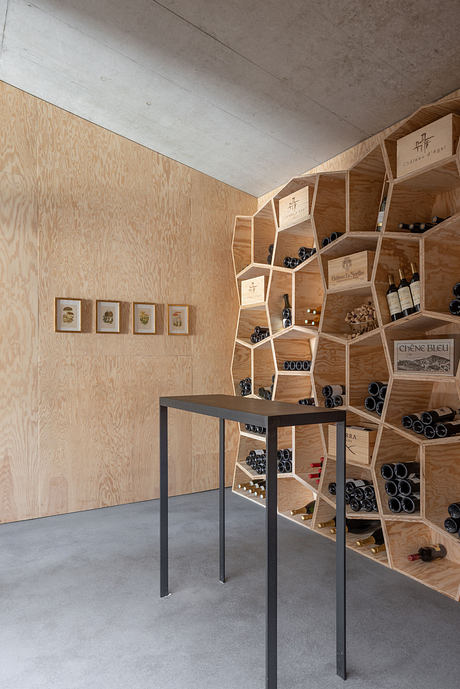
On the main floor, living, dining, kitchen, and office align toward the terrace so daily routines stay linked to the view. Behind the kitchen, a single-flight stair runs down to the garden level, connecting the multifunctional entry with built-in wardrobes to bedrooms, bathroom, dressing room, and shower. Cellar rooms sit deeper into the hillside, with the wine cellar gaining its own distinct atmosphere through honeycomb shelving and warm timber linings.
Minimal Interiors With Warm Accents
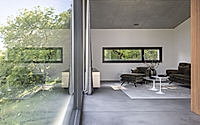
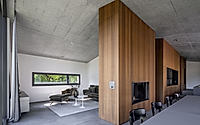
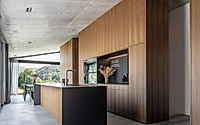
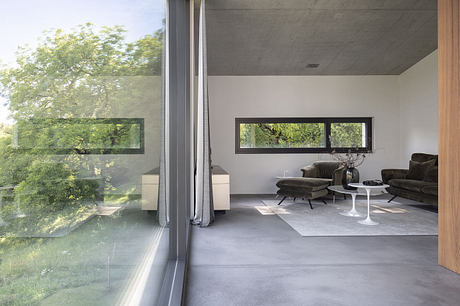
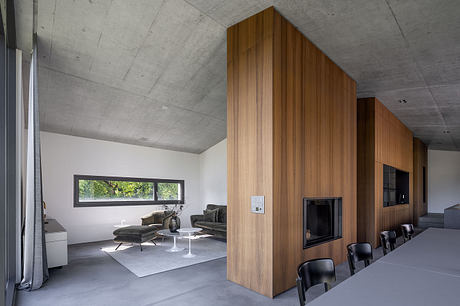
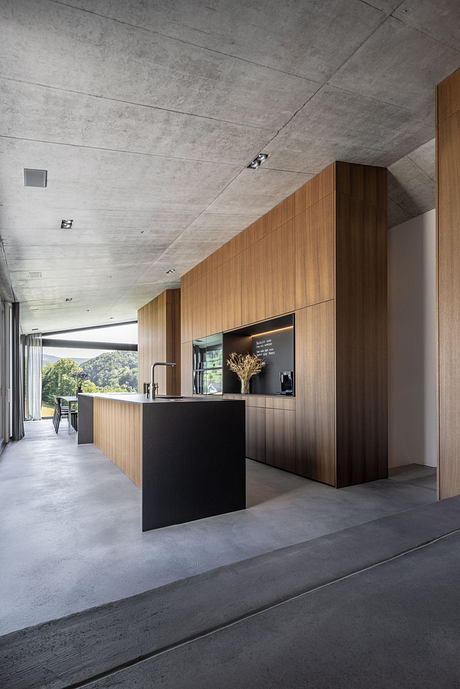
Inside, a pared-back palette governs every room. Exposed concrete floors and ceilings form a continuous gray field, while smooth plaster walls keep surfaces quiet and reflective. Three floor-to-ceiling veneered wood units on the open-plan level act as wardrobe, kitchen core, and fireplace wall, their vertical grain bringing warmth and rhythm to the long volume. Furnishings stay low and simple, from dark upholstered seating on pale rugs to slender white tables and dining chairs, so material contrasts register more strongly than decorative detail.
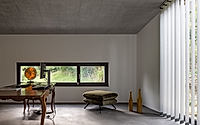
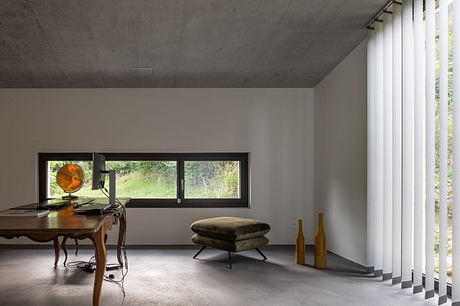
In the office, a classic wooden desk and minimal chair sit against full-height blinds and a narrow horizontal window onto planted ground. Downstairs, the sculpted wine racks double as display and storage, giving depth to the otherwise compact room. Across the house, this balance of concrete, wood, and restrained furniture keeps attention on light changes through the day.
By evening, the cantilevered upper level glows above the garden while the pool mirrors the sky. Quiet surfaces pick up soft reflections from outside, extending the landscape into every room. The house holds steady on its hillside terrace, defined as much by materials and furnishings as by its precise concrete form.
Photography by Börje Müller
Visit Beck Oser Architects