House J: Tiered Courtyards Shape a Home for Distant Generations
House J sits in the western mountains of Beijing, China, where Atelier About Architecture reshapes a long-familiar house into a layered retreat for a scattered family. The freestanding house reworks its original shell into a series of gardens, halls, and rooms that hold changing generations together while keeping everyday life quietly independent. Light, topography, and an enduring courtyard structure the project’s new rhythm of return.


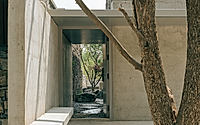
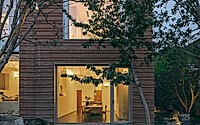
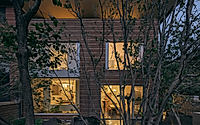
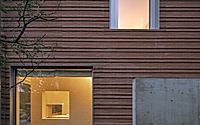
Concrete steps rise through the garden as mountain air cools the slope and mature trees cast loose shadows across weathered red brick. Sunlight catches the edge of a newly cut void, slips past the entrance, and lands softly in a living room held above ground like a floating box.
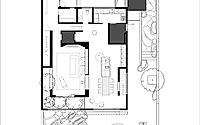
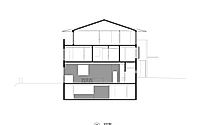
This reworked house in western Beijing, China, is a family residence by Atelier About Architecture, set between Fragrant Hills Park and the distant outline of Yuquan Mountain. The project takes a once-dark, inward hall and turns it into a sequence of garden-linked rooms where circulation, light, and level changes guide daily life. Plan, section, and planting all work together so that returning family members move through overlapping courtyards rather than a single, dominant foyer.
The original house sat heavy on the north edge of the garden, its oversized central hall compressing bedrooms and living rooms on the upper floors. An enclosed balcony turned sunroom blocked daylight, and excessive building depth left many rooms stranded in shadow. As the owner’s children grew up and moved abroad, the old internal hierarchy no longer fit a family that now returns in waves, wanting shared time without losing privacy.
Reworking Volume And Light
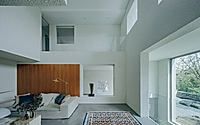
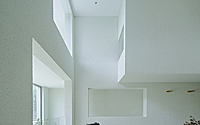
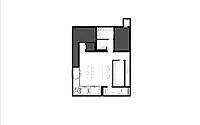
The first decisive move cuts away: the protruding balcony and sunroom are removed, and the existing structure is resized, with some parts expanded and others pared back. Floor heights reset across the house, bringing a more even sense of scale and allowing daylight to penetrate deeper into the plan. Skylights now pour light into a double-height entrance hall, which no longer dominates but acts as a luminous hinge between garden, circulation, and living areas. From this hall, movement drifts through a transitional zone toward the new heart of the home.
Floating Living Room And Indoor Garden
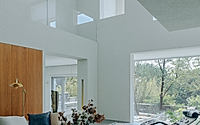
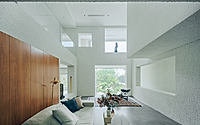
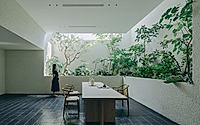
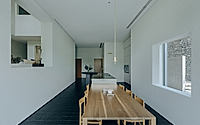
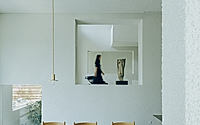
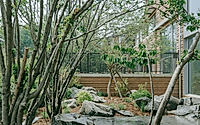
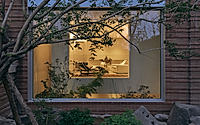
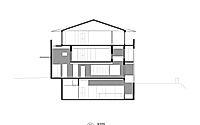
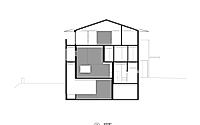
At the core, the living room becomes a cantilevered box that hovers within the house while looking toward a slightly offset dining area and sunken garden. Raised concrete beams free the volume below of columns, creating an indoor garden beneath the floating room that remains visually and physically open. Sunlight enters through the upper voids, drops between levels, and lands on soil, stone, and leaves before reflecting back upward. As plantings grow over time, tree canopies are expected to surround the suspended living room, tying the interior to the older courtyard vegetation outside.
Circulation Through Overlapping Gardens
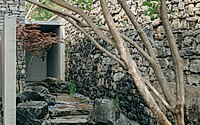
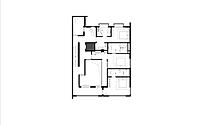
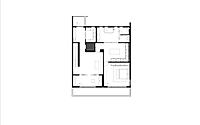
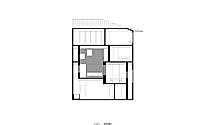
Subtle level changes across the site—up to 1.5 meters from north to south and a gentle slope along the east garden—become tools for composing varied routes. The east garden, guided by stones, turns into an independent entrance so visitors arrive through a planted court directly into the overlapping interior levels. On the second floor, a double-height central atrium acts as a passage, with a corridor wrapping around the floating living room and connecting three bedrooms. Each bedroom is reached by a slightly different path, and along these walks, oblique views cut through interior and exterior, revealing what the architects describe as a garden within a garden spread over two levels.
Rooms For Cooking, Reading, Returning
Daily routines key into this layered plan. An open kitchen faces both the living room and the indoor-outdoor garden, fitting owners who are confident cooks and generous hosts. Food preparation and quiet reading sit apart in the layout, yet communication moves through shared sightlines and shifting light rather than constant conversation. The dining area aligns in arrangement and material with the adjacent garden, so meals extend outward while long-planted trees and flowers stay rooted where they first were placed. Around these enduring plantings, new corners for retreat, gathering, and passage multiply without erasing the memory of the older house.
In the end, the house becomes a multidimensional garden sequence where sunlight tracks paths of movement indoors, outdoors, and in between. Every turn—down a stair, along a corridor, beneath the floating room—lands in a pocket of greenery or a quiet, enclosed volume. Rather than directing attention outward to the road, the reworked plan folds distant mountains, old trees, and new voids into a set of routes that lead residents back to their own inner landscapes.
Photography by Zhu Yumeng
Visit Atelier About Architecture