Planted Pavilion: A Low-Slung Retreat Woven Into Constantia Hills
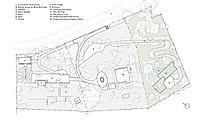
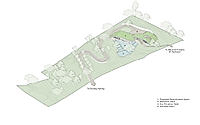
Planted Pavilion extends a long-running architectural story on a Constantia estate in Cape Town, South Africa, by Malan Vorster Architecture Interior Design. This new pavilion settles into a steep hillside, linking restored house, acclaimed Tree House, and gym building through a historic poplar-lined wagon road. Across glass, planted roofs, and water, the project draws the wider landscape and Table Mountain views into everyday life on the property.


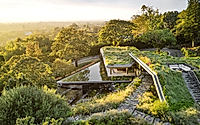
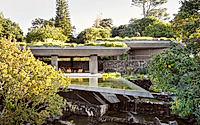
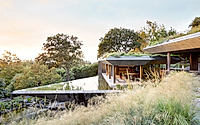
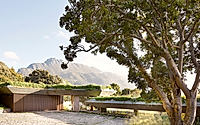
Sun catches the planted roof before it touches the glazed walls, so the building reads as contour and garden before architecture. From the poplar-lined wagon road, the pavilion steps out from the hillside, low and quiet, and frames a long view toward Table Mountain.
This pavilion on the Constantia estate in Cape Town, South Africa is conceived as a landscape-driven room for gathering and retreat. Malan Vorster Architecture Interior Design continues nearly two decades of work on the property, extending a sequence that began with a restored house and grew to include the Tree House and a modern gym. Here, the through-line is clear: architecture works with slope, trees, and water to deepen the daily experience of the land.
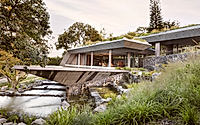
The new building rests partway down a steep site, tying the original grounds to a recently acquired neighboring parcel without dominating either. A historic poplar-lined wagon road, uncovered during this expansion, now anchors the layout as a physical link and a gentle promenade between old and new territories. From this route, the pavilion’s low profile and planted roof keep the view open, so the hill still feels continuous and green. The result is a building that participates in the terrain rather than crowning it.
Aligning With The Land
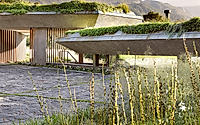
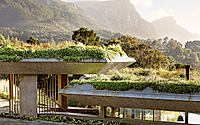
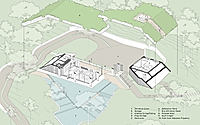
The pavilion tucks into the hillside, its sandblasted concrete core and stone accents giving the impression of a cut in the slope rather than an object on display. Rugged textures catch light and shadow through the day, reading close to local rock and grounding social life in something tactile and enduring. A planted roof drapes the structure with vegetation, softening edges and stabilizing the microclimate around the rooms below. From above, the roof reads as another terrace in the garden, so architecture and topography merge into a single, stepped landscape.
Views Through The Tree Canopy
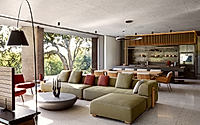
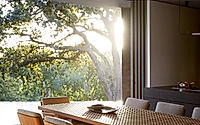
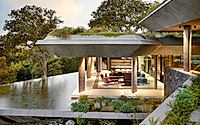
Expansive glazing opens the pavilion to sweeping views over the tree canopy toward Table Mountain, turning the horizon into a daily companion. Inside, an open-plan arrangement supports both sociable gatherings and quieter retreat, with circulation slipping along the glass so movement always stays in touch with light and foliage. Sliding doors dissolve boundaries on mild days, and the terrace edge becomes another room where air, sound, and scent take on as much weight as furniture. Every seated position claims a different slice of canopy and mountain, so the experience shifts gently over hours and seasons.
Water, Planting, And Sound
A cantilevered reflection pond extends from the building, sharpening awareness of gravity and drop while bringing a sheet of sky right to the threshold. Water spills from its edge in a controlled cascade, creating a constant, low sound that threads through conversation and quiet moments alike. The pond supports aquatic plants through natural filtration, turning a view element into habitat and a subtle cooling device near the glazed facade. Below and around the pavilion, native planting draws local ecology closer, so paths and stairways cross ever-thickening layers of biodiversity.
A Multi-Sensory Everyday
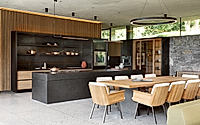
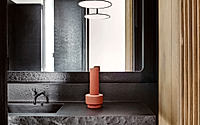
The project grows from a close collaboration with a family deeply engaged in sensory experience through their work in the food world. That expertise translates into architecture through attention to texture, rhythm, and sequence rather than overt display. Sandblasted concrete, natural slate, and terrazzo flooring provide distinct underfoot sensations, from cool smoothness to fine grain, so walking itself becomes an act of noticing. As one moves from shaded interior to planted roof and along the wagon road, shifts in light, sound, and material keep perception alert yet calm.
Landscape design reinforces this sensory framing by using native species that respond to wind, rain, and seasonal change in visible ways. Taller grasses catch breezes along the paths, low shrubs hug the building edge, and aquatic plants animate the pond’s surface with slow movement. Every route across the grounds now threads views of the pavilion, the Tree House, and the original house into a single, legible experience of place.
In the end, the pavilion reads as another chapter in the Constantia estate’s ongoing conversation with its terrain. Concrete, stone, water, and planting work together to hold the hillside without hardening it. As vegetation thickens on roof and banks, the building recedes even further into the land, so future walks along the poplar road will feel less like an approach to a structure and more like entering a carefully tuned piece of landscape.
Photography courtesy of Malan Vorster Architecture Interior Design
Visit Malan Vorster Architecture Interior Design