AWAWA — Interactive Learning Landscapes For Children
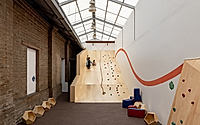
AWAWA occupies a former textile factory in Quito, Ecuador, now home to the Interactive Science Museum, and is imagined by Morphism as a permanent, child-centered exhibition. Within this industrial shell, the project turns early education into a sensory journey, using narrative, material, and movement to connect young visitors with nature and the building’s past. Children and their companions move through environments shaped for play, discovery, and shared learning.


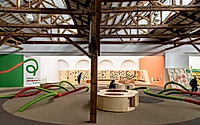
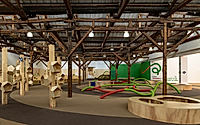
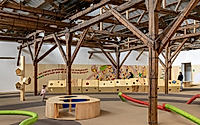
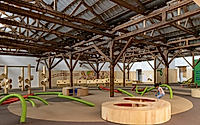
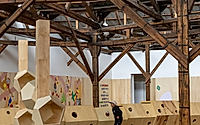
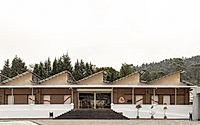
Light moves across tall wooden trusses and thick adobe walls as children arrive, the old factory hall now humming with soft color, sound, and motion. Under the broad sheds, a ring of play worlds unfolds in sequence, each one tuned to a different way of learning.
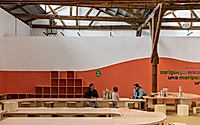
This permanent exhibition grows from an industrial hall within the Interactive Science Museum in Quito, Ecuador, designed by Morphism as an early childhood environment shaped around play. The project takes the building’s large spans and open sheds as a loose armature, then threads a chain of zones that encourage exploration, rest, and collaboration. Program drives every move: each area is named, given a sensory character, and connected to stories that link children back to nature and the wider territory.
Weaving Factory And Childhood
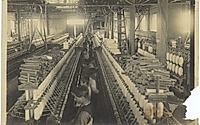
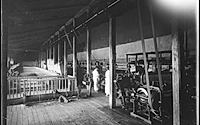
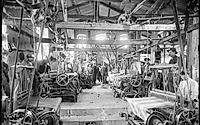
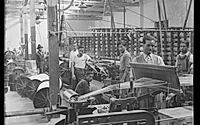
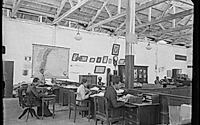
The former textile plant, once part of the La Industrial complex in Chimbacalle, brings long views, tall volume, and generous floor plates to the new interior. Morphism keeps this industrial order as a backdrop while inserting a landscape of scaled-down worlds, each one legible to a child yet porous to the next. Memories of production turn into places for play, education, and community, folding the neighborhood’s past into a daily program of learning. Visitors read the built story not through plaques, but through touch, movement, and shared rituals of entry and pause.
Zones As Narrative Journey
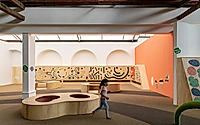
Circulation follows a loose loop, so children drift from one named area into another without sharp thresholds. Pollen sets the tone at the beginning, a welcoming zone where belongings are left behind and attention turns inward to the hall. From there, The Night closes down daylight with light tables and mediated projections, drawing bodies around glowing surfaces and shifting images. The Anthill opens up a different register, with water and organic forms that invite experimentation and messy play.
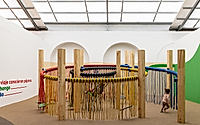
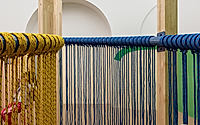
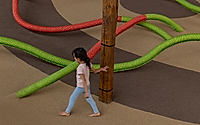
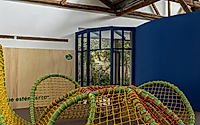
Beyond, The Nests offer a quieter rhythm for breastfeeding, reading, or simple rest, giving caregivers a place to slow down within the active room. The Lianas twist into a spiral of colored ropes, a kind of walk-in labyrinth where puzzle pieces can become swing supports or rocking elements. Roots holds lower-impact balance play for younger children, its amoeba-like modules in reflective materials creating gentle challenges in a compact field.
Playgrounds Of Making
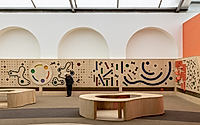
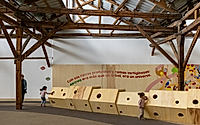
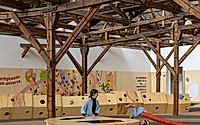
Several zones connect back to the idea of making—textiles, weaving, and crafted surfaces—echoing the building’s productive history. The Termite Mound pulls parts from the old textile factory into an interactive wall, turning industrial remnants into tactile game elements. At The Leaves, children work at a large-scale weaving area, moving their bodies as they thread materials in and out. The Drops encourages painting across varied substrates, shifting attention from finished image to the act of applying color. In The Wasp Hive, soft movable elements support climbing and sliding, letting kids test coordination and confidence while staying close to the ground.
Nature As Teacher
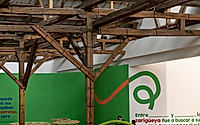
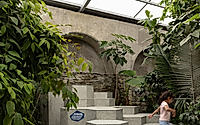
A narrative rooted in the metaphor of the tree and Amazonian worldviews ties this sequence together. The Trunk becomes a tunnel reminiscent of a fallen tree, pierced by holes and tied chromatically to a myth-based mural. The Flower sets ropes at different heights, encouraging vertical exploration and new perspectives on the hall. At the far end, The Cloud Forest forms an indoor garden with modular topographies, where children climb, sit, and crawl among planted surfaces and recycled flooring. Throughout, stories about interdependence and care frame every game as part of a larger living system.
Materials For Play And Care
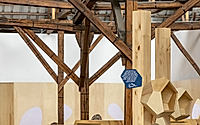
Material choices follow both safety and environmental criteria, aligning with the project’s educational mission. Pressed wood from responsibly managed forests shapes walls and elements that children touch, climb on, or crawl through. Bio-rubber softens impact across interior areas, giving floors a forgiving feel under running feet. In the garden zone, recycled pressed Tetrapak and aluminum form a tough yet visually distinct surface that can stand up to heavy use. Soft-textured, long-lasting plastics—ropes, climbing holds, colored acrylics—round out the toolkit, delivering color and tactility without sharp edges.
In this former factory, play is treated as serious work, shared by children, adults, and museum mediators who move alongside them. The generous hall, once filled with machinery, now stages loops of curiosity, rest, and collaboration that can evolve with new programs. As light shifts across trusses and adobe, AWAWA keeps the building’s memory active through everyday acts of learning and joy.
Photography by JAG
Visit Morphism