Herol by Stefan Gamper Architecture
Herol stands on the high meadows of Lüsen, Italy, where Stefan Gamper Architecture reinterprets the archetype of the alpine chalet as a quiet, contemporary farmstead. The project folds traditional pitched roofs, larch cladding, and white-plastered masonry into a compact residential ensemble that engages both the landscape and agricultural life around it. Interiors lean on natural tones and tactility, creating a calm rhythm between private family living and welcoming guest accommodation.
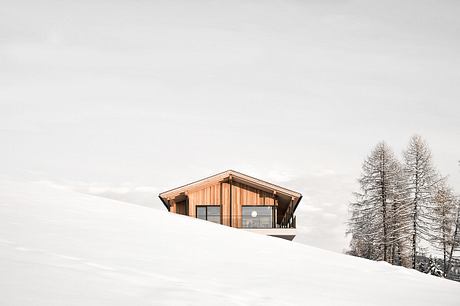
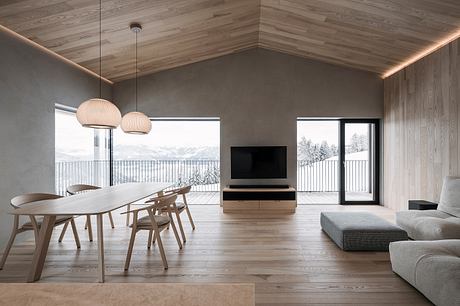
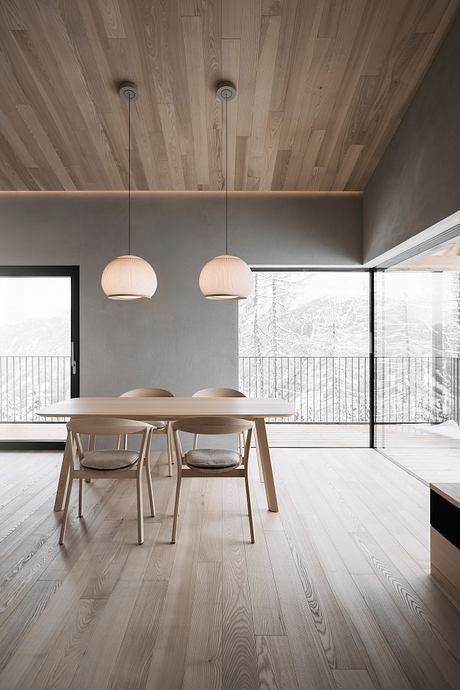
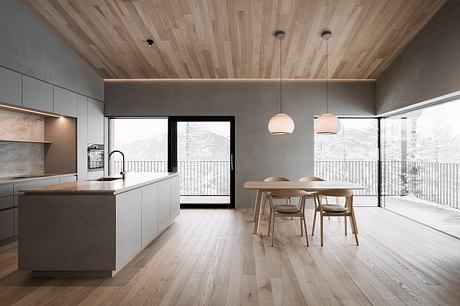
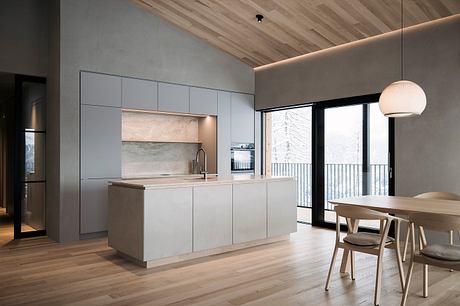
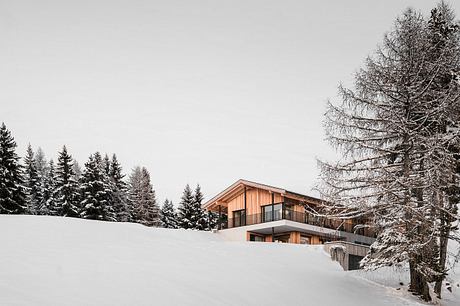
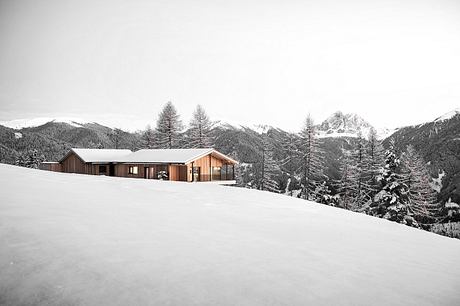
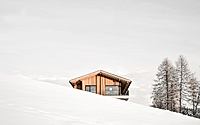
Morning light brushes the white-plastered base, then climbs over larch boards and dark pitched roofs before spilling into terraces that open toward the Eisack Valley peaks. From the slope, the chalet reads as one clear farmstead stance, grounded in the meadow and tuned to the changing weather.
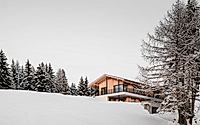
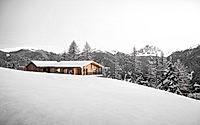
This residential chalet in Lüsen is planned by Stefan Gamper Architecture as an evolution of the area’s traditional farmhouses, built at around 1,600 meters above sea level. Rather than a singular object, the project positions itself as a continuation of local building forms and agricultural life. Context guides the architecture, from massing and material choice to the way circulation, courtyards, and terraces draw occupants outward to the mountains.
Settling Into The Meadow
The house sits within sculpted meadows so that the ground floor seems to rise directly from the terrain. A compact, white-plastered plinth holds the chalet against the slope and gathers daily routines around a sheltered inner courtyard. This courtyard becomes the quiet heart of arrival and interaction, protected from winds yet visually connected to surrounding fields and sky.
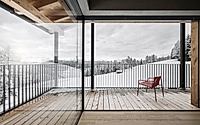
Above the grounded base, larch-clad upper levels step back to form generous terraces looking toward mountains and forests. Two pitched-roof volumes cap the composition, recalling separate barn and house structures while responding to local snowfall and alpine light. The clear split of volumes helps the building read as part of the valley’s farm fabric rather than a foreign insertion.
Courtyard, Farm Shop, And Daily Rhythms
Movement across the plinth is organized with simple, legible paths that stitch domestic life to agricultural work. Access to the apartments follows these routes and an elevator, guiding residents and guests through the courtyard before they reach interiors. Everyday comings and goings stay close to open air and meadow views.
An adjacent farm shop with a tasting room brings the working landscape into direct contact with visitors. Seasonal produce and stories of fieldwork share the same ground as the dwellings, so the chalet reads as part of a living farm cycle. Agricultural rooms and storage settle into the basement, robust and tucked into the topography, where they support the farm without interrupting the residential calm above.
Rooms Framing Mountains And Sky
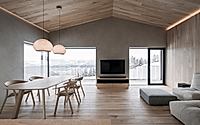
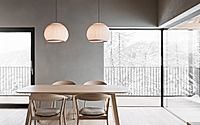
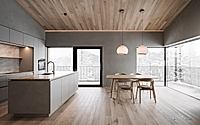
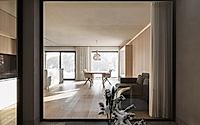
Within the upper levels, two family apartments and guest holiday units unfold around wide views. Large glazing panels pull mountains, forests, and clouds into daily routines of cooking, eating, and resting. Shared rooms for living and dining sit near these openings, so light and horizon remain constant companions.
Private bedrooms, dressing rooms, pantries, and laundry areas cluster in quieter bands behind the social zones. This arrangement keeps storage and service close at hand without blocking outlooks or cross-ventilation. Terraces extend the main rooms outdoors, creating platforms where residents can linger in sun or shade and watch the weather move across the valley.
Material Calm And Climate Logic
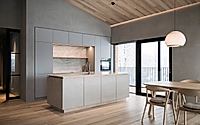
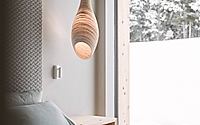
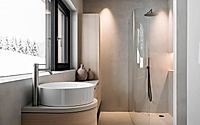
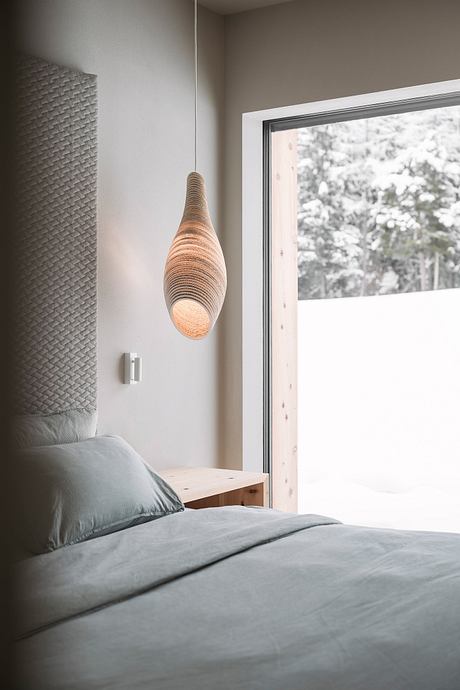
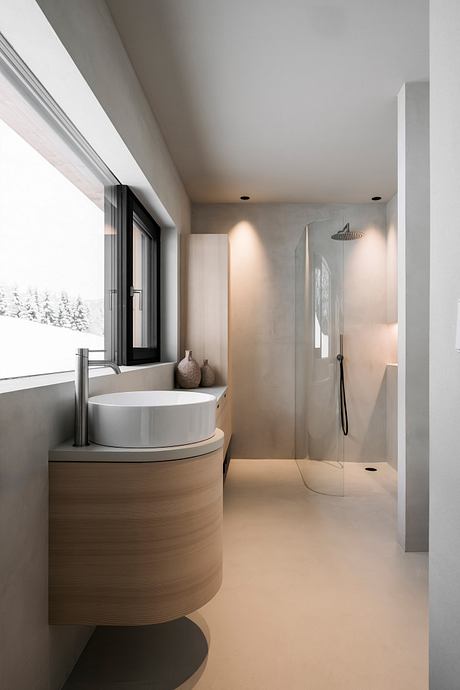
Interior finishes continue the restrained exterior logic, using a tight palette tuned to touch, light, and regional forestry. Floors and surfaces in heart ash and white fir carry warmth underfoot and on handrails, while soft gray lime plaster tempers daylight and adds gentle texture. Natural linen and wool fabrics reinforce this quiet tone, absorbing sound and softening edges.
A quartz and Fenix kitchen block introduces precise, durable surfaces where work is concentrated. Throughout the chalet, every room leans on daylight, views, and material heft rather than decoration for character. Climate House A performance underpins this atmosphere: a wood-chip heating system draws on the property’s own forest, and a rooftop photovoltaic array supports autonomy while technical systems quietly balance efficiency and comfort.
In the closing view from the meadow, white base, larch cladding, and dark roofs settle into the slope as if they had long been there. Light tracks across façades and terraces during the day, then withdraws to reveal a few measured openings in the evening. The project anchors contemporary alpine living within its valley context, letting landscape and climate remain the leading forces.
Photography by Alex Filz
Visit Stefan Gamper Architecture