Mexico and “Vucciria”: Color-Rich Apartment Reinvents Family Living
Mexico and “Vucciria” transforms an existing apartment in Palermo, Italy into a narrative interior by Vid’A, shaped around memory, color, and everyday ritual. The project draws on the client’s formative journey to Mexico and the dense urban character of Palermo’s Vucciria quarter, translating those impressions into rooms that compress and release, invite conversation, and keep family life at the forefront.


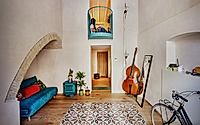
Light filters through an urban apartment, catching on saturated walls and doorways that pull the eye inward. Rooms feel strung together like streets after rain.
This home is an apartment in Palermo, Italy, reworked by Vid’A around the client’s deep attachment to a journey through Mexico. The project leans on an interior palette that draws from city streets, markets, and courtyards rather than from abstract style. Color, sequence, and lived-in corners carry the story of a family that treats daily life as an inventive act.
Walking The City Inside
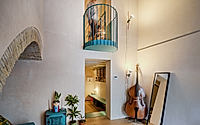
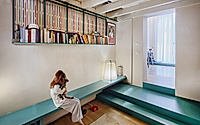
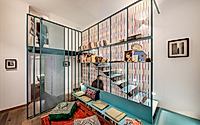
The apartment borrows its structure from a walk through Palermo: a main route, unexpected turns, sudden pauses, then an opening again into shared life. One room functions like a small piazza, where conversation lands and children cross through, while tighter passages recall narrow vicoli that press the walls close and then lift the gaze upward. A stair and landing echo a Vucciria scalinata, shaping vertical movement as part of the daily scene rather than a hidden connection.
Courtyards, Thresholds, Rooms
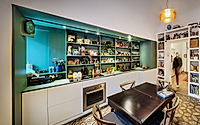
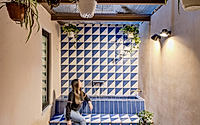
Domestic rituals unfold as if they were happening around a courtyard, with visual links between cooking, eating, and resting zones. From one doorway, a view might cut across to a corner where two people talk, while a higher landing reads like a balcony overlooking that quiet core. Doors stay open so sightlines remain long and continuous, allowing one unified volume to hold different degrees of privacy. The result is a home that treats movement between rooms as the main narrative thread.
Color As Urban Memory
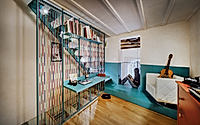
Color does the work of both Mexico and Palermo here, tying the apartment to crowded streets and open-air markets. Saturated surfaces recall façades and stalls, while more neutral planes temper the intensity and keep daily use comfortable. Bold passages carry energy down corridors, then soften where the family rests or where children work and play. With doors open, these tones bleed from one room to the next, making the home feel like a single, continuous urban fabric.
Family Life As Brief
The commission grows from close reading of a family’s habits, rather than from a preconceived formal agenda. Parents who work in the arts and children raised toward inventive thinking need rooms that invite participation, not display. Corners for conversation sit close to routes of daily movement, so watching, learning, and talking stay part of the same scene. In this way, the layout grows from an intellectual act: translating biography and cultural memory into walls, views, and shared tables.
By the end of the day, light has shifted and colors deepen, but the sense of the city still threads through the home. Palermo’s complexity and Mexico’s vivid streets remain present in every view. What began as a story about a trip and a market district resolves into a lived-in interior, where memory, movement, and family life stay tightly bound.
Photography by Lamberto Rubino
Visit Vid’A