Casa Viteri Vergara by MCM+A Taller de Arquitectura
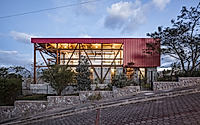
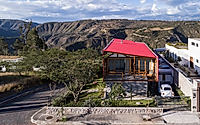
Casa Viteri Vergara is a house in Quito, Ecuador, designed by MCM+A Taller de Arquitectura for a narrow corner site in Nayón. Completed in 2018, the project responds to a steep slope, broad mountain views, and a warm, dry climate with a mixed structural system of concrete and wood. Its arrangement follows the plot’s long axis, setting social and private areas in clear relation to terrain, light, and privacy.
About Casa Viteri Vergara
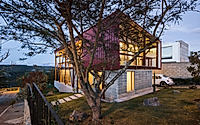
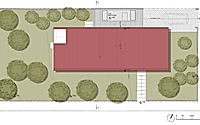
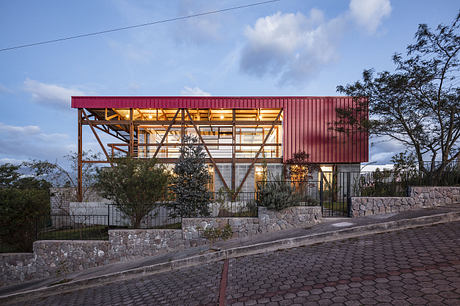
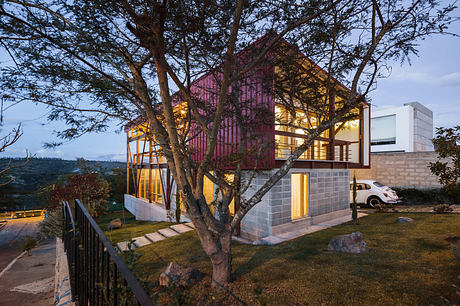
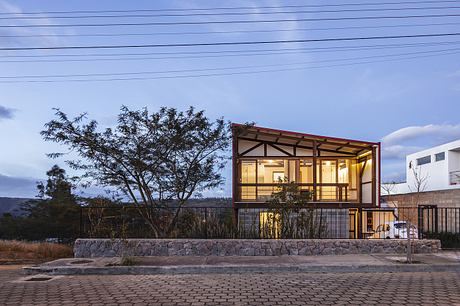
The house sits in Nayón, a suburban district known for its rich landscape and warm, dry climate, about 15 minutes from northern Quito. The site is a narrow rectangular corner lot with a pronounced upward slope. Sun reaches the long sides of the plot, the mountain range opens in the distance, and a small amount of existing vegetation remains an important part of the setting. These conditions, along with local regulations, determine both the placement of the house and the logic of its structure.
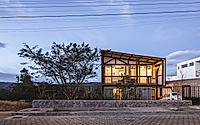
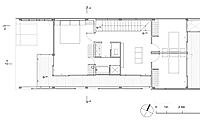
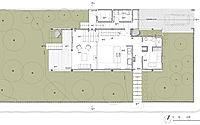
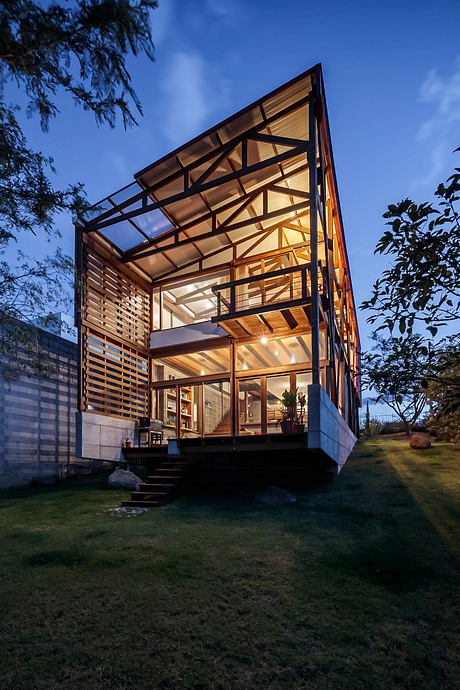
Set along the longitudinal axis of the site, the residence is organized as a two-story rectangular plan. Its structural system responds directly to the terrain. Two north-south structural axes, each spanning 6.6 meters (21.7 feet), establish the main order of the plan and give the house its spatial clarity.
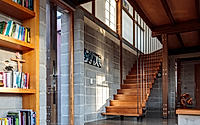
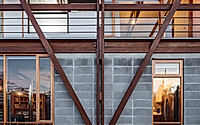
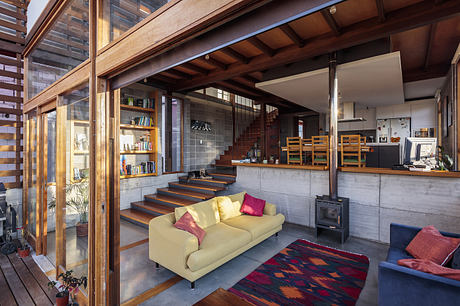
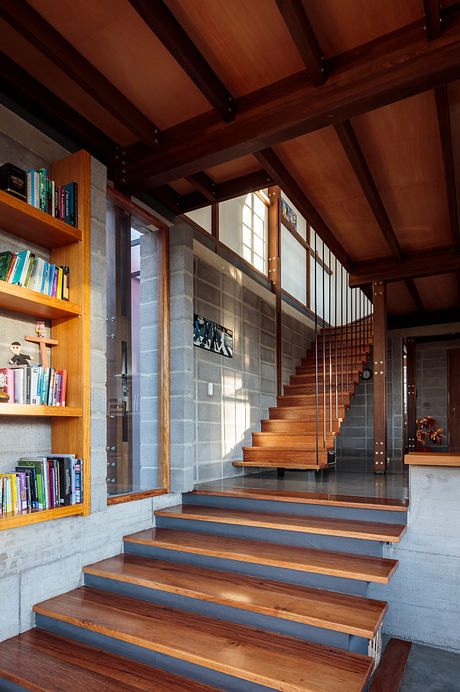
The slope is handled through a terraced reinforced-concrete platform that forms the base for a self-supporting concrete structure. This concrete box has a double role. It contains the kitchen, service areas, and study, while also protecting the more private parts of the home from the street and neighboring views.
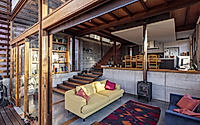
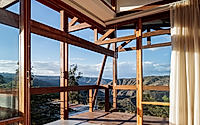
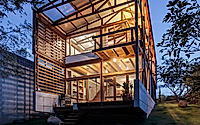
At the lower platform, the arrangement shifts toward openness. On the opposite end of the structure, where the site looks out toward the mountain canyon, the social areas take their place. Here the construction feels lighter and more open, allowing the main living areas to engage the landscape more directly.
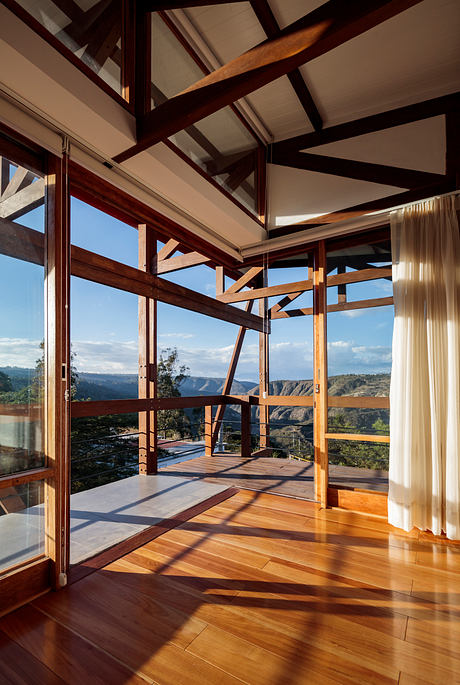
Above the concrete base, the entire upper floor is built in wood and reserved for the private living quarters. The wood envelope wraps both vertically and horizontally. In doing so, it protects the structure from weather and strong solar exposure, while also framing outward views and reinforcing the connection to the surrounding landscape.
The mixed structural system also addresses seismic performance, allowing loads and forces to be transferred efficiently to the ground. Construction methods play an equally practical role. Prefabrication in the workshop helps reduce costs, and the use of materials in their natural state, without coatings, extends that economy across the project, including the roof.
What emerges is a residence shaped by terrain, climate, and construction logic rather than applied effect. Concrete anchors the house to the slope, wood gives the upper level protection and warmth, and the plan balances privacy with long views. The result is a home with clear spatial quality, grounded in its setting and built with careful restraint.
Photography by Bicubik
Visit MCM+A Taller de Arquitectura