House 2.0 Reworks Andean Vernacular
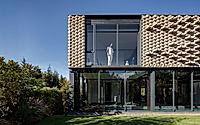
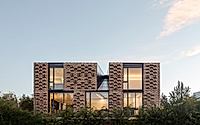
House 2.0 is a three-level house in Ecuador by CORREA+FATEHI ODD. The project reinterprets Andean vernacular with adobe made from on-site earth and rammed earth cuts that stage the approach. With a ventilated masonry skin that modulates temperature and light, the residence moves between solid and porous—by day a shaded monolith, by night a lantern—while a vertical living room eases circulation and expands daily use.


Sun rakes across the adobe and the wall turns tactile. Late light threads through perforations, casting latticed shadows that climb floors before dissolving into dusk.
This is a house in Ecuador by CORREA+FATEHI ODD, conceived as a solid earthen figure tuned by a high-performance skin. It is a domestic project, yet its material ambition drives the agenda. The focus is elemental: earth turned to structure, texture, and climate control, with a ventilated brick facade that breathes.
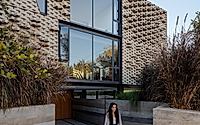
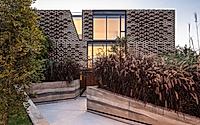
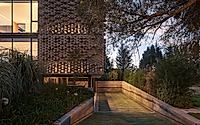
A monolith rises from shaped mounds. The ground is worked into angular cuts that reveal rammed earth strata and guide movement, recalling the Andean Chaquiñán trails carved through rugged terrain. These incisions form a semi-underground room with a cool hush and a calibrated roughness, the kind that anchors the house to its geology and sets a plainspoken material tone.
Make Adobe Perform
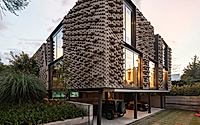
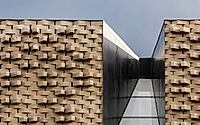
The facade uses a single adobe module developed through material studies of composition and grain. One brick, many readings. Made from earth excavated on-site, the units honor local rock diversity while aligning color with the ground plane. Laid as a perforated field, the bricks orchestrate shade, thickness, and airflow, turning a vernacular material into a calibrated environmental tool.
Ventilate the Envelope
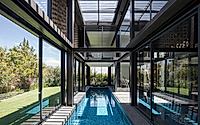
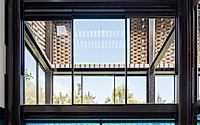
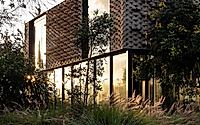
Behind the textured screen, the wall assembly acts as a ventilated facade that tempers daily swings in temperature and sheds water. Cooling air slips through the voids. Sunlight filters in as patterned bands, softening glare and producing a consistent interior light level that reduces dependence on mechanical systems (and amplifies the tactile read of the masonry during the day).
Cut Ground, Cast Shadow
Access paths carved through the mounds expose compacted earth faces that read like excavated sections. The cuts are directional tools. They steer views, compress then open circulation, and frame a flexible semi-below-grade room that holds cool air and a robust acoustic character—useful for gathering in heat or wind.
Vertical Living Room
A platform elevator slides through the three levels and works as a living room in motion. That move frees adjacent rooms to shift with use. Openings are placed for clear sightlines through the brick veil and into planted slopes, keeping material continuity between interior volumes and the earthworks beyond without blurring the house’s crisp edges.
Light, Then Lantern
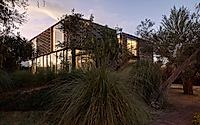
As the sun drops, perforations glow and the adobe reads weightless. Night turns the wall into a quiet lamp. By morning it returns to rugged matter, its grain and shadow play reminding occupants that the house is literally drawn from the ground underfoot.
Photography by Bicubik
Visit CORREA+FATEHI ODD