A Villa in the Castelli Romani Recasts a 1960s House with Warm Craft
A Villa in the Castelli Romani sits in Grottaferrata, Italy, reimagined by Studio Tamat as a modernist house attuned to light, material, and daily rhythms. The renovation respects 1960s Usonian cues while reshaping the plan for a family of five, marrying Roman hillside calm with metropolitan ease. Built as a retreat, it now reads as a lived-in home, open yet grounded by stone, wood, and crafted details.


Stone walls catch the afternoon sun as the hillside drops toward Rome. Inside, revived wood and brick set a calm register that carries from entry to terrace.
This is a house in Grottaferrata by Studio Tamat, reworked for a family without losing its Usonian backbone. The throughline is the interior palette: restored masonry, warm timber, and articulate furnishings that pull light across rooms and stitch new uses to the original shell.
Restore And Reframe
At the entry, a tailored wardrobe wrapped in patterned fabric and trimmed in Tanganika walnut signals craft and care. The original beech door returns with a soft sheen, keeping a tangible link to the 1960s build and its measured proportions.
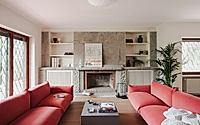
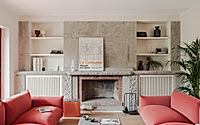
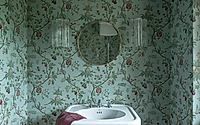
Stone fireplaces read as part of the walls rather than add-ons, with the conversation zone anchored by an integrated hearth and a pair of deep sofas. A powder room clad in botanical wallpaper and a sculptural pedestal sink nods to early American modern forms, precise yet playful.
Kitchen As Social Core
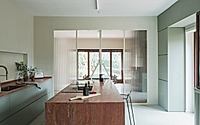
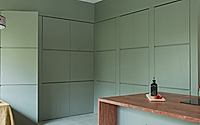
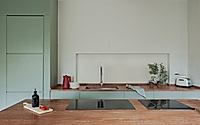
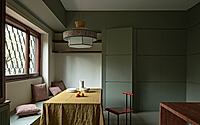
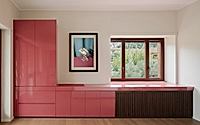
To the west, the 40-square-meter (430 square feet) kitchen gathers cooking, eating, and quiet morning rituals around a travertine island. A built-in bench tucks under the window for small meals, while tall panels hide refrigeration, storage, and two discreet passages to service rooms.
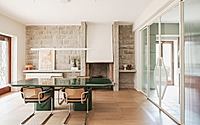
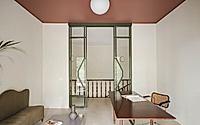
A full-height, powder-coated glass partition creates a gentle seam between kitchen and dining—transparent enough for conversation, firm enough to keep tasks sorted. Vintage and contemporary pieces meet at the table, where a high-gloss finish bounces daylight and draws the room together.
Stair, Study, And Rooms
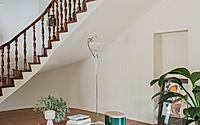
An elliptical staircase commands the ground floor, visible from the entrance and centering the plan. Upstairs, oak parquet laid in a sister pattern sets a steady grain, linked by a continuous cream resin path that eases the move between bedrooms and terrace.
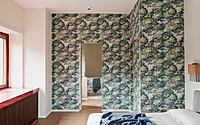
A custom glass wall shapes the study at the landing, bright and quiet, with a Tuscan red ceiling warming the light. In the main bedroom, patterned wallcovering conceals the door to a private bath—freestanding tub, walk-in shower, and an Arabescato marble basin aligned with the window.
Kids’ Wing And Details
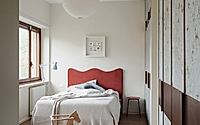
The daughters’ rooms trade in color, texture, and tailored storage, with upholstered beds and custom wardrobes scaled to growing routines. Between them, a shared vanity zone uses a galvanized iron cabinet and finely set tile to bridge privacy and connection.
Throughout, original ironwork inspires a rhomboid motif that recurs in window framing and select joinery. The effect is quiet patterning that guides the eye and keeps new elements in step with the house’s midcentury origins.
Loft With A View
On the top floor, a loft opens to long views of Rome, set up for movies, games, and winter weekends. Terracotta rubber flooring underlines the casual tone and tolerates heavy use without fuss.
Furniture choices balance vintage ease and modern clarity, from lounge pieces in the living room to bentwood-and-cane chairs at the dining table. The palette holds steady: stone, wood, soft color, and light doing quiet work.
Evening returns to the stair as surfaces warm and shadows lengthen. Material memory and new craft share the lead, letting the hillside house speak in a present tense.
Photography by Peter Molloy
Visit Studio Tamat