Phan Rang House – Hidden yard: Concrete Refuge For Coastal Heat Living
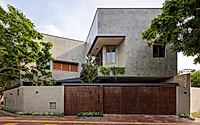
Phan Rang House – Hidden yard stands in Phan Rang–Tháp Chàm, Vietnam, where Plus Idea Studio tackles dense city fabric and a harsh coastal climate with quiet clarity. This private house for a young family turns heat, wind, and noise into design drivers, using raw concrete, shaded voids, and layered thresholds to shape daily life. Inside, open volumes and sliding partitions keep the home adaptable as the children grow and routines shift.
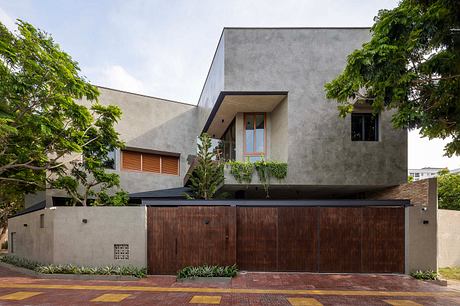
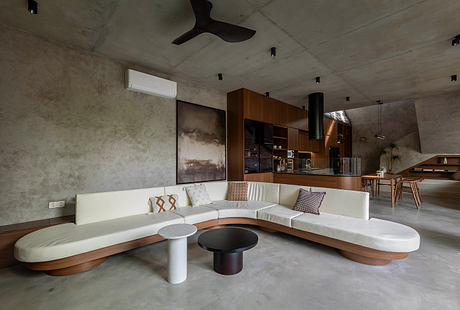
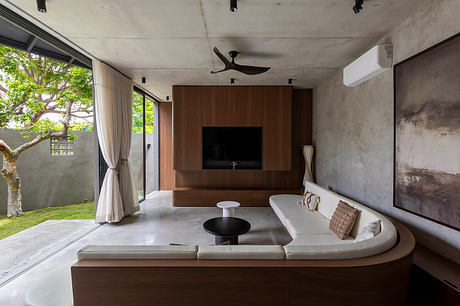
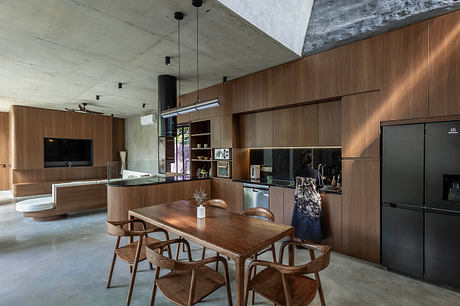
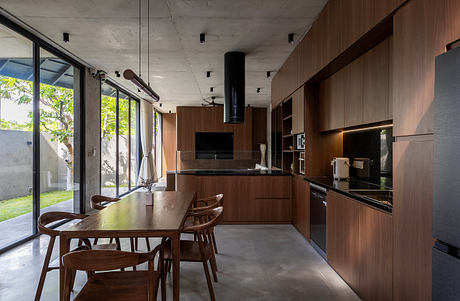
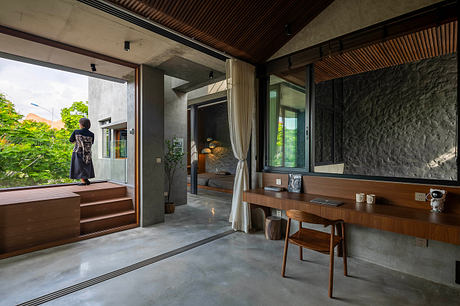
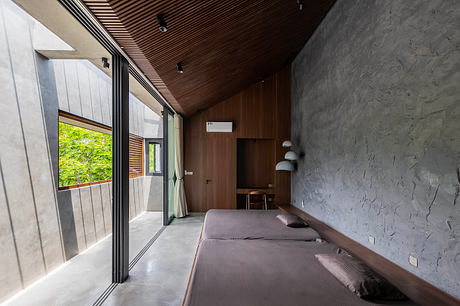
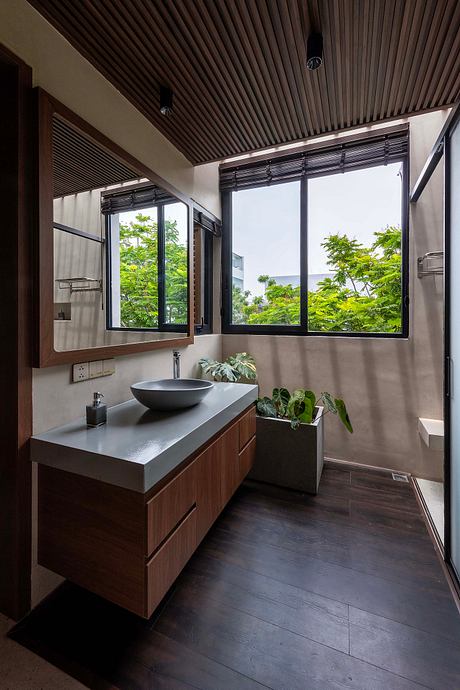
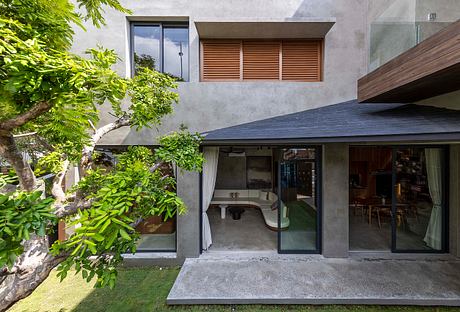
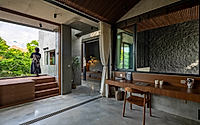
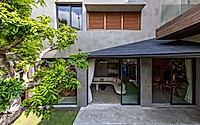
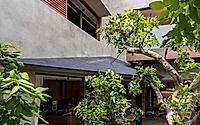
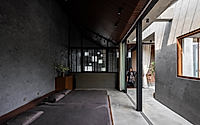
Sea light grazes the raw concrete ceiling as it enters from the hidden yard, catching the edges of thick walls and deep eaves. Air drifts through the house in slow, steady currents, cooled by trees and shaded terraces before it reaches the family rooms.
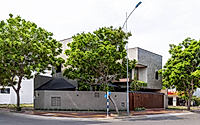
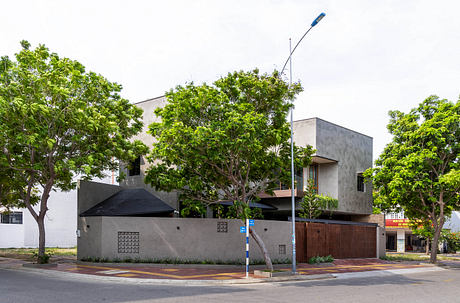
This private house in Phan Rang–Tháp Chàm sits in a tight urban grid, yet it orients itself around climate rather than street frontage. Plus Idea Studio organizes the home as a layered shell that filters intense sun, invites coastal breezes, and shelters a young family on a compact 178m² plot. Context drives every move: the plan, materials, and openings work together to turn a harsh setting into a calm, durable place to live.
Shielding From Heat
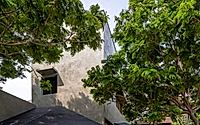
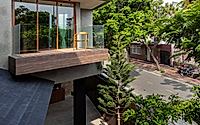
The house answers Phan Rang’s intense sun with wide eaves that cast deep shade over walls and openings. Sun-shading screens sit in front of glazed areas, catching glare before it enters and leaving interiors washed in softer, indirect light. Thick masonry and concrete act as a buffer against both heat gain and urban noise, so rooms hold a more stable temperature through the day. On the roof level, the protective shell continues, trading exposed surfaces for controlled edges and sheltered outdoor moments.
Catching The Coastal Breeze
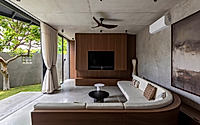
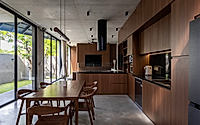
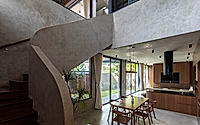
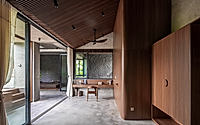
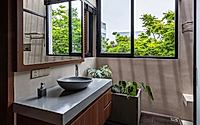
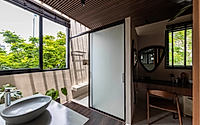
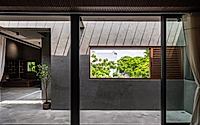
Natural wind from the nearby sea becomes a key material, guided rather than blocked. Openings align to pull breezes through the length of the 513m² house, with the hidden yard and planted buffers cooling air before it reaches the core. Greenery sits as a breathable layer between street and interior, softening light and adding shade without closing the house off. Ventilation paths remain clear across both floors, reducing dependence on mechanical cooling even in peak heat.
Family Life Around One Volume
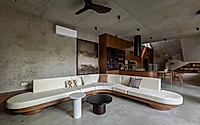
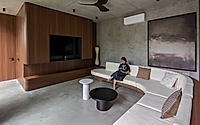
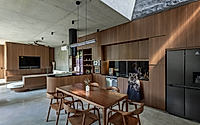
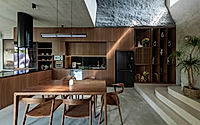
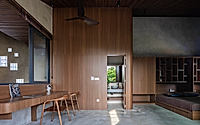
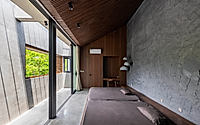
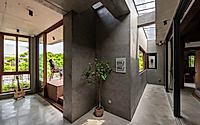
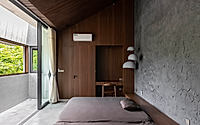
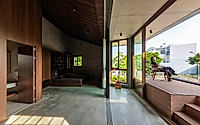
Daily life concentrates on the ground floor, where living room, kitchen, and shared areas flow without permanent walls. This open layout supports easy conversation, quick supervision of children, and a sense of togetherness from morning to night. Sliding partitions upstairs repeat that idea in a different key, letting bedrooms shift between enclosed retreat and shared zone depending on time and need. Privacy becomes adjustable, not fixed, so the house can adapt as the children grow, routines change, and family rhythms evolve.
Raw Concrete As Climate Tool
Unfinished concrete runs across ceilings and floors, chosen for both character and performance. The material’s thermal mass helps absorb heat during the day and release it later, tempering indoor conditions in concert with shading and airflow. A double-layer concrete slab system hides technical systems inside its thickness, keeping ceilings clean while servicing the house with precision. Warm, directional lighting plays against the cool grey surfaces at night, tracing edges and casting long shadows that give each room a quiet, grounded mood.
As evening falls, the hidden yard cools first, carrying a gentler breeze through the open ground floor. Light spills from the raw concrete ceilings and filters through screens, signaling a house tuned to its coastal setting rather than sealed away from it. Climate, material, and family life stay closely linked, giving this compact urban plot a generous, enduring rhythm.
Photography courtesy of Plus Idea Studio
Visit Plus Idea Studio