Casa 49 by Salagnac Arquitectos
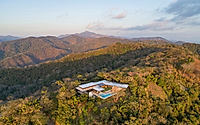
Casa 49 stretches along a lush hillside in Nosara, Costa Rica, where Salagnac Arquitectos shapes a modern house tuned to Pacific light and wind. The project arranges generous living areas, terraces, and bedrooms to keep family life close to the surrounding landscape without losing a sense of calm retreat. Strong structural elements sit beside warm timber and open thresholds, giving daily routines a direct connection to ocean views and green slopes.


Ocean air moves up the hillside and slips through Casa 49, brushing timber ceilings and concrete floors before drifting back out toward the Pacific. From the terrace, the horizon stretches wide, and the house reads as a clear frame between dense green slopes and the open water beyond.
Casa 49 is a house in Nosara, Costa Rica, designed by Salagnac Arquitectos as a modern hillside retreat grounded in bioclimatic thinking. The project uses its elevated site, open plan, and controlled envelopes to keep interiors porous to breeze and light while still feeling composed. Structure, material, and plan all push toward one aim: living with the coastal climate rather than shutting it out.
Framing Ocean And Hills
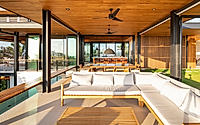
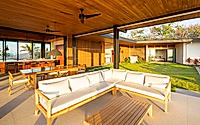
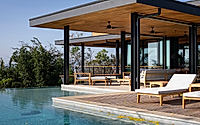
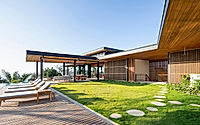
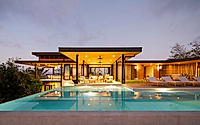
From the main terrace, the house stretches laterally so every major room looks toward the Pacific while staying close to the slope behind. Large folding doors pull back along the social wing, turning the main living area and the covered terrace into one elongated volume facing the infinity-edge pool. A simple gesture does the work here: the house becomes a viewing platform where water, horizon, and sky read as a continuous band.
Living With The Climate
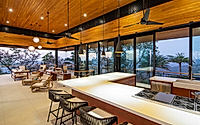
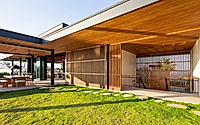
Bioclimatic principles guide the arrangement of openings, structure, and shading so wind and sun patterns set the daily rhythm inside. Exposed black steel frames and concrete elements establish a durable armature, while timber ceilings and wooden slats temper heat and glare without shutting out air. Cross-ventilation is encouraged from room to room, letting breezes move through the house instead of relying solely on mechanical cooling. Light is filtered into soft, repeating bands, so interiors stay bright yet controlled through long coastal afternoons.
Social Wing To Terrace
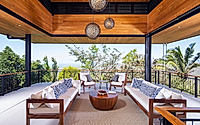
The upper level divides cleanly into a social wing and a private wing, a simple plan that clarifies how the house meets its site. Elevated ceilings in the shared living areas pull heat upward, while broad openings on the ocean side and higher windows behind invite air to travel across the room. Daily life centers on the transition between interior living room, shaded terrace, and pool edge, where family members can drift between cooking, lounging, and swimming without losing sight of one another. The terrace acts as an outdoor living room, pressed right up against the distant view yet still anchored to the hillside garden.
Family Life Across Levels
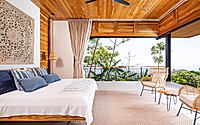
Private rooms are pulled slightly away from the main gathering areas, yet they keep a close relationship with vegetation and coastal air. Two bedrooms on the primary level sit in the quieter wing, giving adults or guests a sense of retreat while maintaining easy access to the terrace and pool. Below, two more bedrooms expand the house for larger family gatherings, with one arranged as a bunk room for six children to share nights, stories, and early-morning views. This vertical stacking of social and sleeping zones strengthens family ties while allowing different generations to find their own pace within the same hillside setting.
Material Rhythm And Warmth
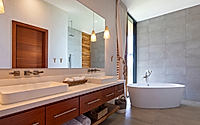
Throughout the house, exposed steel and concrete are kept in balance with crafted wood surfaces that add warmth to the coastal air. Slatted timber elements repeat along facades and ceilings, creating a steady pattern that reads in both light and shadow across the day. These linear rhythms help ground the open volumes, so long views do not overwhelm the more intimate corners where people read, talk, or watch the changing sky. As daylight fades, the hillside house settles back into the trees, still open to the evening breeze and the low sound of the ocean beyond.
Photography courtesy of Salagnac Arquitectos
Visit Salagnac Arquitectos