Brandilera House: Pacific Courtyard Living Along Mexico’s Coastline
Brandilera House sets a coastal rhythm in Nayarit, Mexico, where Manuel Cervantes Estudio draws the house around sea light and dense Pacific vegetation. The project, created in collaboration with James Perse, organizes a resort-scale home as a series of pavilions that open toward a central garden and the horizon. Daily life stretches between interior comfort, shaded outdoor rooms, and long views over the water.


Wind moves through planted courtyards before reaching the long view of the Pacific, softening the line between house and horizon. Light falls across concrete walls and water surfaces, drawing attention to the simple palette and the surrounding vegetation.
Brandilera House is a house in Nayarit, Mexico, organized as a destination retreat rather than a single object building. Manuel Cervantes Estudio arranges 3,600m2 of construction as a loose ensemble along the Pacific coast, always in conversation with sea views and existing flora. The project prioritizes how people inhabit the coastal climate: shaded circulation, open-air rooms, and constant proximity to gardens, pools, and the ocean.
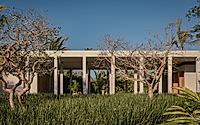
At the core sits a vast central garden that functions as the house’s primary room in the open air. Suites, living areas, and social terraces face this planted void, using it as a hinge between domestic life and the horizon line beyond. Most rooms frame a direct view of the sea through the garden and existing vegetation, so every daily routine stays connected to the coastal setting.
Sequencing Courtyards And Volumes
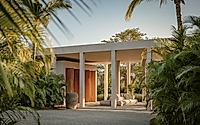
A series of independent buildings spreads across the site, forming a loose campus rather than a compact block. Paths thread between them, guided by low walls, porticoes, trees, and textured pavements that shape a measured progression from one area to another. Residual outdoor rooms emerge between these elements, treated with the same care as enclosed volumes and supporting everything from quiet circulation to informal gathering.
Nine suites, generous living rooms, and social zones sit along this network, always just a few steps from gardens or water. Pools and a spa tie into the sequence, offering places to cool down or linger while still remaining visually linked to the sea and topography.
Living With The Landscape
Built mass never dominates the terrain; it threads through existing vegetation and follows the topography. Nature acts as the connective tissue, drawing buildings together with canopies, planted clearings, and views cut through the foliage. Landscaping takes a determining role, controlling shade, privacy, and long sightlines so that outdoor movement stays comfortable in the coastal sun.
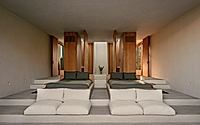
Indoor and outdoor thresholds remain fluid, with many rooms opening wide to terraces, verandas, and garden edges. Luxury resides in this constant dialogue with the exterior, where comfort is measured by breeze, filtered light, and the ease of moving barefoot from suite to pool.
Concrete, Wood, And Water
Material decisions stay deliberately simple, reinforcing the focus on climate and landscape. Pigmented concrete structures and walls form the bones of the house, their surfaces catching sun and shadow over the course of the day. Partition floors give a grounded texture underfoot, while wood frames windows and furniture, adding warmth against the more robust mineral elements.
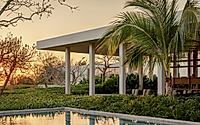
Beyond those three, the remaining materials are vegetation and water, handled almost as architectural elements in their own right. Pools reflect the sky and nearby foliage, and planted areas push against edges of terraces and walls, softening every junction between building and ground.
Daily Life As Destination
Brandilera House is conceived as a place to arrive and stay, rather than a simple coastal dwelling. The ensemble supports long visits with extensive services, generous suites, and varied settings for gathering or solitude. Social zones cluster near water and central gardens, while more private suites retreat slightly into vegetation, maintaining both connection and quiet.
Paths, courtyards, and shaded porches create a daily rhythm of short walks and outdoor pauses. Movement becomes part of the pleasure of staying here, always tuned to the climate, the sound of the sea, and the feel of the ground underfoot.
By dusk, concrete planes hold the day’s warmth while the garden cools and the Pacific darkens at the horizon. Rooms glow onto terraces, and the courtyards read as calm exterior living rooms. The project resolves as a coastal compound where structure, planting, and water work together to frame the ocean and make the most of its setting.
Photography by Cesar Bejarana
Visit Manuel Cervantes Estudio