Blueinc House by Padovani Arquitetos
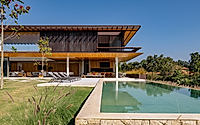
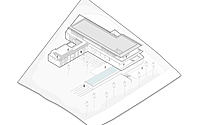
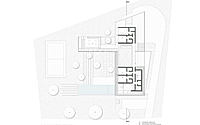
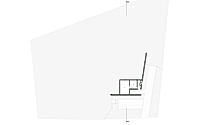
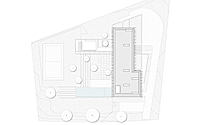
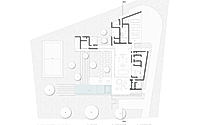
Blueinc House rises in Quinta da Baroneza, Brazil, by Padovani Arquitetos as a three-level house organized around an assertive L-shaped plan. The residence in the interior of São Paulo arranges social, leisure, and private rooms around a central yard, drawing views to the horizon while threading outdoor circulation between volumes. Wood, stone, and metal mark the exterior, setting up a calm yet active stage for daily life and weekend gatherings.
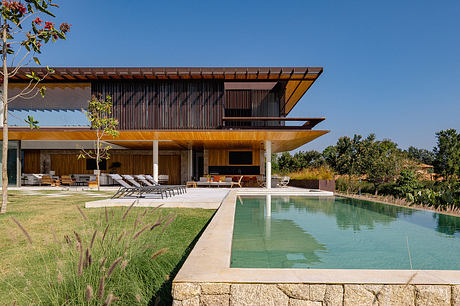
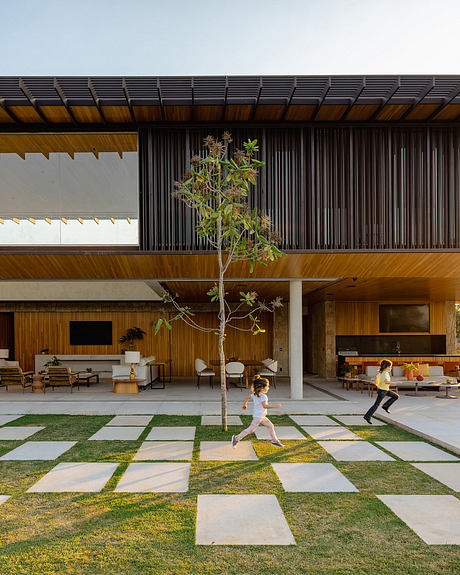
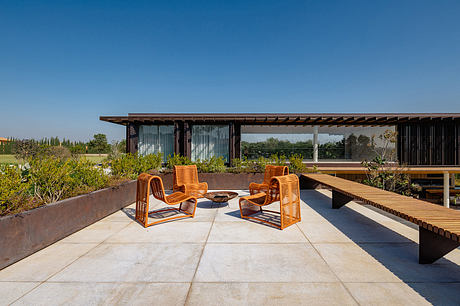
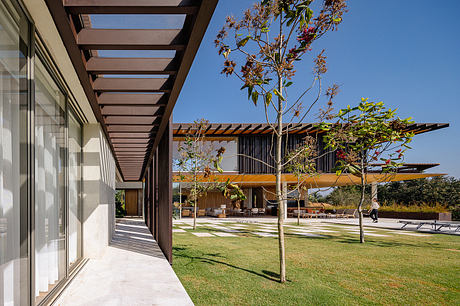
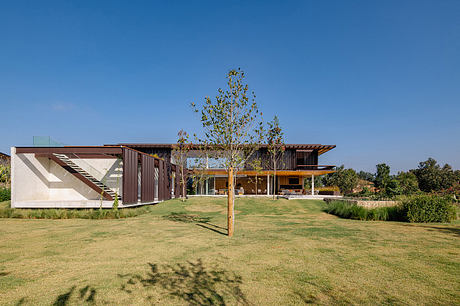
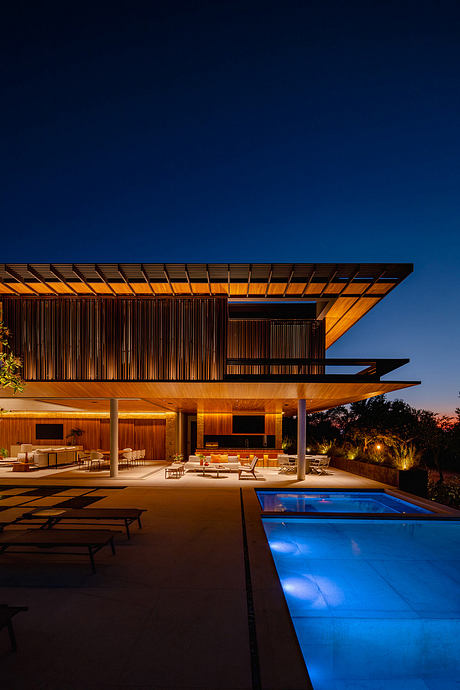
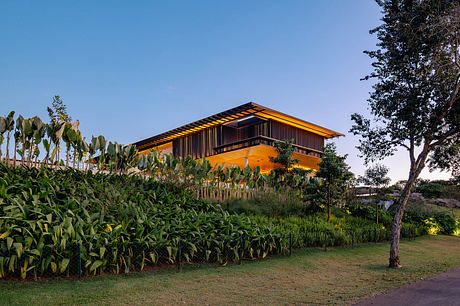
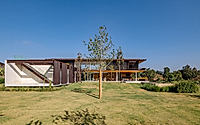
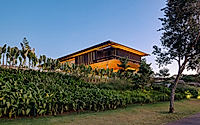
Light catches the pale stone base before sliding up to the darker metal and wood above, where irregular louvers cut shadows across the upper volume. From the entry, the three-tiered composition comes into focus in one sweep, with the L-shaped plan folding around broad leisure courts and a long horizon line.
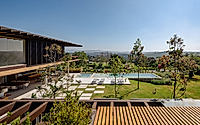
This house in Quinta da Baroneza is a multi-level residence planned by Padovani Arquitetos as a layered sequence of living, service, and leisure rooms. Organized across three distinct levels, the project leans on an L-shaped layout and careful circulation to keep every area connected while maintaining clear boundaries. The plan treats the lot as a central ground, wrapping pool, courts, and social terraces with volumes that define edges yet keep visual continuity.
Stacking The Volumes
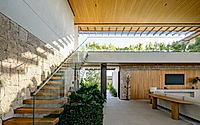
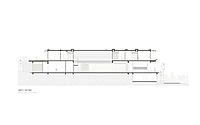
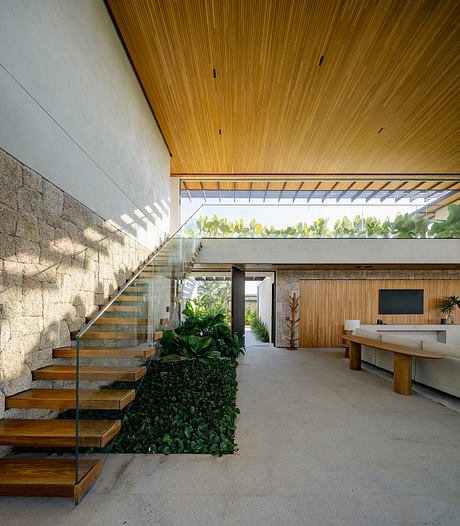
A solid base clad in light stones anchors the house and eases the height of the upper floors against the sloping terrain. Above this plinth, a shifted wing in the L-shaped footprint pulls one portion of the volume forward, carving out a protected outdoor room and clarifying how daily movement bends around the corner. Ascending access points stitch the three levels together, so circulation between courts, rooftop, and interior remains fluid rather than strictly vertical. The result is a legible sequence: stone at the ground for weight, wood and earthy-toned metal above for rhythm, and a crown of rooftop terraces at the top.
Framing Social Rooms
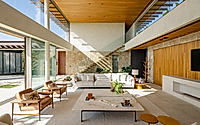
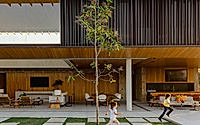
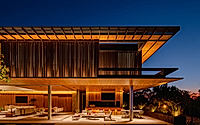
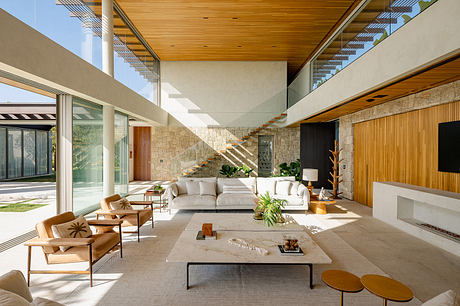
Just inside the threshold, a generous social area opens in two directions, linking the leisure zone to one side and the distant horizon to the other. This central room acts as a hinge in the plan, directing movement between pool deck, courts, and front-facing views without closing off lines of sight. Medium-toned wood works against light masonry to ground the living and dining areas, while large openings keep the interior continuously engaged with terraces and vegetation. With sunlight and greenery entering from both fronts, the main level feels extended by porches and decks rather than confined by walls.
Ground Level Logic
Along one lateral edge of the lot, service rooms group into a practical strip that frees the central area for social life and direct outdoor contact. The dining room sits at a pivotal point between this service band and the main living zone, using retractable panels to either open to the kitchen or stand apart when a quieter atmosphere is needed. This flexibility supports different daily patterns, from casual cooking with everything connected to more defined hosting where the kitchen recedes from view. Around them, sliding thresholds and generous openings keep movement between interior floor and pool terrace straightforward, reinforcing the house’s ring of leisure along the inner arm of the L.
Upper Rooms And Screens
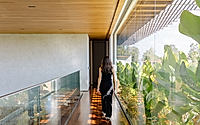
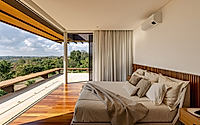
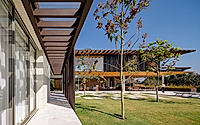
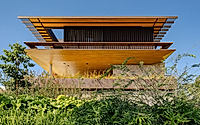
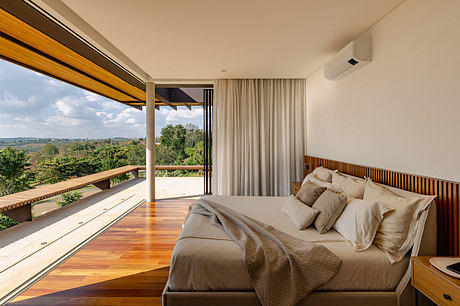
Suites occupy the upper floor, with the master suite projecting toward the front landscape and capturing a more expansive view of the horizon. Along this level, asymmetric metal panels and irregular louvers in earthy tones modulate exposure, tempering light and sightlines while giving the facade a controlled sense of movement. A cutout in the roof, paired with pergolas and pantographic panels, casts patterned sunlight into circulation zones and private rooms, changing through the day. Around the perimeter, crossed metal elements line the eaves as a permeable belt that softens the volume’s edge and filters transitions between interior and sky.
Courts, Pavilion, Rooftop
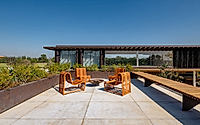
At the lot’s center, the plan gathers pool, sports courts, and open social terraces into a broad shared ground embraced by the L-shaped house. Toward the back, a transverse volume forms a quieter pavilion where the game room and TV room sit behind sliding metal panels, shielded from direct views to neighboring properties. This bar ties the arms of the house together and reinforces privacy while still maintaining a visual thread across the leisure yard. Above it, a rooftop deck adds a final level in the sequence, extending outdoor life upward and giving residents a wide-angle perspective on the surrounding landscape.
As the day shifts, light moves across stone, wood, and metal, drawing attention to the stepped massing and its courts. Circulation moves easily from ground to rooftop, wrapping around the central yard that holds the project together. The house reads as a set of connected levels around a shared open heart, with each route revealing another view back to the landscape.
Photography courtesy of Padovani Arquitetos
Visit Padovani Arquitetos