House Slabbert: Modern Alterations for a 1970s Family Home Life
House Slabbert sits in Stellenbosch, South Africa, where SALT Architects reworks a modest 1973 modernist house into a more connected family home. The single storey house is re-planned for convivial cooking, outdoor gathering, and better light, yet the low-profile street façade stays recognizably of its time. New internal and external sequences now support an easy movement between public rooms, private quarters, and a series of terraces tuned to everyday life.
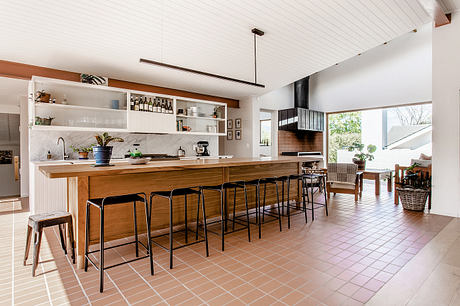
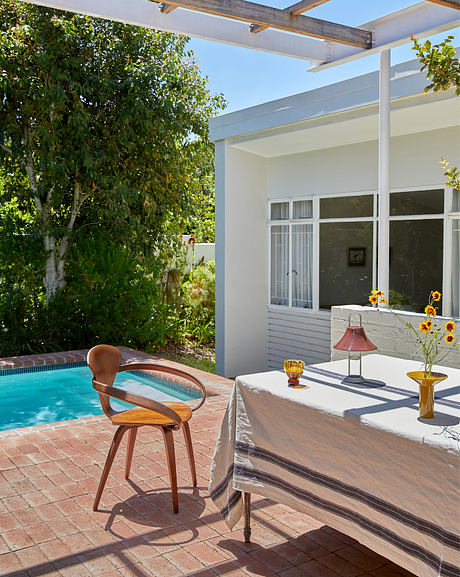
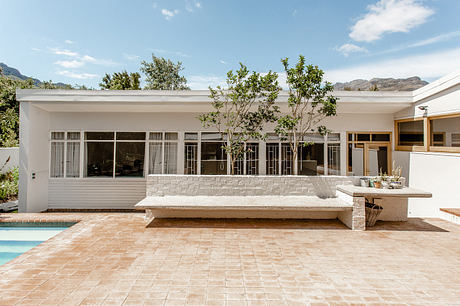
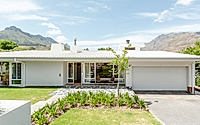
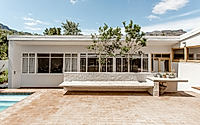
Late afternoon light runs across terracotta tiles and clay pavers as the house opens toward its re-leveled lawn and patios. From the street, the roofline still reads low and calm.
Behind that modest first impression, the plan of this single storey house from 1973 now turns around movement, thresholds, and calibrated daylight. The house is a family home in Stellenbosch, South Africa, reworked by SALT Architects to strengthen the everyday journey from street to garden. Plan adjustments stay deliberately discrete, yet they reshape how rooms connect, how the kitchen functions, and how outdoor courts support cooking and social life.
Originally, a living wing faced the street while a separate sleeping wing sat lower on the site. One dropped down from public to private, stepping through thresholds that protected bedrooms from traffic and passersby. Between these parallel bars, a small, isolated kitchen sat with minimal links to either side, interrupting flow and holding back natural light.
Two clear objectives drive the intervention: improve connection, functionality, and daylight while working with as little building work as possible. The outcome is a tighter, more legible whole rather than a dramatic new shell, with leftover external areas recast as rooms for daily living.
Reworking The Central Node
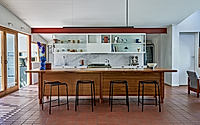
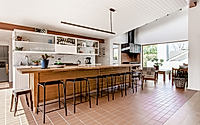
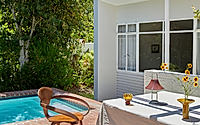
Unused outdoor pockets created by the original plan become active living courts. Where these pockets meet, a primary node now anchors the house, and the re-sited kitchen sits exactly at this crossing. It opens in all directions, tying together interior and exterior rooms as one walks from the public front towards quieter domains. A large stepped threshold on the eastern side carries people from kitchen to patio, with a braai area and swimming pool drawing family and friends outside.
Linking Surfaces And Levels
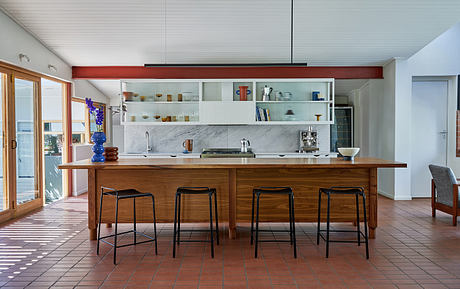
The new strip between the original wings is legible underfoot. Terracotta tiles inside are cut to match the clay pavers outside, so the floor finish runs as a continuous field between kitchen and adjacent terraces. This simple adjustment tightens the sense of one connected ground while still respecting the gentle level changes of the sloped plot. Stepped edges around the outdoor living areas double as informal seating, places to play, and casual gathering spots.
Extending The Sleeping Wing
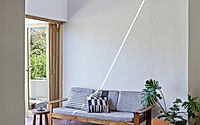
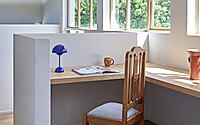
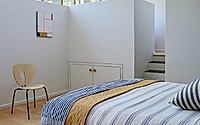
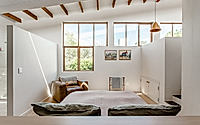
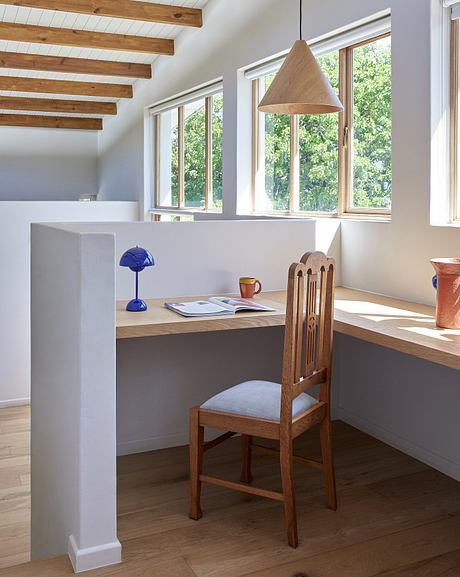
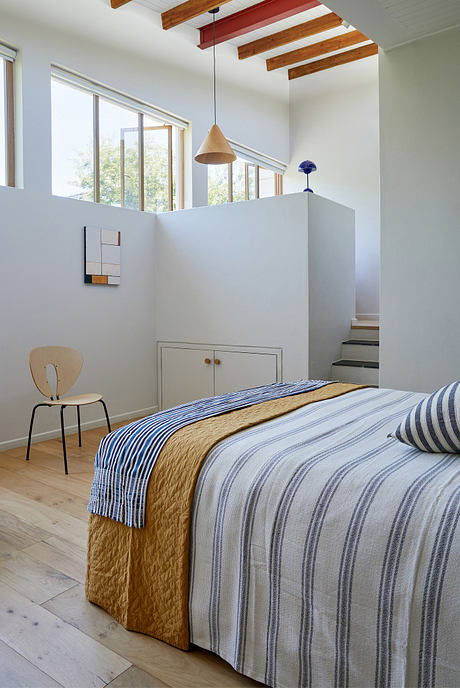
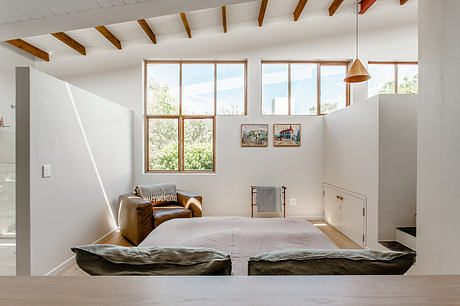
At the lower south-west corner, an awkward, dark room once broke the logic of the sleeping wing. A new 2.5 x 10 m strip added along the western edge absorbs this fragment and reorganizes it into a kitchen nook, study room, master bedroom, and en-suite bathroom. The roof of this addition projects slightly beyond the existing structure to hold a clerestory window along its entire length, drawing consistent, good-quality light into the reconfigured rooms. Privacy improves while the internal route still follows the original descent from public to private.
Terracing The Garden Edge
Working on a sloped site means the outdoor ground needs as much care as the interior plan. Street-level lawn is re-shaped by a garden terrace at the boundary, raising natural levels to support the new patio courts beside the kitchen. These terraces reinforce the earlier idea of thresholds: from street to lawn, from lawn to patio, from patio to interior rooms. Around them, a large timber island table underlines the project’s social intent, giving the family a warm place to gather at the heart of daily routines.
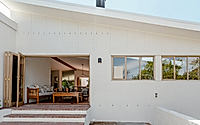
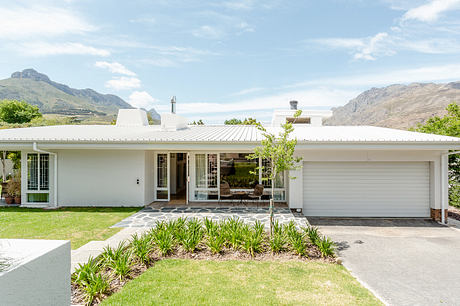
From the sidewalk, the house still reads as a simple, low-profile modernist volume, with a new chimney and a slightly elevated roof section just visible above. Inside the plot, however, the reworked sequence of courts, steps, and light reshapes how the family moves and spends time. What began as a modest 1970s house now runs on clear routes, gentle level changes, and rooms that tie cooking, resting, and outdoor life into a coherent whole.
Photography courtesy of SALT Architects
Visit SALT Architects