House of Cross Recasts Multi-Generational Living Around a Central Yard
House of Cross stands in Beijing, China, as a new kind of rural house designed by chaoffice for three generations under one broad courtyard sky. The project rebuilds a family home and home office on a village plot, working within strict single-story regulations while rethinking how courtyards, roofs, and rooms connect daily life. Its cross-shaped plan sets up a quiet but precise geometry for shared routines and private retreats.
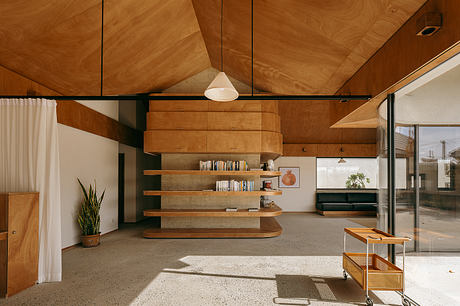
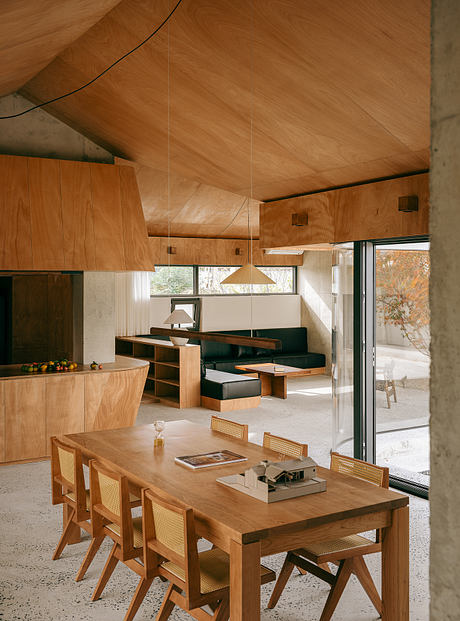
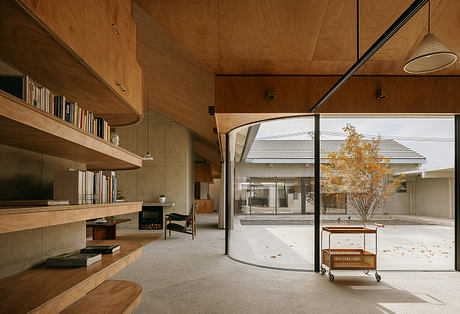
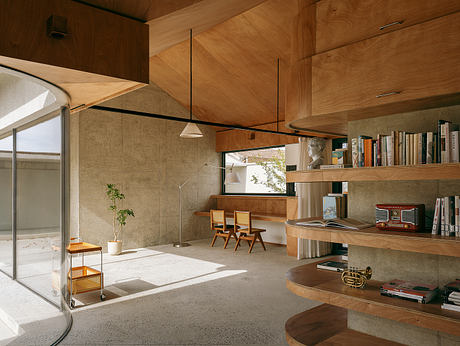
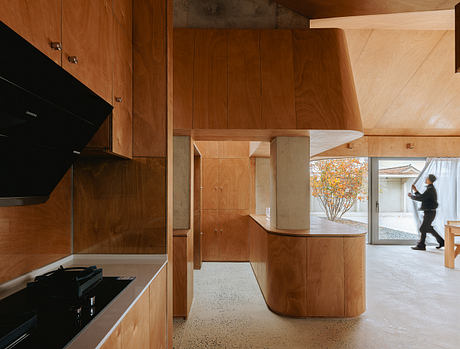
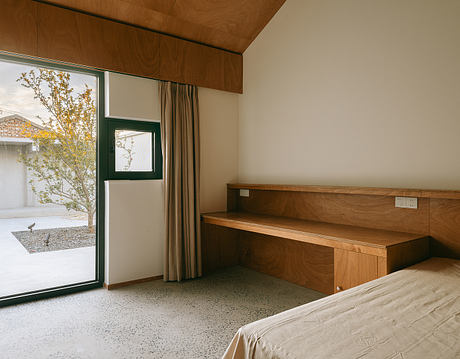
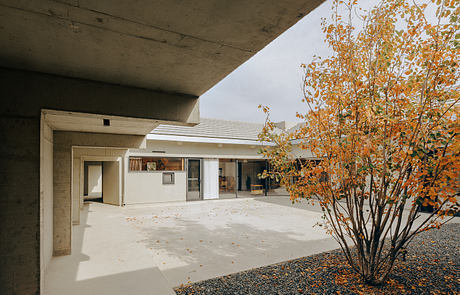
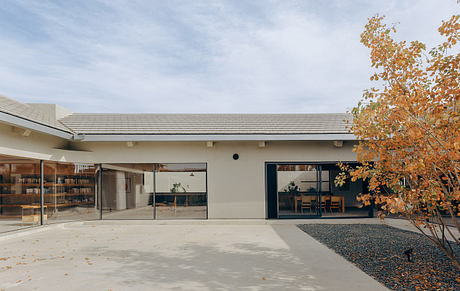
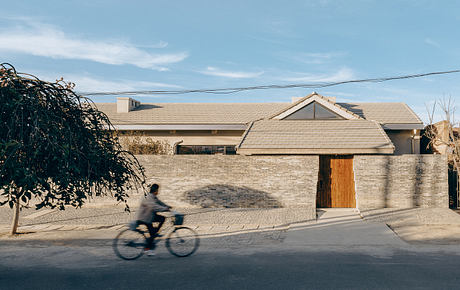
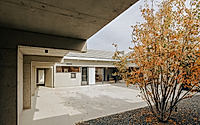
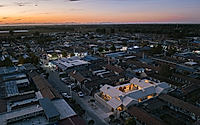
Rain clouds hang low over the village when visitors first enter the 700-square-meter courtyard, where the new single-story volume traces a quiet cross against the ground. The eaves sit low, yet the view still runs out to a distant slice of blue sky and the wide, flat landscape that surrounds the house.
This is a rural house in Tongzhou, Beijing, conceived by chaoffice for three generations who return from the city to live and work in their parents’ village. The project responds to strict local regulations on height and massing by compressing volume and expanding the courtyard, using geometry and structure to negotiate privacy, climate, and openness in daily use. Its cross-shaped plan and recessed structural core organize movement, light, and thresholds rather than simply repeating inherited courtyard models.
Cross Plan In The Courtyard
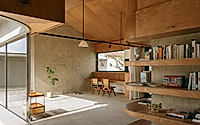
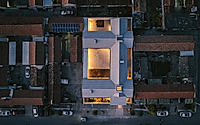
Traditional heyuan houses in the village keep to low, perimeter wings wrapped around a central yard, often linked over time by improvised roofs and corridors. Those additions help people move under cover but can cut off sunlight and breeze, turning the yard into a dim interior court with little direct contact between rooms and open air. Here, the new house pulls the side wings away from the boundary walls, carving a narrow secondary courtyard to the rear and pushing the north-facing main hall slightly south to open a backyard. From above, the plan reads as a cross that balances the large central courtyard with smaller exterior pockets, setting up layered views of courtyard, house, and courtyard again.
Arms For Three Generations
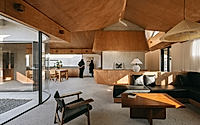
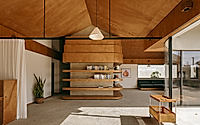
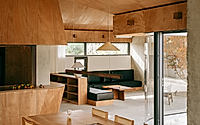
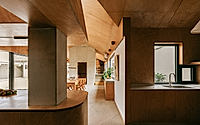
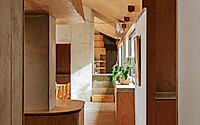
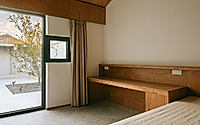
Each arm of the cross ends in a terminal room, giving grandparents, parents, children, and visiting guests their own clearly defined endpoints. The grandparents’ preference for separate sleeping quarters finds a quiet resolution at two extremities, close enough for contact yet with a subtle physical break. Between these rooms, the elongated connective zones take on the public roles: family gathering, working from home, and circulation around the courtyard. Movement constantly alternates between shared and private, turning the walk from one wing to another into a gentle sequence of outlooks, thresholds, and brief crossings of the yard.
Structure Drawn To The Core
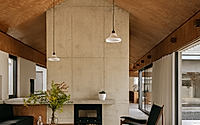
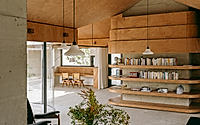
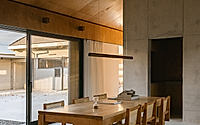
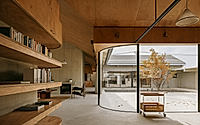
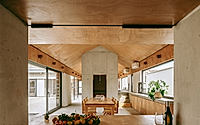
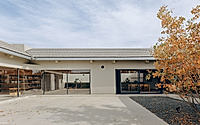
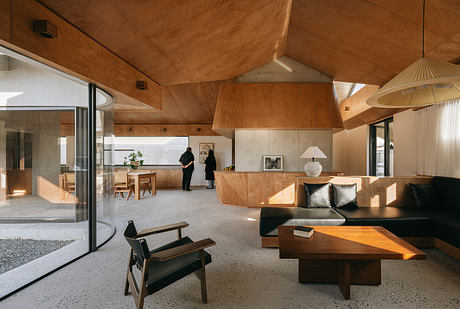
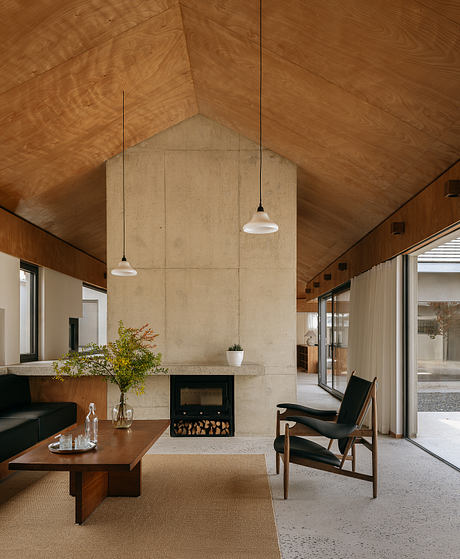
To keep the perimeter light and porous, the structural system contracts toward the roof ridge and the center of the plan. Shear wall cores sit at the heart of the cross, where structural elements from different directions converge into a compact anchor. The image of a mushroom is apt here: a sturdy stalk at the center supports a broad cap, while the edges stay thin and open. With the load-bearing role concentrated, the external walls soften into largely glazed surfaces facing the courtyard, giving each wing dual-sided natural light and long, unobstructed sightlines across the plot.
Mushroom Eaves And Edges
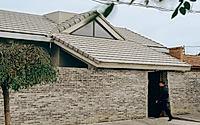
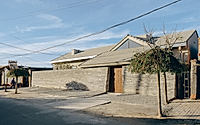
If the eaves and upper window frames aligned, the house would hold over three meters of vertical glass, generous yet exposed and energy hungry. Instead, the eaves beam drops to 2.4 meters, pulling the edge of the roof down so that people sitting by the window feel tucked under a cap during strong sun or heavy rain. This downward sweep shades the interior while preserving comfortable ceiling heights and clear views into the courtyard. Outward, the only elevation that faces the street belongs to one of the terminal rooms, where a semi-outdoor entrance traces the roof’s slope and a brick boundary wall steps inward with the rising ground, keeping the house low and unassuming.
Three core ideas hold the project together: the cross-shaped volume that reads public against private, the recessed shear walls that free the perimeter, and the calibrated eave and roof heights that settle daily life under a protective canopy. In a village of flat, single-story roofs and inherited courtyard layouts, this house stays grounded yet introduces a new way of organizing family, work, and climate through structure. Light, shade, and the long arms of the plan become the quiet measures of each day in the courtyard.
Photography by ZHU Yumeng
Visit chaoffice