Ridge House: Quiet Forest Living
Ridge House settles between field and forest in Owen Sound, Canada, where superkül shapes a rural house around slope, wind, and long horizontal views. The project treats the ridge as both datum and shelter, using a singular roofline to gather four-season rooms that stay close to the ground and even closer to the surrounding woods. Inside, calm finishes and controlled light keep the focus on climate, texture, and the slow movement of the day.


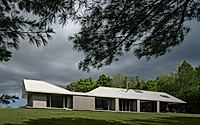
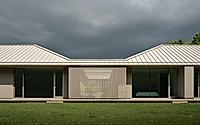
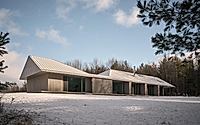
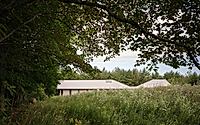
Low field grasses brush the edge of the house as the roofline lifts from the ridge. A single, deliberate slope rides the contour, catching light and framing the distant line of forest while keeping the rooms pressed close to the land.
This is a house in rural Ontario, set near Owen Sound, designed by superkül as a clear response to grade, wind, and the wooded edge. The project reads as one long, quiet volume that works with the existing downslope, a high water table, and a stand of ironwood and pine. Superkül treats climate and landform as primary constraints, letting the ridge, sun path, and seasonal weather set the rules for how each room meets the outdoors.
Setting House Into Grade
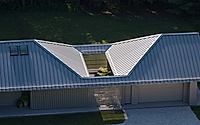
The house straddles a gentle declivity, sinking into the land rather than perching on top. That siting choice brings living areas closer to the cooling influence of the adjacent woods and shields them from strong rural winds. The large sloping roof floats above the field’s horizon while the front façade stays concealed from the main road, preserving privacy without tall fences or heavy planting. By eliminating a basement in response to the high water table, superkül reduces concrete use and keeps the profile lean, trading buried volume for a more grounded, lateral plan.
Shaping Light And Weather
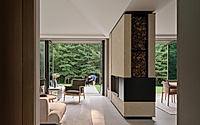
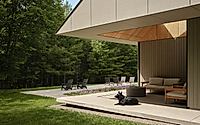
Deep overhangs cut the high summer sun and protect floor-to-ceiling triple glazing along the east and west elevations. In winter, lower rays slip beneath those eaves, sliding deep into the rooms and warming finishes that absorb rather than reflect glare. On the west side, glass accordion doors pair with retractable insect screens to create protected mid-door zones where breezes and views stay constant even during bug season. These operable walls open to a cantilevered walkway set along the natural pitch, turning the ridge line itself into a mild theatrical moment of arrival and departure.
Courtyard As Quiet Core
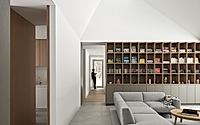
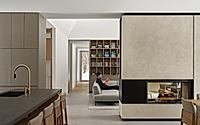
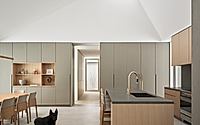
Inside, the clients’ preference for monochromatism, matte surfaces, and natural materials supports a gentle, subdued atmosphere. At the heart of the plan, an enclosed garden courtyard sits beneath a rectangular cut in the roof, reaching upward while wood screens filter sun into moving bands of shade. The principal bathroom opens directly to this inner garden, giving a private room a direct outdoor companion and extending daily rituals into the changing weather. Negative volume from the courtyard allows daylight to enter adjacent rooms obliquely, so illumination arrives from multiple directions rather than a single bright wall.
Monochrome Rooms, Durable Shell
Strategically staggered skylights send light across vaulted ceilings in the living and dining rooms, softening any contrast between exterior and interior. A vaulted plywood ceiling shelters a southwest corner firepit, keeping gatherings close to the body of the house even in cooler months. The soft grey of the kitchen extends the tone of the exterior cladding on the piers, bringing the exterior palette indoors without drama or sharp breaks. Throughout, marine-grade plywood, prefabricated millwork, and low-VOC coatings absorb light, resist scratches and mould, and keep maintenance demands low for a rural setting.
Systems For Rural Climate
Underfoot, high-efficiency zoned in-floor radiant heating responds to use patterns and room orientations instead of relying on a single ambient system. A cold-climate heat pump works with Ontario’s clean energy grid to limit carbon consumption for both heating and cooling across long winters and humid summers. Energy Recovery Ventilator equipment continuously trades indoor air for fresh supply while retaining heat or coolth, improving air quality and comfort without heavy mechanical noise. Every environmental move stays quiet yet precise, so the house reads as a simple roof on a ridge while its systems handle the harder rural conditions.
At dusk, the roofline reads as a long dark stroke against the tree line. Light spills from the courtyard, the west terrace, and the rooms tucked into the slope in measured bands. Ridge House stays rooted to its gentle gradient, letting weather, field, and forest continue their cycles around a calm, resilient shell.
Photography by Doublespace Photography
Visit superkül