Bangalow Road House: Timber Screens Shape a Calm Urban Retreat
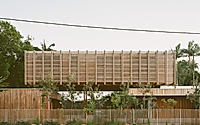
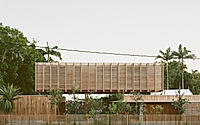
Bangalow Road House stands on a narrow 360m² corner block in Byron Bay, Australia, shaped by Son Studio as a compact, efficient family house. The project responds to tight height and boundary controls with stacked timber volumes and a central courtyard that mediate between a busy street and calm interior life. Within this modest footprint, the house treats light, screening, and climate as core architectural tools rather than add-ons.
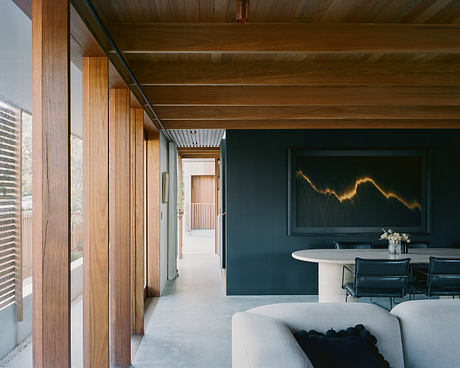
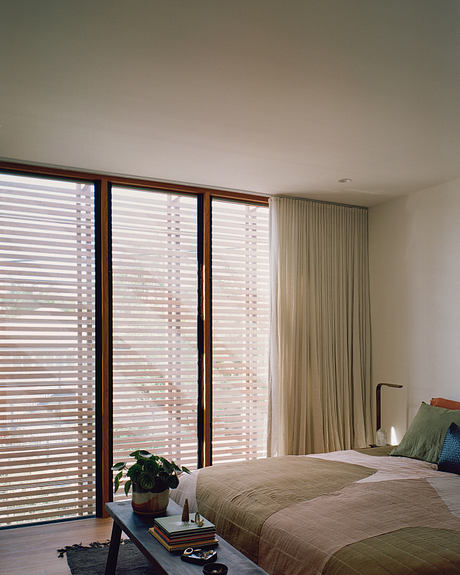
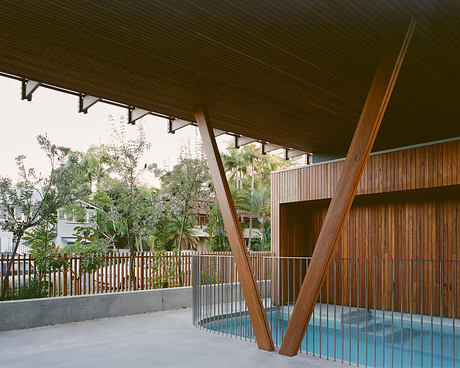
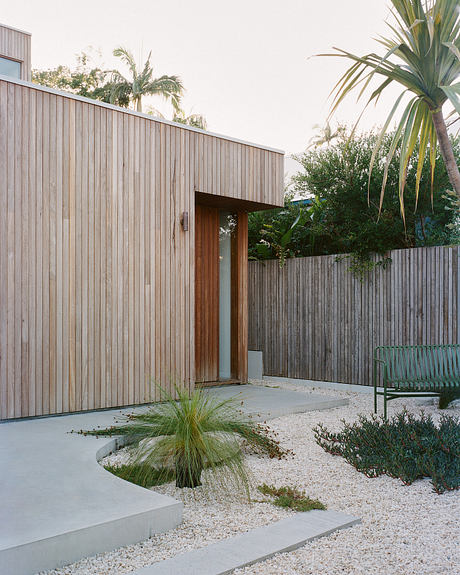
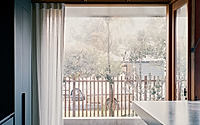
Morning light slips through timber battens, tracing fine stripes across concrete and hardwood floors. Inside the courtyard, the street noise softens and the house gathers around a calm, sheltered core.
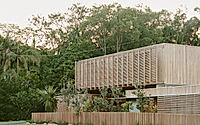
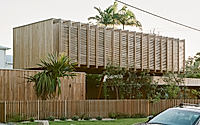
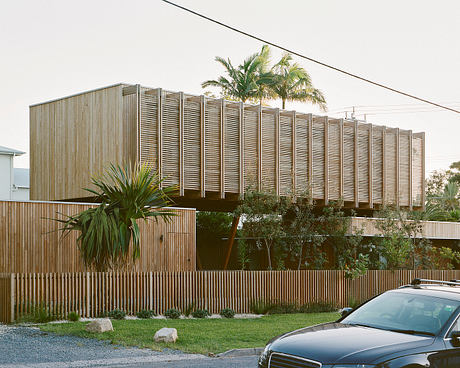
Bangalow Road House is a three-bedroom family house in Byron Bay, Australia, shaped by Son Studio on a narrow 360m² corner lot. Working within strict height limits and side setbacks, the architects stack three rectangular volumes and carve a central courtyard that manages light, privacy, and climate. The project reads as a compact urban dwelling whose environmental performance grows directly from its siting, footprint, and layered timber skin.
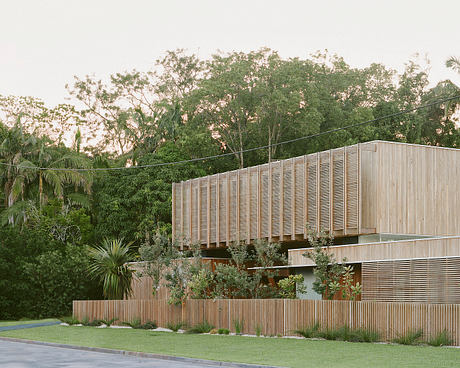
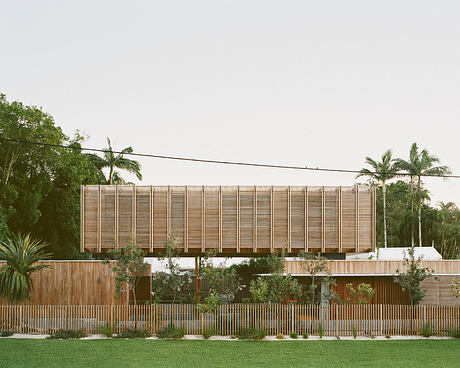
Within just 140m² of internal floor area, the house carries a full family program while keeping its environmental load tight and controlled. One lower volume holds the garage, the other contains living areas, and the upper bar carries all bedrooms in a clearly legible arrangement. The upper element floats visually between the two ground volumes, relieving bulk on the street and letting the house sit more gently among modest neighbors.
Courtyard Anchors The Plan
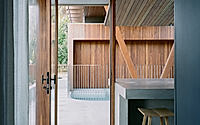
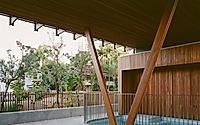
At the center, a courtyard sits cradled by the three volumes and becomes the project’s climatic hinge. Doors and openings slide back to dissolve boundaries, turning the ground level into a continuous loop for daily family life. When privacy is needed from the busy corner, solid panels pull across and the courtyard becomes a protected outdoor room, screened from view yet still washed with daylight.
This inward focus tempers the exposed street edge and creates a quiet, green heart. With the main living areas wrapped around it, cross-ventilation and shaded light reach deep into the plan without sacrificing seclusion.
Screens Modulate Street And Sun
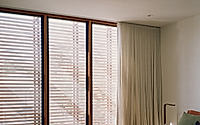
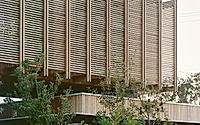
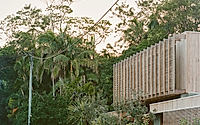
Facing the road, the elongated form presses close to the boundary, so privacy and glare control fall to a layered system of screens. Horizontal battens on the upper level cut low sight lines from the street while preserving views outward, allowing bedrooms to stay open to air and light without feeling exposed. The screen reads as an outer skin, softening the solid upper volume and catching dappled light that shifts across the day.
Ground-floor screening adds another threshold along the extended northern aspect. This secondary layer filters sun, creates a buffer from traffic, and lets intimate rooms sit just behind a permeable edge rather than a hard wall.
Timber Skin And Interior Warmth
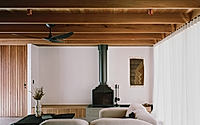
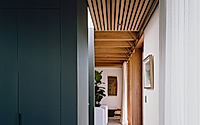
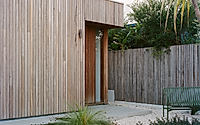
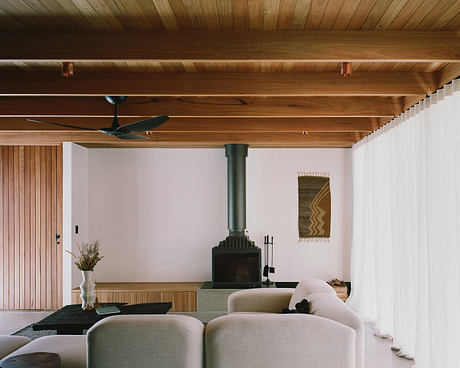
A restrained palette of locally and sustainably sourced raw materials ties climate concerns to tactile experience. Native hardwood wraps the exterior, then folds indoors so the same timber boards read on both facade and interior walls. Outside, weathering gradually turns the cladding silver-grey, giving the house a changing expression under Byron Bay’s coastal light.
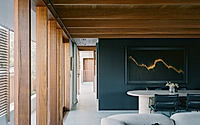
Inside, the timber holds its warm tone and meets concrete and other simple finishes with a clear, calm grain. That contrast between sun-bleached shell and sheltered interior warmth creates a gentle narrative as you move from street, to screened edge, to courtyard, to bedroom.
Light, Views And Vistas
The layered screening devices do more than protect; they choreograph how residents look out and how light falls in. Narrow slits, framed views, and partial glimpses of garden and street turn everyday moments—standing at a window, crossing a corridor—into small acts of discovery. Dappled light tracks across walls and floors, quietly registering the movement of clouds, trees, and time.
Varying densities of timber create a gradient from fully open to almost opaque. This gradation encourages curiosity and produces a heightened awareness of climate outside the house, even when doors are closed and the interior is held in privacy.
Compact Footprint, Reduced Impact
Environmental performance begins with the decision to keep the house small for its brief. A 140m² internal area naturally means fewer trees felled, fewer materials manufactured, and less energy required over the building’s life. The elevated arrangement of volumes satisfies spatial needs without inflating the footprint, reinforcing the idea that compact planning can still support generous daily routines.
Technical systems extend this low-impact stance. Photovoltaic panels support a heat pump system and all-electric appliances, removing reliance on natural gas and reducing operational emissions. Rainwater tanks further cut demand on mains supply, aligning resource use with the house’s modest scale and climate-aware shell.
From the street, Bangalow Road House reads as a quiet composition of timber bars and screens filtered by vegetation. Step inside the courtyard and the mood shifts, with filtered light, protected edges, and a clear sense of orientation. In a small urban corner, climate, material, and program tie closely together to form a precise, measured home for family life.
Photography courtesy of Son Studio
Visit Son Studio