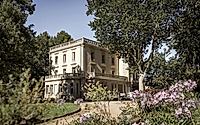
Picturesque Hotel in France by Marianne Tiegen Interiors
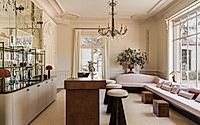
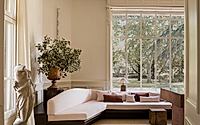
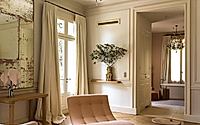
Picturesque Hotel in France transforms an 18th-century château near Montpellier, France, into a textile-driven hotel by Marianne Tiegen Interiors. The project reworks historic rooms with plant-dyed fabrics, antique cloth, and flexible furnishings that bring sustainable luxury into daily hospitality rituals without erasing the estate’s classical bones. Guests move through volumes where light, landscape, and cloth stay in constant conversation.


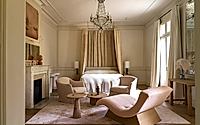
Soft Mediterranean light filters through tall openings, sliding across stone floors and pools of color laid down in cloth. A bed canopy stirs slightly as air circulates, carrying in the scent of nearby vineyards.
This former 18th-century estate now works as a hotel near Montpellier, France, shaped by Marianne Tiegen Interiors through textiles, craft, and regenerative thinking. The project centers on how fabric can define rooms, absorb sound, frame views, and carry history while still meeting the demands of contemporary hospitality. Every decision ties back to cloth, from the plant-dyed hues drawn from the surrounding landscape to the way antique textiles gain new use without losing their age and character.
Textiles Shape Rooms
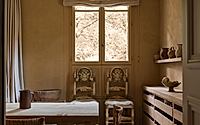
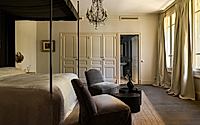
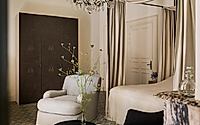
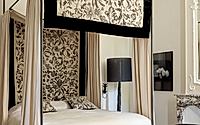
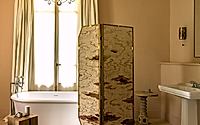
Each room works as a dialogue between natural light, stone, wood, and carefully placed textiles. Rather than coating surfaces, fabrics sit where the body comes close: canopies, screens, throws, and padded panels that temper acoustics and guide sightlines. Canopies drop from metal frames, casting gentle shadows and giving height real purpose, while screens in cloth mark thresholds and introduce privacy without closing off volume. Textiles bring the tactile warmth usually reserved for private homes into a hotel setting, making large rooms feel personal and legible.
Color From The Vineyard
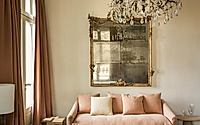
The color story grows directly from the surrounding Mediterranean landscape. Botanical dyers and local specialists develop pigments from grape seeds, madder root, and woad, translating vineyard and garden into blush, coral, apricot, blue, and soft grey. These plant-based tones sit quietly on linen, hemp, and cotton, carrying faint variations that keep surfaces alive through the day as light shifts. Nothing feels flat; the chromatic range reads as lived-in, rooted in earth and agriculture rather than in synthetic saturation.
Antique Cloth In Use
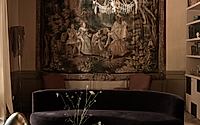
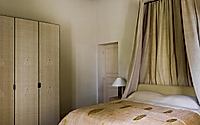
Antique damasks, Venetian block-prints, and couture-surplus fabrics enter the rooms as anchors, not nostalgia. Often a single found textile, chosen for its patina or weave, sets the direction for everything around it, from wall color to canopy lining. When older materials arrive fragile, they are repaired, backed with light cotton, or left with visible mends that read almost like kintsugi drawn in thread. Guests read those surfaces up close; a repaired seam or softened motif tells them that age is retained rather than polished away.
Craft And Durability
The project pulls artisan skills from couture ateliers into everyday hospitality. Woven Belgian linens, hand-printed serigraphies, Venetian block prints, and embroidered panels carry a recurring bee motif worked in Pont de Beauvais stitch. That single emblem links biodiversity, garden life, and a circular approach to making, quietly repeating across cloth rather than shouting from signage. Bed canopies, screens, throws, and upholstery sit on removable frames or covers, so pieces can be cleaned, repaired, or even redyed without wasteful replacement.
Rooms Meant To Evolve
Behind the softness lies a rigorous approach to longevity. Cabinet fronts, screen panels, and textile elements can be restored or swapped when worn, while the underlying structure remains in use. Sustainable hospitality here does not read as sparse or punitive; it rests in materials and techniques chosen to age with dignity and to support a circular economy of making. Over decades, fabrics gather new marks and memories, turning each room into a quiet record of stays, seasons, and care.
Light still moves across stone and fabric at day’s end, catching the grain of wood and the raised threads of embroidery. Guests inhabit a château where history, craft, and cloth remain active, not archived. The hotel invites time to work slowly on every surface, letting color, texture, and use deepen rather than fade.
Photography by Jeremy Wilson
Visit Marianne Tiegen Interiors