Casa da Rocha Quebrada: Concrete House on São Miguel Coast
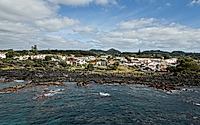
Casa da Rocha Quebrada sits on the southern coast of São Miguel in Lagoa, Portugal, a concrete house by SO Arquitetura & Design. The project belongs to the parents of one of the studio’s founders, so the brief strips back every nonessential move and pairs a mineral exterior with a warmer interior. Exposed concrete, sheltered openings, and a simple plan respond to the harsh Atlantic edge without losing a sense of quiet domestic life.
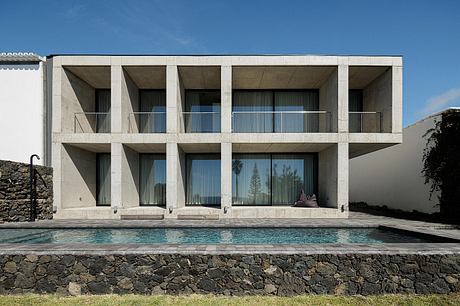
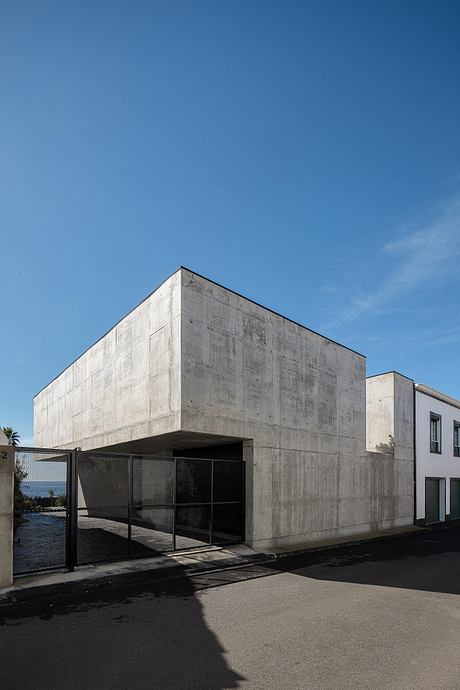
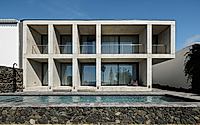
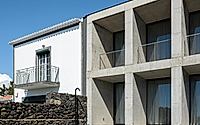
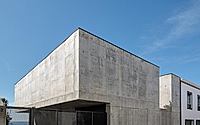
Light catches the exposed concrete and throws thin shadows into the recessed openings. From the street, the house reads as a single mineral object against the Atlantic.
Behind that first impression sits a compact house in Lagoa, Portugal, drawn by SO Arquitetura & Design for the parents of one of the studio’s founders. The commission invites a direct, almost ascetic approach, where construction choices carry the story. Material, proportion, function: everything else falls away.
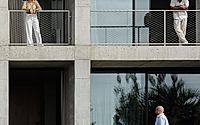
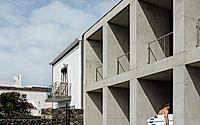
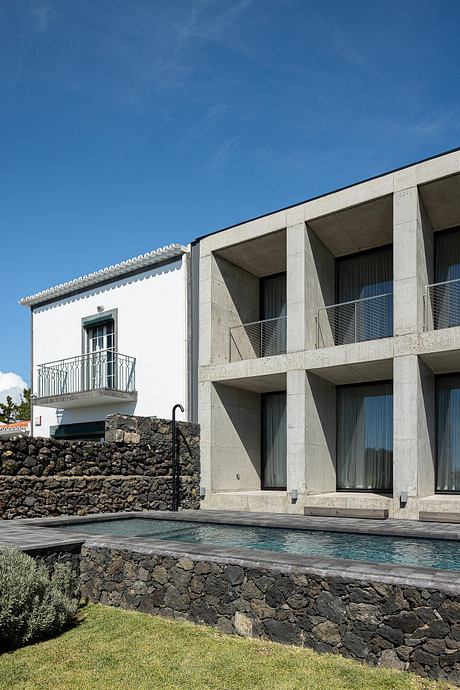
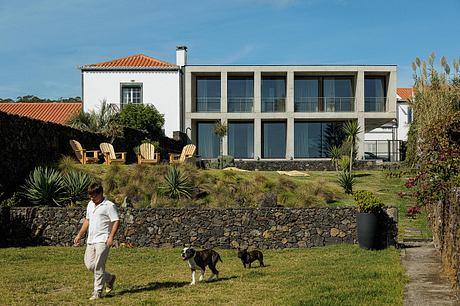
The house occupies the last empty plot along a run of older buildings on São Miguel’s southern coast, so the volume closes the block with a blunt, solid presence. Exposed concrete becomes the natural answer to salt, wind, and time, a skin that can weather harsh seasons without fuss. Toward the street, solids and voids carve into this shell, with deep recesses that protect openings and yield a façade that feels more like rock than domestic frontage.
Concrete As Shell
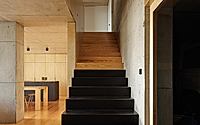
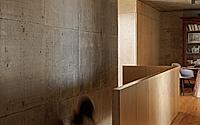
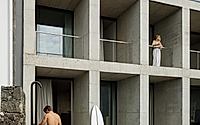
Exposed concrete is not a finish layered on top of structure; it is the structure and the face of the house in one move. The mass rises as a continuous mineral volume, its thickness legible in the depth of every window reveal and carved cutout. Recessed openings temper sun and salt-laden air, while the play of solids and voids keeps the street elevation quiet but never flat.
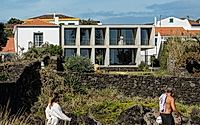
From certain angles, the house reads almost like a new ruin, a sequence of voids hollowed from a cliff. This raw stance ties the building visually to the rocky coastline, so the boundary between constructed wall and natural rock feels deliberately thin. Light and shadow sharpen the edges of each recess, giving the shell a slow change throughout the day.
Caves Turned Home
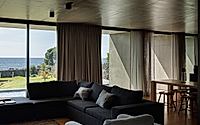
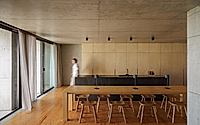
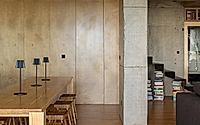
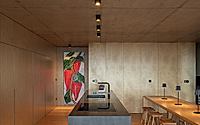
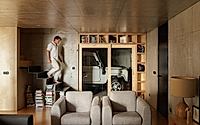
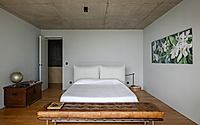
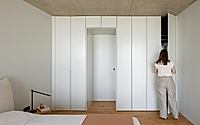
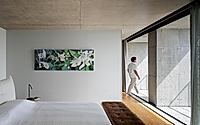
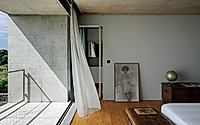
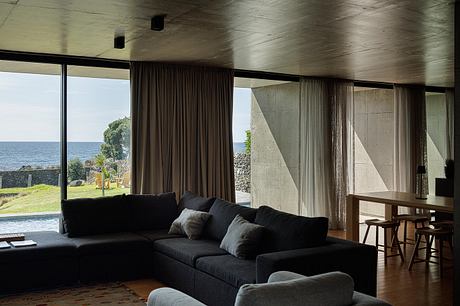
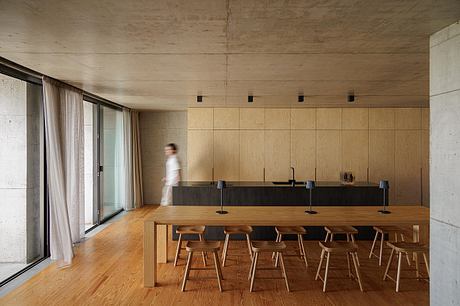
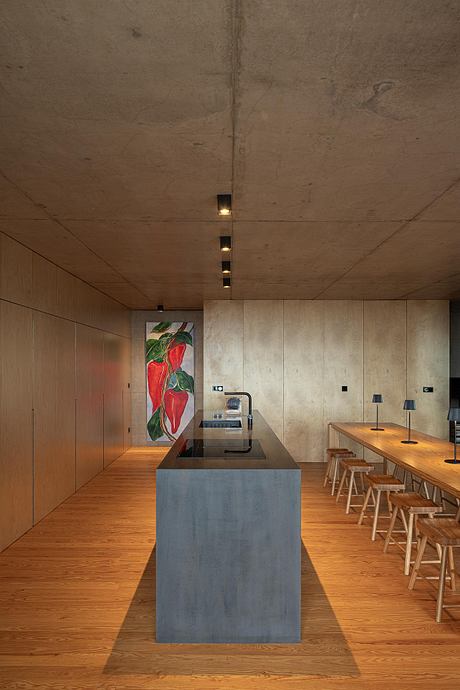
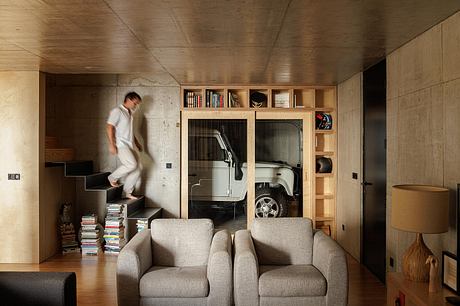
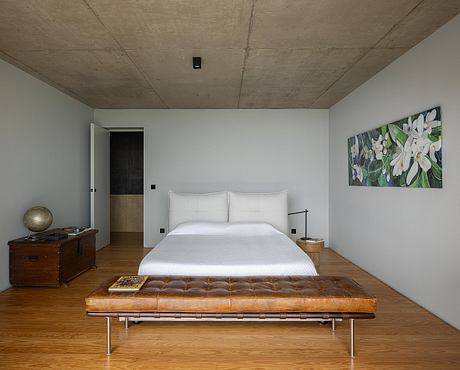
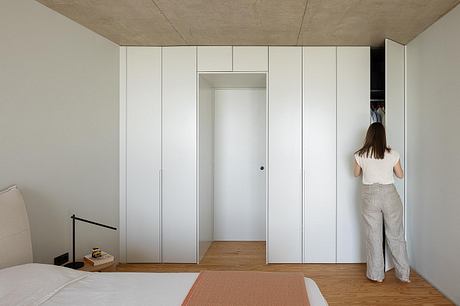
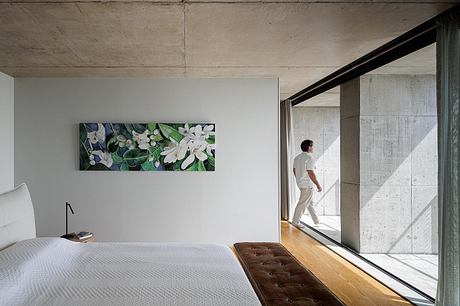
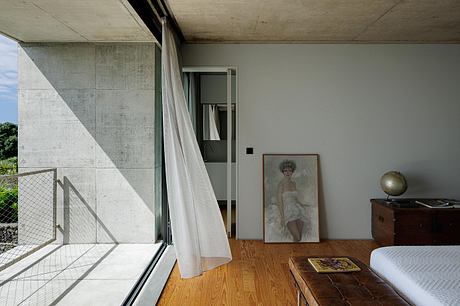
Inside, the mineral exterior gives way to a warmer equilibrium where wood lines surfaces and softens the concrete frame. Floors, cabinetry, and key interior planes use timber to bring color and touch, setting up a calm contrast with the cool gray structure. The domestic program stays straightforward: three bedrooms and an open social area gathered around a central patio.
That patio slices down through the volume and pulls daylight and air into the heart of the plan. Natural ventilation moves through the rooms without mechanical drama, giving the interior a steady, tempered climate. Circulation flows around this void, so daily routines always reconnect to sky and weather, even on more enclosed days.
Facing The Atlantic
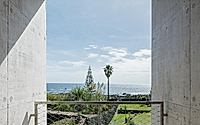
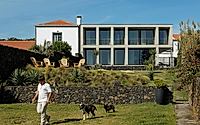
On the southern side, concrete framing edits the ocean rather than turning it into a spectacle. Openings direct views toward the sea through controlled cuts, keeping the horizon present but not overwhelming. From the natural pools in front, the house looks almost deaf and mute, just stone, light, and shadow against the water.
This restraint continues in the way terraces and rooms meet the exterior, with no theatrical gesture toward the coastline. Structure does the work instead, setting up quiet vantage points where the residents live with the Atlantic rather than perform toward it. Everyday life unfolds against a steady backdrop of weather, tide, and rock.
Matter, proportion, and function stay at the center from street edge to ocean side. As days track across the concrete skin and wood-lined interior, the house holds its essential brief. Nothing extra is needed.
Photography by Ivo Tavares Studio
Visit SO Arquitetura & Design