Loui Paris: Quiet Minimal House for a Discreet Creative Family Retreat
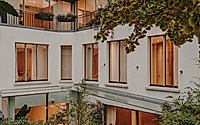
Loui Paris sets a quiet tone in the heart of Paris, France, where Holzrausch crafts a family house as a tribute to wood and restraint. Behind a closed gate in the 11th arrondissement, the home withdraws from the street into a courtyard and garden, trading the city’s noise for calm rooms defined by oak, plaster, stone, and concealed technology.
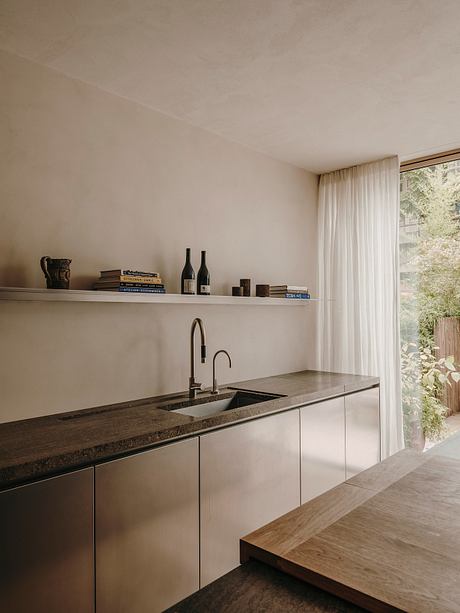
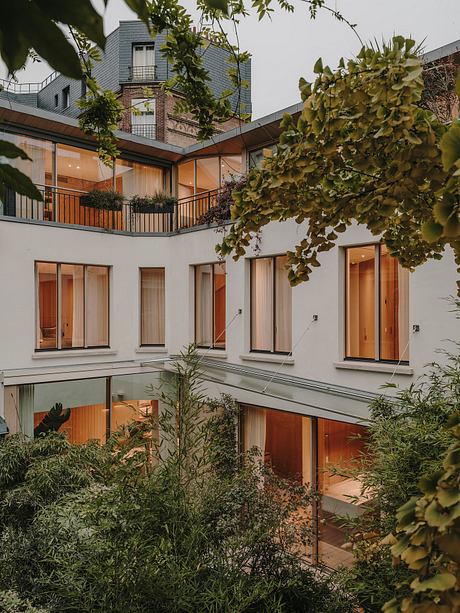
A closed gate clicks behind and the city recedes. A long courtyard path draws the eye toward a garden and the quiet house beyond, where light catches pale plaster and oak surfaces.
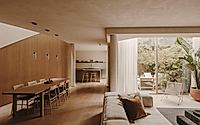
This is a four-level family house in Paris’s dense 11th arrondissement, designed by Holzrausch as a retreat grounded in woodcraft and restraint. The project centers on a minimal interior palette—oak, plaster, stone, stainless steel, and retained concrete floors—and on the daily choreography around a sculptural stair. A private garden at the front and new skylights above reinforce the shift from urban noise to measured domestic rhythm.
Conceived as both dwelling and homage to woodworking, the house folds a former model and gallery owner’s life into a calm, materially focused interior. Built-in furniture, recessed lighting, and closed storage reduce visual noise, while the workshop roots of Holzrausch ensure that the carpentry and interior architecture read as one continuous craft.
Approach Through The Courtyard
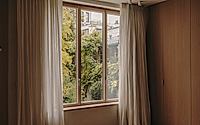
From the street, only a gate hints at what lies beyond. Once inside, a winding route along the long courtyard slows the pace and frames the unexpected garden at the end. This sequence sets up a deliberate contrast: the bustling neighborhood falls away as the house presents itself as a quiet volume turned inward to greenery. Every window of the L-shaped building faces this courtyard realm, reinforcing that inward focus on family life.
Staircase As Light Spine
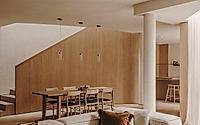
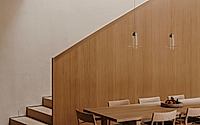
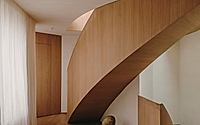
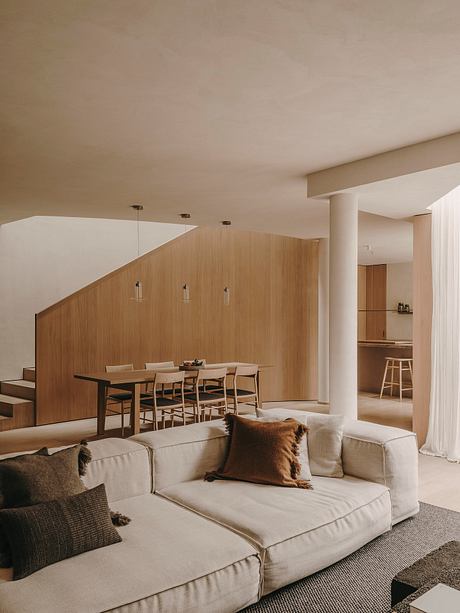
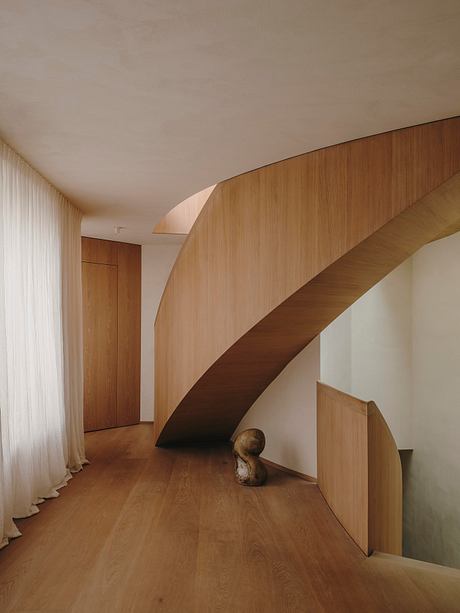
At the core, an undulating wooden staircase rises beneath a skylight and acts as the home’s vertical spine. Natural light drops from above, traveling along the curved balustrades and filtering across each level, from the small basement to the upper rooms. The stair’s oak matches the wall paneling and built-in elements, so circulation and furniture read as one continuous volume rather than separate parts. Daily movement up and down this stair becomes a steady encounter with crafted wood and changing daylight.
Minimal Palette, Quiet Rooms
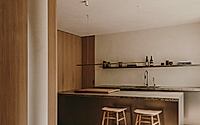
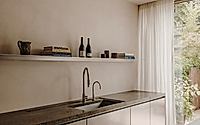
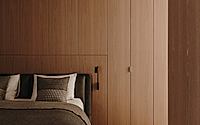
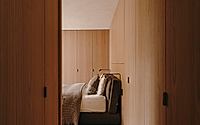
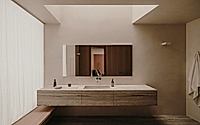
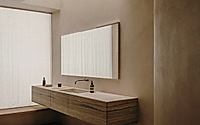
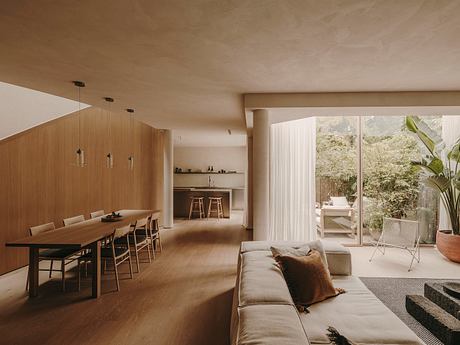
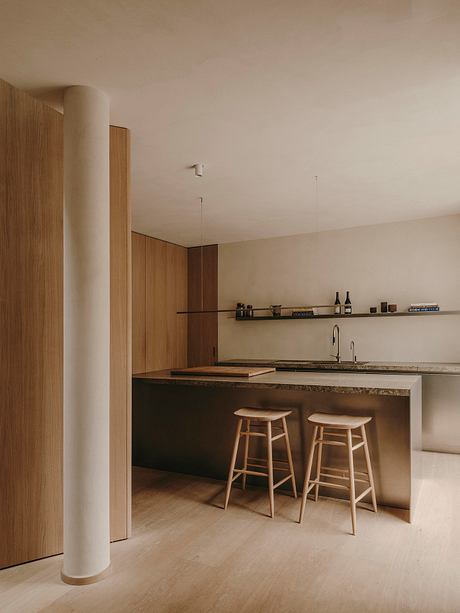
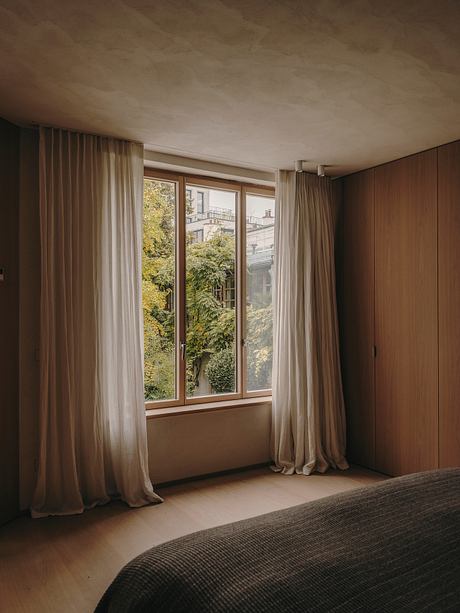
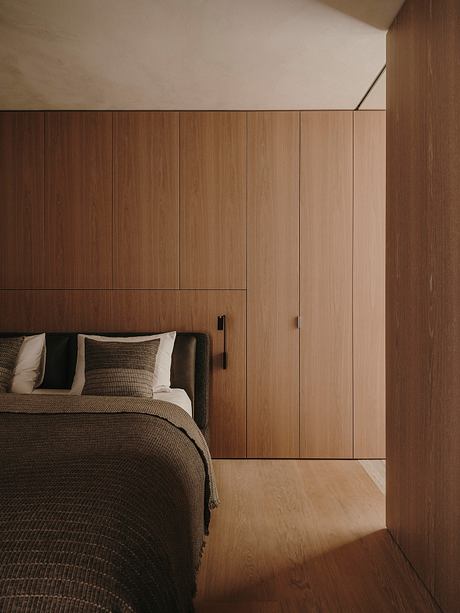
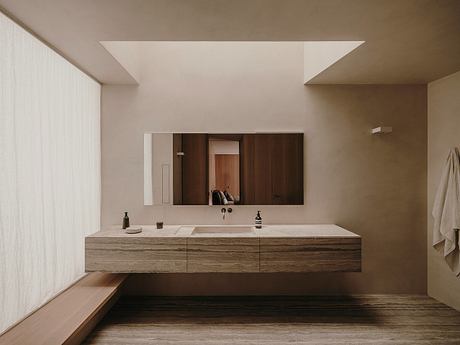
Inside, the client’s wish for calm leads to a disciplined use of materials: oak, plaster, stone, stainless steel in the kitchen, and concrete floors kept from the existing structure. Decorative elements and art are absent by intention, even though one of the clients works in the art world, so surfaces remain visually open and undisturbed. Lighting is recessed rather than exposed, and most furniture is integrated into the architecture, with appliances tucked behind wooden fronts that align with wall panels. This restraint gives weight to small shifts in texture—the coolness of stone, the warmth of oak, the soft transitions of plaster—rather than to objects.
Craft Network And Daily Living
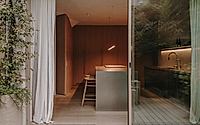
The house spans roughly 3,800 square feet across four floors, with four bedrooms and four bathrooms organized for a family of four. In warm weather, large doors open toward the garden so daily life can extend outward, turning the courtyard into an outdoor room for meals and quiet time. Behind the calm surfaces lies a network of specialists: plasterwork from Italy, massive oak floors from Denmark, and lighting from Denmark, all coordinated through Holzrausch’s combined workshop and studio. Their role as interior designers, interior architects, and master carpenters condenses the path from drawing to built joinery, keeping the interior aligned with their stated philosophy of simplicity, minimalism, and long-haul clarity.
As the day fades, light pulls back to the stair and the soft sheen of oak. The garden settles, and the house returns to its quiet dialogue between wood, stone, and plaster. Within this Paris courtyard, Loui Paris stands as a composed retreat where material rather than decoration carries the mood of everyday life.
Photography by Salva López
Visit Holzrausch