Villa Nuri by Studio Saxe
Villa Nuri is a house in Cabo Velas District, Costa Rica, by Studio Saxe. Set on a hillside above the Pacific Ocean, it turns the slope into a vertical sequence of living areas, terraces, and views. Concrete, steel, wood, and planted edges work together to keep the home open to air and light while staying firmly tied to the terrain.


About Villa Nuri
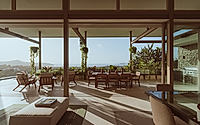
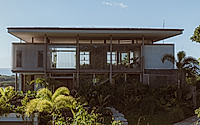
Set on a hillside above the Pacific Ocean, Villa Nuri uses the slope as part of its plan. A solid base meets the terrain, while the upper level opens toward long views and moving air.
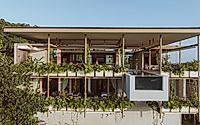
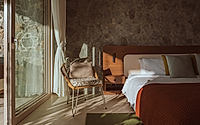
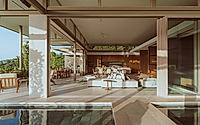
Studio Saxe designs the house as a vertical sequence in Cabo Velas District, Costa Rica. Social areas, terraces, and the main bedroom sit on the second floor, where the architecture lifts clear of the land and opens toward the horizon.
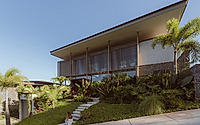
Below, the middle floor holds the secondary bedrooms and continues to take in ocean views through the site’s natural fall. The garage, laundry, and service rooms are tucked into the base, so the composition steps with the hillside instead of resisting it.
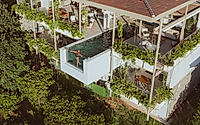
The narrow plot and changing topography shape the house’s structure. A grounded concrete base supports a prefabricated steel frame above, giving the upper level a lighter presence and allowing open facades to look toward both mountains and sea.
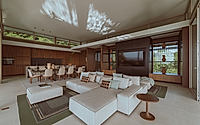
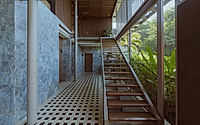
That shift in materials is also felt inside. Heavy concrete and stone give way to lighter woods and open steel as the house rises, reinforcing a sense of ascent without losing contact with the ground.
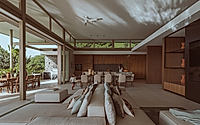
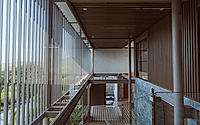
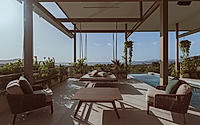
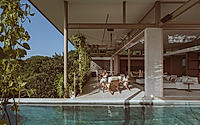
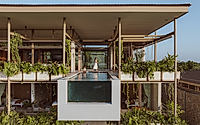
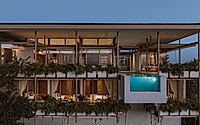
Cross ventilation, shaded openings, and long sightlines keep the house connected to its surroundings. A planted terrace and a cantilevered pool extend the living level outward, with the pool projecting over the canopy and giving the upper floor a direct relationship to the landscape.
Natural stone and wood help regulate heat, while openings are oriented to control sun and draw breezes through the rooms. The surrounding vegetation cools the home further, and solar panels add on-site power, reducing dependence on mechanical systems and the grid.
Inside, a green wall marks the entry, and black-and-white tile in the foyer references Costa Rican residential traditions. Cobalt blue armchairs bring a clear note of color to the upper level, echoing sea and sky without overwhelming the room.
The house is also shaped by openness at a more practical level. High ceilings and ventilated corridors help the interior breathe, and the layout supports a daily life that moves easily between room, terrace, and view. Birds pass through the house, reinforcing the sense that the architecture is part of the site rather than sealed off from it.
Photography courtesy of Studio Saxe
Visit Studio Saxe