Dora Villa by PAK architects
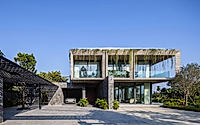
Dora Villa sets a concrete cube against the broad fields and low hills of Quốc Oai, Hanoi, Vietnam, its profile reading clearly from the suburban edge. PAK architects arrange this house as a family retreat, where verandas and voids negotiate between raw structure and the changing climate. Inside and out, the project balances compressed thresholds and expansive rooms so daily life stays close to light, air, and the surrounding greenery.
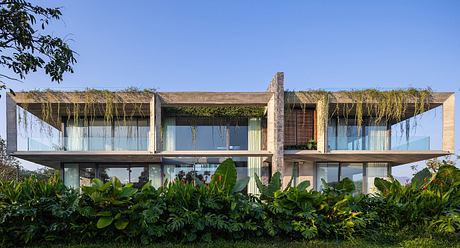
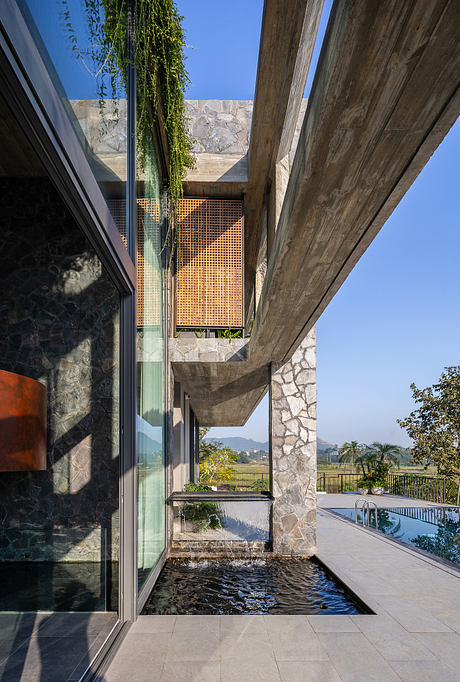
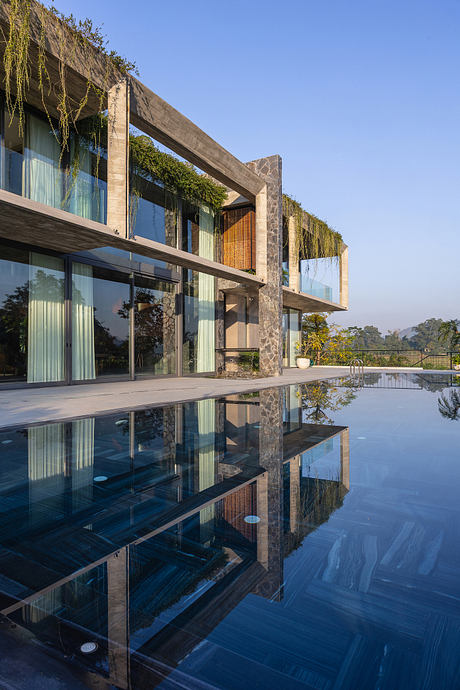
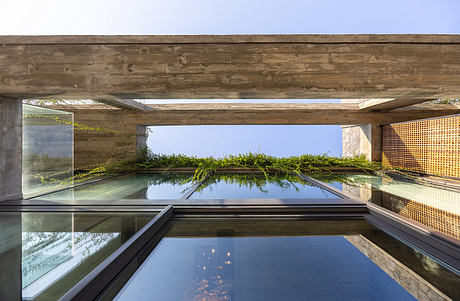
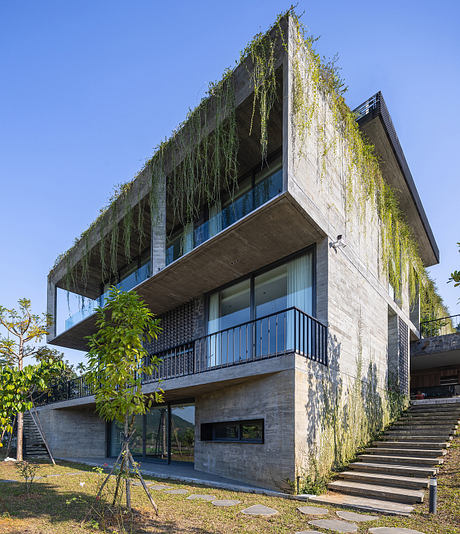
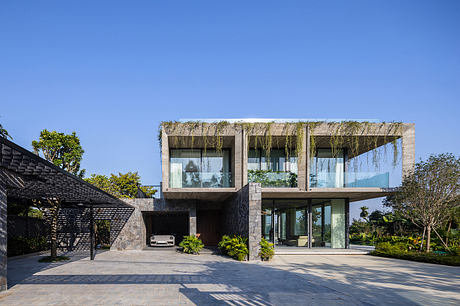
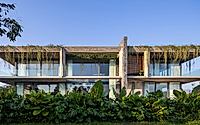
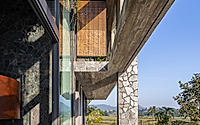
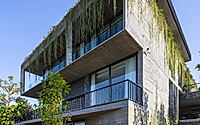
Low fields stretch toward distant hills as the concrete volume comes into view, a compact cube resting in the green. Deep verandas cut shadows along its edges, while stone walls and glass openings register the movement of sun, rain, and wind over the day.
This suburban house serves as a family retreat, set in Quốc Oai outside Hanoi and shaped by PAK architects around climate and landscape. The project focuses on how a single cubic form can hold generous outdoor rooms, layered thresholds, and a clear flow of air. Concrete, stone, and glass work together so that verandas, voids, and corridors keep the interior connected to the surrounding fields.
Embedded In Landscape
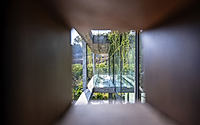
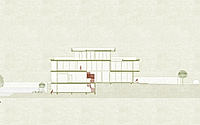
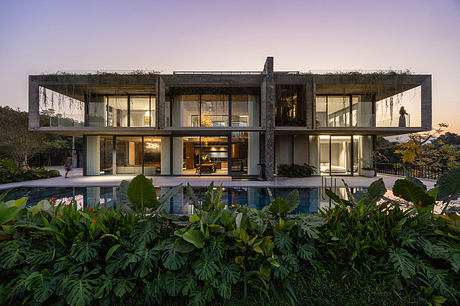
The house reads as one cubic volume embedded in the natural terrain, its concrete mass sitting against the soft profile of fields and hills. Natural stone walls slice through this cube, dividing rooms while still allowing long views toward the horizon and nearby greenery. From a distance, the balance of solid planes and recessed verandas makes the building feel anchored rather than isolated. Up close, narrow entry points and low overhangs compress the body before releasing it toward wider outlooks.
Verandas As Climate Filter
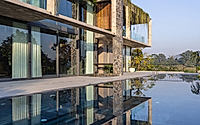
A generous cantilever on the upper level creates a continuous belt of deep verandas that wraps the main façades. These outdoor galleries reduce direct sun, temper wind-driven rain, and give the house a protective collar that suits the local climate. The verandas act as a buffer between interior rooms and the open site, so daily routines unfold in half-shade rather than under harsh exposure. Sliding glass doors allow the living areas to open directly to this band, turning thresholds into lived-in zones instead of simple circulation.
Light, Void, And Airflow
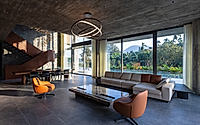
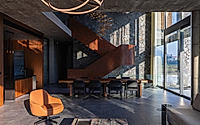
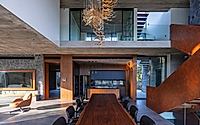
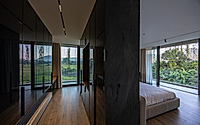
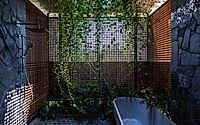
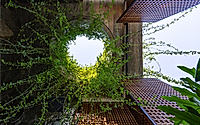
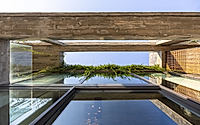
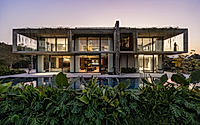
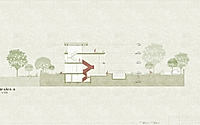
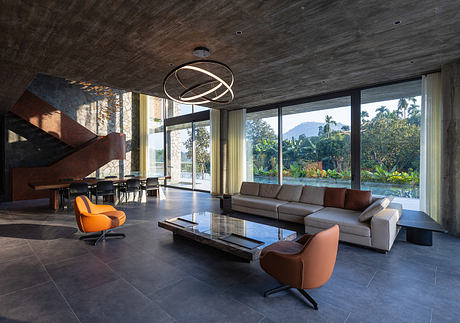
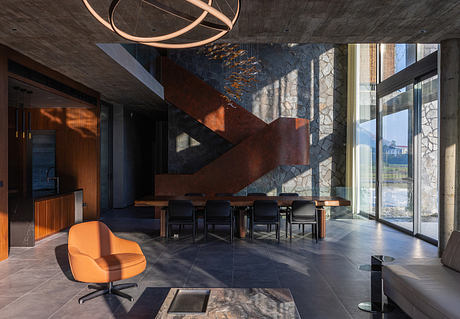
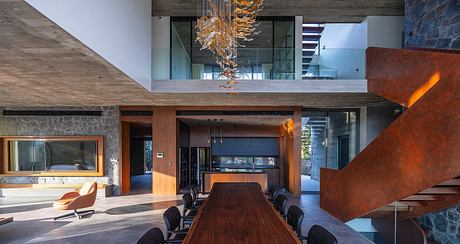
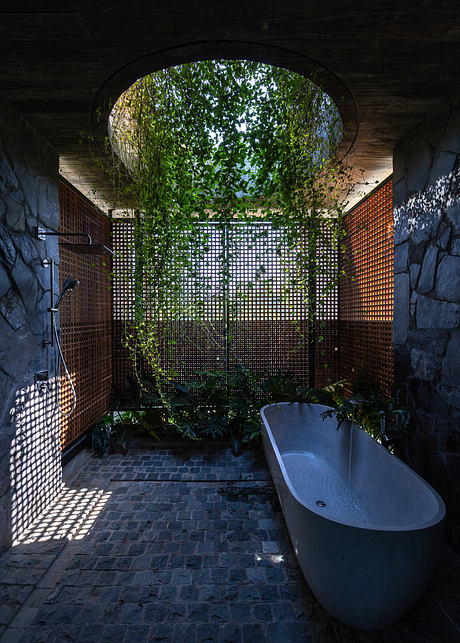
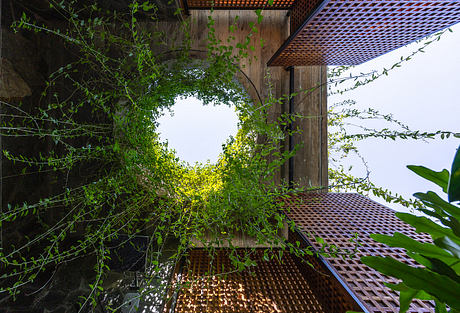
Inside, expansive concrete ceiling planes define the atmosphere, catching light that filters in from verandas and tall openings. A narrow entry gives way to a broad, bright communal room on the first floor, where sliding glass merges the interior with the pool terrace and surrounding greenery. At the core, a double-height dining volume becomes the main gathering room for family events and social occasions, anchoring life around a single vertical void. This tall cavity links stair, corridor, and upper rooms, encouraging natural airflow through the house as warm air rises and draws cooler breezes across the lower level.
Rooms Facing The Fields
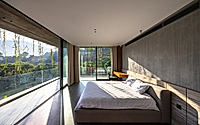
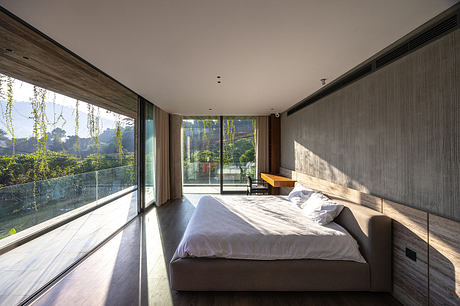
On the second floor, every functional room is oriented toward the landscape so occupants wake to long views and steady daylight. Openings are placed to promote cross-ventilation, allowing fresh air to sweep along the verandas and through bedrooms and corridors. Structural frames of walls, beams, and columns sit within the main volume, producing a façade where light and shadow cut across deep recesses and punched apertures. As one walks from stair to corridor to veranda, each shift in level and depth brings a new angle on the surrounding fields.
From the garage and entrance buffer, movement flows into the communal living area, then rises along the stair toward more private rooms above. The sequence makes each transition legible: compressed thresholds, then volumes that widen toward air and view. In this setting, Dora Villa continues PAK’s interest in how people inhabit climate and ground, using concrete geometry, verandas, and voids to keep family life tuned to light, weather, and the changing landscape beyond.
Photography courtesy of PAK architects
Visit PAK architects